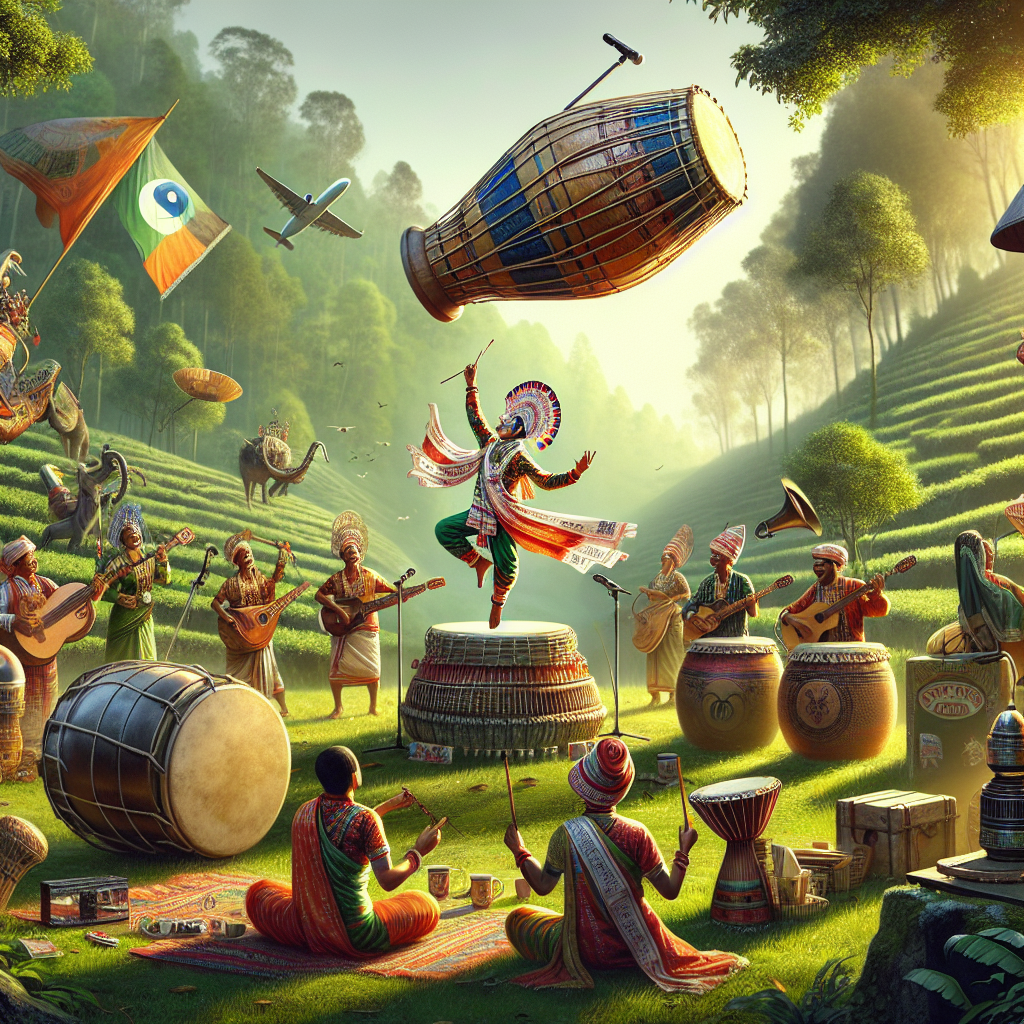

The beating heart of Assam, a northeastern gem of India, pulses with vibrant festivities and an infectious zest for life, most vividly captured in the tradition of Bihu songs. Who could resist being swept up by the melodic tunes and lively dances that dwell at the core of this cultural phenomenon? Bihu songs, traditionally sung during the Bihu festivals, are an integral facet of Assamese culture, unraveling an intriguing narrative with roots reaching deep into the past. These songs encompass themes of romance, nature, and the unyielding spirit of community, celebrated thrice a year— during Bohag Bihu in spring, Magh Bihu in winter, and Kati Bihu in autumn—each marking an important seasonal transition for the agrarian society of Assam.
The Essence of Bihu Songs
Bihu songs are a testament to human creativity and resilience, encapsulating the essence of the Assamese people. These songs, simple yet profound, offer insights into daily life, rural and urban alike, portraying vibrant tales of love, community, and the inherent beauty of nature. But what makes these songs so significant?
The variety in Bihu songs echoes the diversity of Assamese life itself. Bohag Bihu, also known as Rongali Bihu, heralds the Assamese New Year with happiness and is affectionately called the 'festival of merriment'. Songs during this time are playful and romantic, often reflecting youth and courtship rituals. The playful tunes and jovial lyrics capture young lovers' whispers and heartbeats.
On the other hand, Magh Bihu, or Bhogali Bihu, weaves songs around the theme of food and festivity, as it celebrates the harvest. The songs during this festival often express gratitude towards nature's abundance and the warmth of a community feasting together.
Meanwhile, Kati Bihu, or Kangali Bihu, focuses on prayers and hope. Songs of Kati Bihu reflect the spiritual side of Assamese culture, with lyrics often invoking blessings for a good harvest and the welfare of the society at large.
The Bihu Beat: A Scientific Perspective
Let's venture into the science behind the uniqueness of Bihu songs. The rhythmic patterns and melodic scales form a compelling subject for ethnomusicologists. Primarily based on the pentatonic scale, these songs often employ a fascinating interplay of major and minor chords. Such scales lend the music its distinct enchanting quality, resonating with the vibrancy of Assamese traditions.
Interestingly, neuroscience teaches us that music can evoke emotional responses and alter our mood, a phenomenon well utilized in the energetic beats and passionate refrains of Bihu songs. These rhythms synchronize with human biological rhythms, naturally invigorating listeners and dancers as if resonating with our very heartbeat.
The Cultural Fabric of Assam
Bihu songs have always been more than just a musical form; they are a crucial thread in the cultural tapestry of Assam. They embody the spirit of resilience and unity, strengthening community bonds. Not surprisingly, during the Independence Movement of India, these songs played a vital role in fostering regional pride and solidarity against colonial rule.
Beyond its agrarian roots, the essence of Bihu and its music has ignited cultural renaissance movements, forming an art form that is both—a remnant of Assam’s proud history, and a beacon guiding the new generation towards preserving their ethereal musical heritage. Today's Bihu songs integrate traditional tunes with contemporary music, reflecting a blend of the old and the new that speaks to younger generations.
The Global Stage and Preservation
As Bihu songs gain recognition on the global stage, it's imperative to preserve this tradition for future generations. The advent of technology has provided new platforms for Bihu artists to showcase their craft, allowing Bihu music to echo in regions far beyond its origin. Platforms like YouTube, Spotify, and social media channels have widened the reach of Bihu music, allowing it to capture a global audience and ensuring its preservation in a rapidly modernizing world.
Education plays a vital role in this endeavor. Initiatives by cultural organizations bring Bihu music into classrooms, teaching young Assamese the significance of their cultural heritage and encouraging them to actively participate in its sustenance and evolution.
Conclusion: A Harmonious Future
Bihu songs, in their miraculous blend of musical traditions, community values, and spiritual insights, continue to be an optimistic reminder of our connection to the past. They are a portal inviting us to dance, sing, and celebrate life with unchecked fervor. As we look towards the future, fueling curiosity and appreciation for such rich cultural expressions will help coalesce the essence of what makes us uniquely human.
May the echoes of Bihu songs continue to inspire harmony and joy, bridging cultures and generations in a shared melody of optimism and resilience.