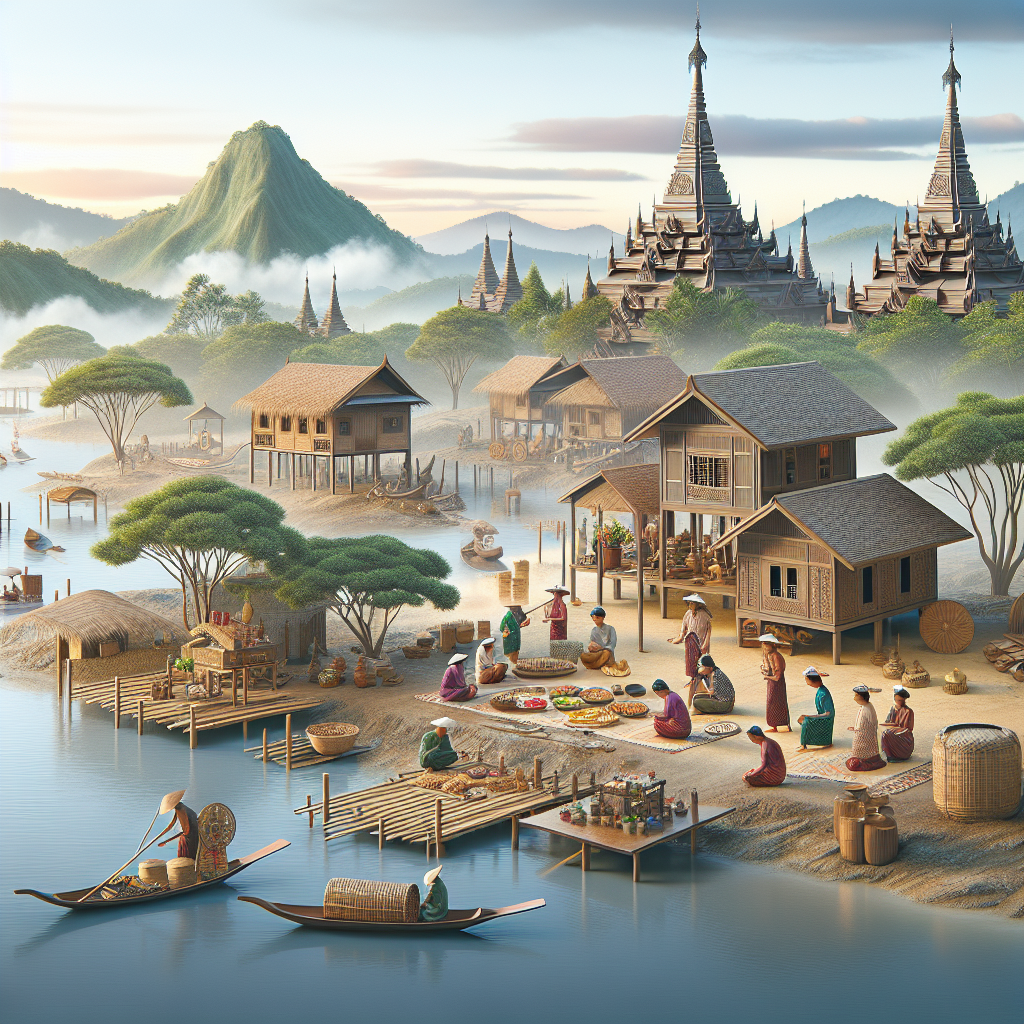

Imagine wandering into a festival that's a distinctive fusion of the age-old and the modern, where vibrant attire dances beneath the sky, ancient sounds drift melodiously through the air, and the scent of delectable local dishes entices you to savor every bite. Welcome to the world of the Bamar people, the ethnic heart of Myanmar!
Who Are the Bamar?
The Bamar, sometimes referred to as Burmans, are the largest ethnic group in Myanmar, constituting approximately 68% of the population. Their influence on the country's cultural, political, and historical tapestry is profound. The Bamar speak the Burmese language and predominantly reside in the Irrawaddy River basin—Myanmar’s heartland. The rich history of the Bamar is one of resilience and adaptation, having been shaped over centuries through interactions with neighboring cultures and various colonial powers.
Historical Footprints
The story of the Bamar people dates back to the 9th century when they migrated from the eastern Himalayas. As they settled in the fertile plains of the Irrawaddy, they created the Pagan Kingdom (1044–1297 AD), one of the first unified states in the region. This period was marked by stupendous architectural achievements, notably the construction of over 10,000 Buddhist temples and pagodas, with Bagan as its epicenter—a site adorned with awe-inspiring landscapes that still captivates visitors today.
Language and Literature
Language is the soul of a people, and the Burmese language is a crucial component of the Bamar identity. Written in its unique script, Burmese is rich in proverbs, poetry, and classical literature. The ‘Jatakas’ or tales of the Buddha’s previous lives, are an essential element of Burmese literature, reflecting the society’s values and aesthetics. What’s particularly exciting about Bamar literature is its interweaving of folklore and history, enabling one to travel through time to witness the shifting tides of culture and tradition.
Festivals and Traditions
Intriguing and full of life, the festivals of the Bamar are a sensory feast. The most celebrated festival is Thingyan, marking the Burmese New Year, akin to a water carnival. Participants gleefully sprinkle water as a symbol of cleansing past sins, embodying an optimistic hope for the times ahead. Another significant celebration is the Thadingyut Festival (Festival of Lights), which illuminates homes and temples, signifying the return of Buddha from heaven, lighting up nights with sheer joy and devotion.
Spiritual Harmony
The Bamar people hold a deep reverence for Theravada Buddhism, which seamlessly intertwines with daily life. Buddhist monks are greatly respected, and monastic education plays a pivotal role in preserving cultural and spiritual knowledge. The ‘Dhamma’ or Buddhist teachings guide moral conduct, embodying a pursuit of serenity and community welfare. But what’s especially endearing is their belief in ‘nats’—spiritual entities believed to control every aspect of life, ensuring that a harmonious balance between the corporeal and the spiritual is maintained.
Family and Community Life
Family is central to the Bamar way of life, where values such as respect for elders and close-knit community ties foster a strong social fabric. Families are often extended, embodying a spirit of cooperative living where each member plays a unique role in ensuring the well-being of the whole. This interdependence is rightfully mirrored in village life, where collective decisions are made to benefit the entire community, nurturing a sense of belonging and shared purpose.
Education and Modern Influence
Education has long been respected among the Bamar, traditionally rooted in monastic schools. Post-independence, Myanmar’s education system has evolved, incorporating modern curricula while still valuing traditional teachings. Contemporary influences are evident, with an embracing of technology and global ideas. This confluence of old and new fosters a fascinating dynamic where innovations and time-honored wisdom thrive side by side, painting a hopeful future for the Bamar people.
Challenges and Aspirations
Despite rich cultural heritage, the Bamar people, like many indigenous communities worldwide, face challenges such as economic disparity and political unrest. However, their unwavering spirit of unity and resilience continually propels them forward. The digital age opens new horizons for cultural exchange and development, offering opportunities for the Bamar to share their stories on a global stage.
Embracing the Future with Roots in the Past
Navigating a world that grows increasingly interconnected, the Bamar people cling to their traditions while keenly adapting to change. This balance promises a compelling journey towards a vibrant, integrated future. In understanding the Bamar, we gain a glimpse into the heart of Myanmar—a people as diverse and beautiful as the landscape they inhabit. They embody humanity’s essence: an unyielding curiosity about life, perseverance amid trials, and a profound capacity for kindness.