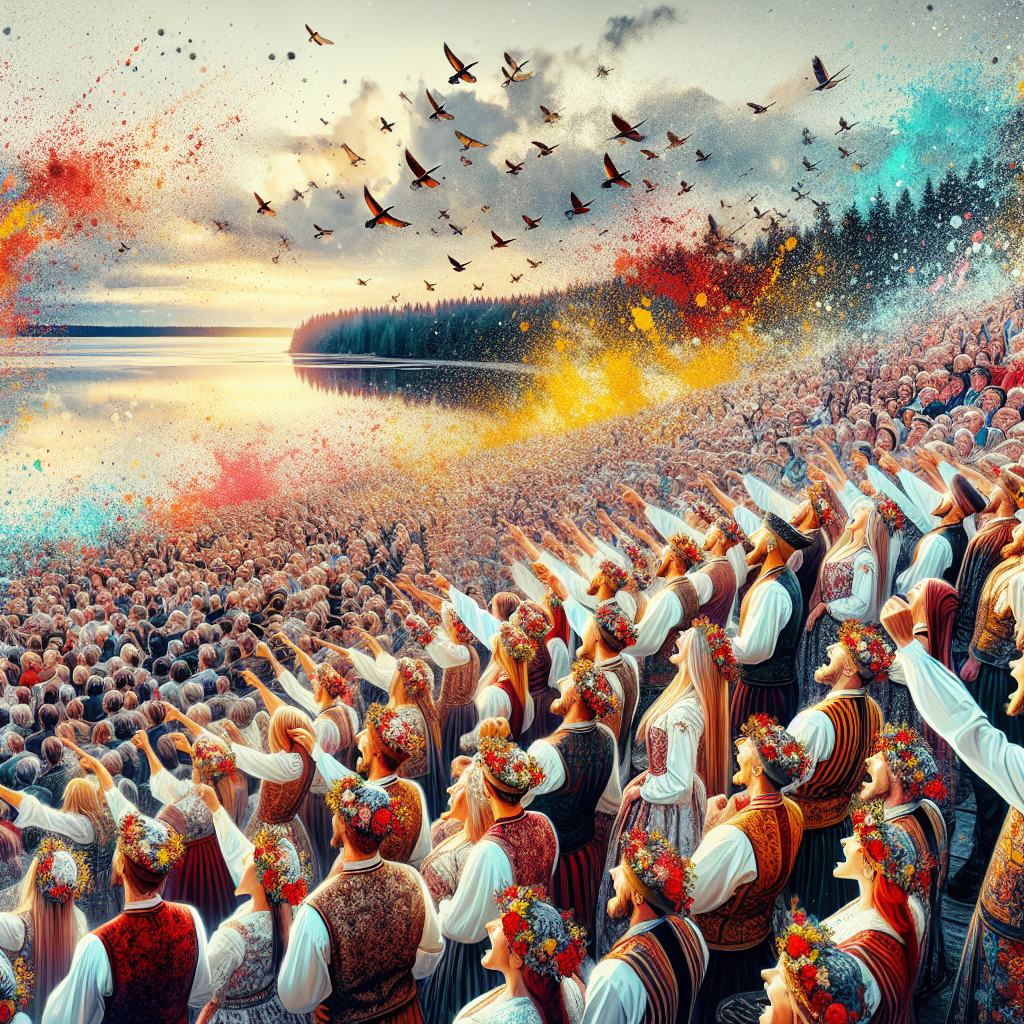

The Baltic Song Festivals: A Harmonious Celebration of Culture and Unity
Imagine a sea of voices rising in unison, creating a symphony of sound that transcends borders and unites nations. This is the magic of the Baltic Song Festivals, a cultural phenomenon that takes place in the Baltic states of Estonia, Latvia, and Lithuania. These festivals, which have been held since the mid-19th century, are a vibrant celebration of national identity, cultural heritage, and the power of music to bring people together. They occur every five years, with each country hosting its own festival in its capital city—Tallinn, Riga, and Vilnius, respectively. The festivals are a testament to the enduring spirit and resilience of the Baltic peoples, who have used song as a form of peaceful resistance and cultural expression throughout history.
The origins of the Baltic Song Festivals can be traced back to the 19th century, a time when national awakening movements were sweeping across Europe. The first Estonian Song Festival was held in 1869 in Tartu, Estonia, inspired by similar events in Germany and Finland. Latvia followed suit with its inaugural festival in 1873, and Lithuania joined the tradition in 1924. These festivals quickly became a platform for expressing national pride and cultural identity, especially during periods of foreign occupation and political oppression.
The festivals are not just about music; they are a grand spectacle of traditional costumes, folk dances, and communal spirit. Choirs from all over the Baltic region, and sometimes beyond, gather to perform a diverse repertoire that includes classical choral works, folk songs, and contemporary compositions. The highlight of these events is the mass choir performance, where thousands of singers come together to create a powerful and moving experience for both participants and audiences alike.
The significance of the Baltic Song Festivals extends beyond their cultural and artistic value. They played a crucial role in the Singing Revolution, a series of peaceful protests in the late 1980s that contributed to the Baltic states' independence from Soviet rule. During this time, singing became a form of non-violent resistance, with people gathering in large numbers to sing patriotic songs and demand freedom. The festivals continue to symbolize unity and hope, reminding us of the power of collective voices in shaping history.
Today, the Baltic Song Festivals are recognized by UNESCO as part of the Intangible Cultural Heritage of Humanity, highlighting their importance as a living tradition that fosters cultural diversity and mutual understanding. They attract thousands of visitors from around the world, eager to witness the unique blend of history, music, and community spirit that defines these extraordinary events. As the Baltic states look to the future, the song festivals remain a cherished tradition, celebrating the enduring bond between music and identity.