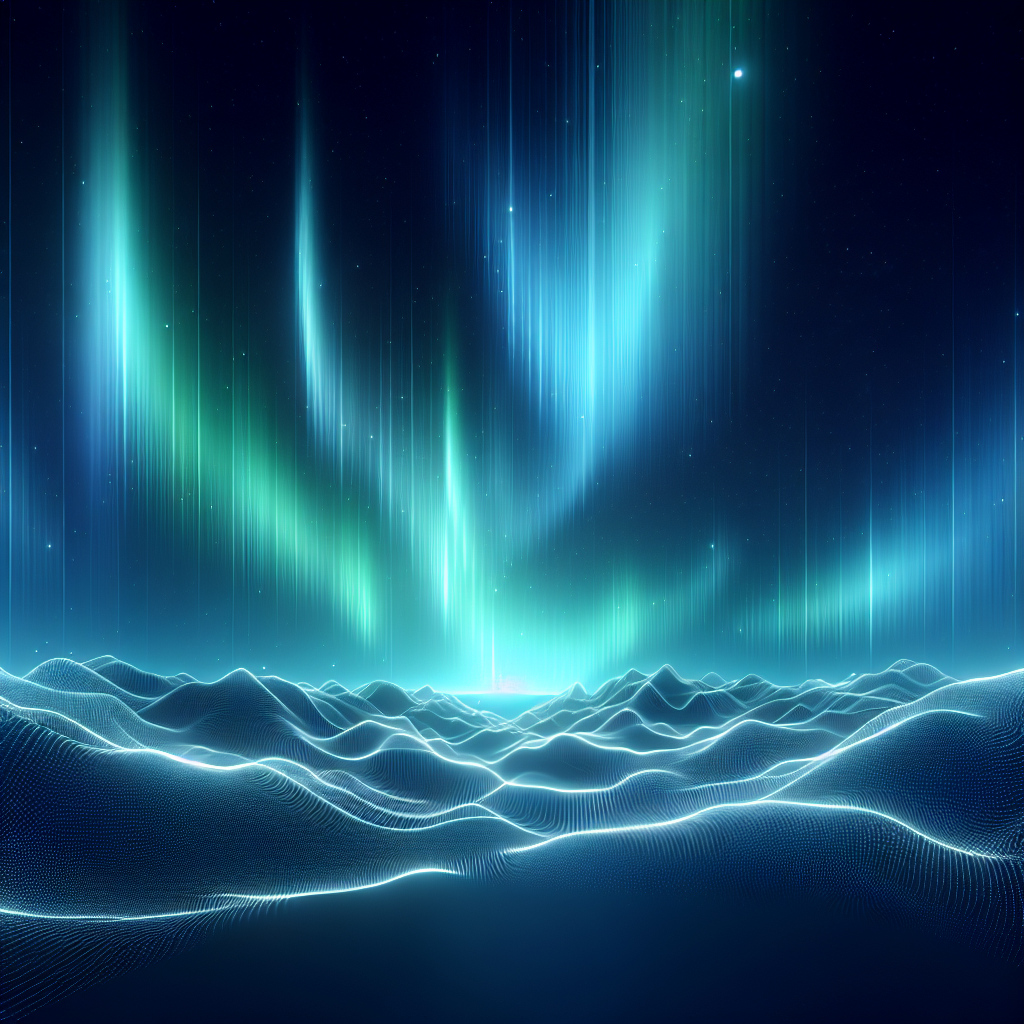

The Enchanting Dance of Aurora: Nature's Light Show
Imagine a celestial ballet of vibrant colors swirling across the night sky, captivating all who gaze upon it. This mesmerizing phenomenon is known as the aurora, a natural light display that occurs in the polar regions of the Earth. The aurora, also referred to as the Northern Lights (Aurora Borealis) in the Northern Hemisphere and the Southern Lights (Aurora Australis) in the Southern Hemisphere, is a result of interactions between the solar wind and the Earth's magnetic field. These dazzling displays have been observed and marveled at by humans for centuries, with records dating back to ancient times. The aurora occurs when charged particles from the sun collide with gases in Earth's atmosphere, creating a stunning array of colors and patterns that dance across the sky.
The science behind the aurora is as fascinating as the display itself. When the sun emits a stream of charged particles known as the solar wind, these particles travel through space and eventually reach Earth. Our planet is protected by a magnetic field, which deflects most of these particles. However, some particles become trapped in the Earth's magnetosphere and are funneled towards the polar regions. As these particles collide with gases like oxygen and nitrogen in the atmosphere, they release energy in the form of light, creating the beautiful auroras we see.
The colors of the aurora depend on the type of gas involved in the collision and the altitude at which the interaction occurs. Oxygen at higher altitudes can produce red auroras, while at lower altitudes, it can create green hues. Nitrogen, on the other hand, can result in purples, blues, and pinks. The intensity and frequency of auroras are influenced by solar activity, with more frequent and vivid displays occurring during periods of high solar activity, such as solar storms.
Auroras are not only a visual spectacle but also a subject of scientific study. Researchers use them to understand the complex interactions between the Earth's magnetic field and solar wind, which can have implications for satellite communications and power grids. Additionally, studying auroras helps scientists learn more about the behavior of the sun and its impact on our planet.
For those lucky enough to witness an aurora, it is an unforgettable experience that connects us to the wonders of the universe. Whether you're in the Arctic Circle or the southern reaches of New Zealand, the aurora serves as a reminder of the beauty and complexity of the natural world. So, next time you find yourself under a clear, dark sky in the right location, look up and enjoy nature's most spectacular light show!