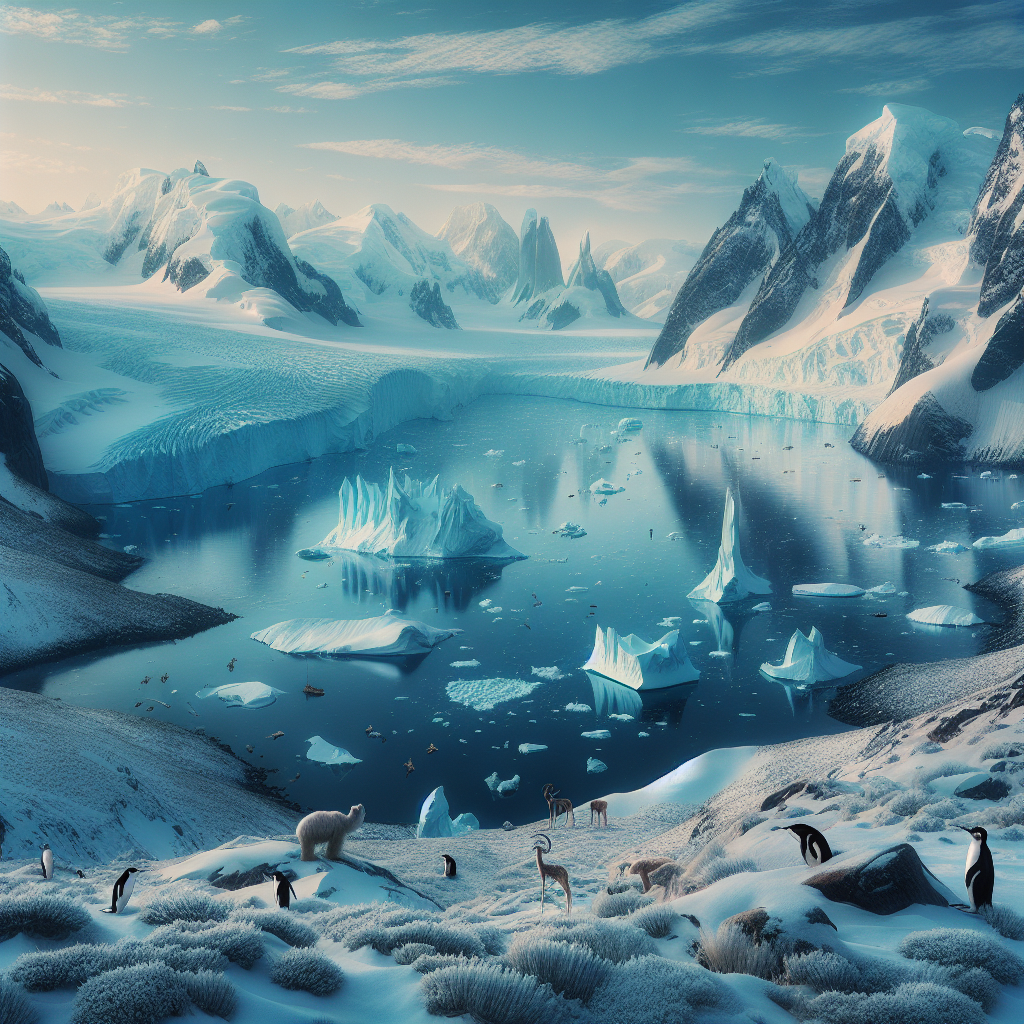

Frozen Horizons: Exploring Argentine Antarctica
In the vast, icy reaches at the bottom of the world lies an enthralling contradiction—a place so hostile yet so full of life and wonder: Argentine Antarctica. So what’s the story? Who is involved, what really happens down there, when did this all start, where exactly is it, and why should we care? Well, to crack the iceberg, Argentina has been actively maintaining a presence in this frozen paradise since 1904, establishing multiple research bases to study the unique environment and its myriad secrets hidden under layers of ice. This intriguing effort aims to understand the profound implications it has on global climates and ecosystems. With temperatures that can drop to a chilling -80°C and winds that make you feel like you're standing on nature's treadmill, researchers flock here to unlock mysteries that can change how we perceive Earth itself.
Now, picture this: Argentina, a country known for its vibrant culture and verdant landscapes, extends its influence to one of the most desolate places on the planet—Antarctica. This white wilderness is not just something you see in glossy calendars; it’s a site of ambitious scientific exploration and ecological significance. Argentina claims a sector of Antarctica covering approximately 965,597 square kilometers, a part illustrated on maps but not internationally recognized due to the Antarctic Treaty.
A Brief History of Argentine Stakes in Antarctica
Argentina's fascination with Antarctica isn't just a modern endeavor. It dates back to over a century ago. The country’s first formal foothold on the continent was established in 1904 with the construction of Orcadas, the oldest permanent human settlement in Antarctica. This tiny station laid the groundwork for Argentina’s future exploits, marking the beginning of a legacy intertwined with ice and discovery.
Over time, Argentina expanded its presence by building several other stations, such as Marambio, Esperanza, and Belgrano. Each outpost serves a unique purpose—from biological research at Esperanza Station to the comprehensive meteorological and geological studies at Marambio Airbase. These bases aren't just pebbles on ice; they're strongholds of human endurance and intellectual inquiry, brimming with the zeal that fuels scientists worldwide.
The Science Boom in Argentine Antarctica
What's it like to work in the world's coldest lab, you ask? Well, it's a cocktail of excitement and challenge. Research in Argentine Antarctica ranges across a plethora of fields including meteorology, climatology, geology, and biology. Argentine scientists often brush shoulders with researchers from all corners of the globe, forming collaborative networks as boundless as the snow itself.
One of the main objectives is to understand the impacts of climate change by studying ice cores, which are natural time capsules harboring ancient air bubbles. These bubbles can offer important insights into Earth’s past climate conditions and atmospheric composition. Imagine holding in your gloved hand, not just ice, but a gateway to Earth 800,000 years ago. It's a thrilling expertise that underscores how interconnected we are with this seemingly distant world.
Moreover, the region is a hotspot for biological studies due to its unique ecosystems. Despite being a giant icebox, life here is surprisingly resilient. The Antarctic waters are teeming with krill—a crucial part of the marine food web—supporting penguins, seals, and whales that thrive against all climatic odds. Deciphering these ecological dynamics helps scientists predict how ecosystems globally might react to environmental changes.
Political Stakes and the Antarctic Treaty
Let's touch on the fact that Argentine Antarctica exists amid a whirlpool of diplomatic negotiations. Geopolitically, it's fascinating. Underpinning all territorial claims is the Antarctic Treaty System, a unique international agreement signed in 1959 by 12 countries including Argentina. The treaty designates Antarctica as a scientific preserve and bans military activity on the continent.
While Argentina claims a pie slice of the icy cake, the treaty puts all territorial claims on hold, fostering an atmosphere of international cooperation. This diplomatic stalemate is not a dead-end but an invitation for a collective guardianship of this frontier, focusing solely on peaceful scientific inquiry and environmental protection.
Why Should We Care About This Chilly Buckle?
Enter the global perspective. Research conducted in Argentine Antarctica isn't just academic learning for the books; it has far-reaching implications. The insights gained here help address climate phenomena like rising sea levels, melting glaciers, and shifting ocean currents. These phenomena aren’t isolated; they ripple across the planet, affecting weather systems, agriculture, and ultimately human livelihoods everywhere.
Furthermore, grasping the ecological framework of Antarctic life sheds light on evolutionary biology and adaptability. The resilience of Antarctic species is akin to a live experiment on survival strategies, unraveling how life molds itself in extreme environments—which might even inspire innovations in sustainable living in our warming world.
In summary, Argentine Antarctica isn’t just some remote frontier; it's a crossroad of science, diplomacy, and ecological wonder. It represents humanity’s enduring quest for knowledge, driven by curiosity and responsibility to understand and protect the planet we call home. So next time you cradle a warm cup and find yourself gazing at a map, remember that beneath the icy whiteness of Argentine Antarctica lies a deep, interconnected narrative of exploration and hope.