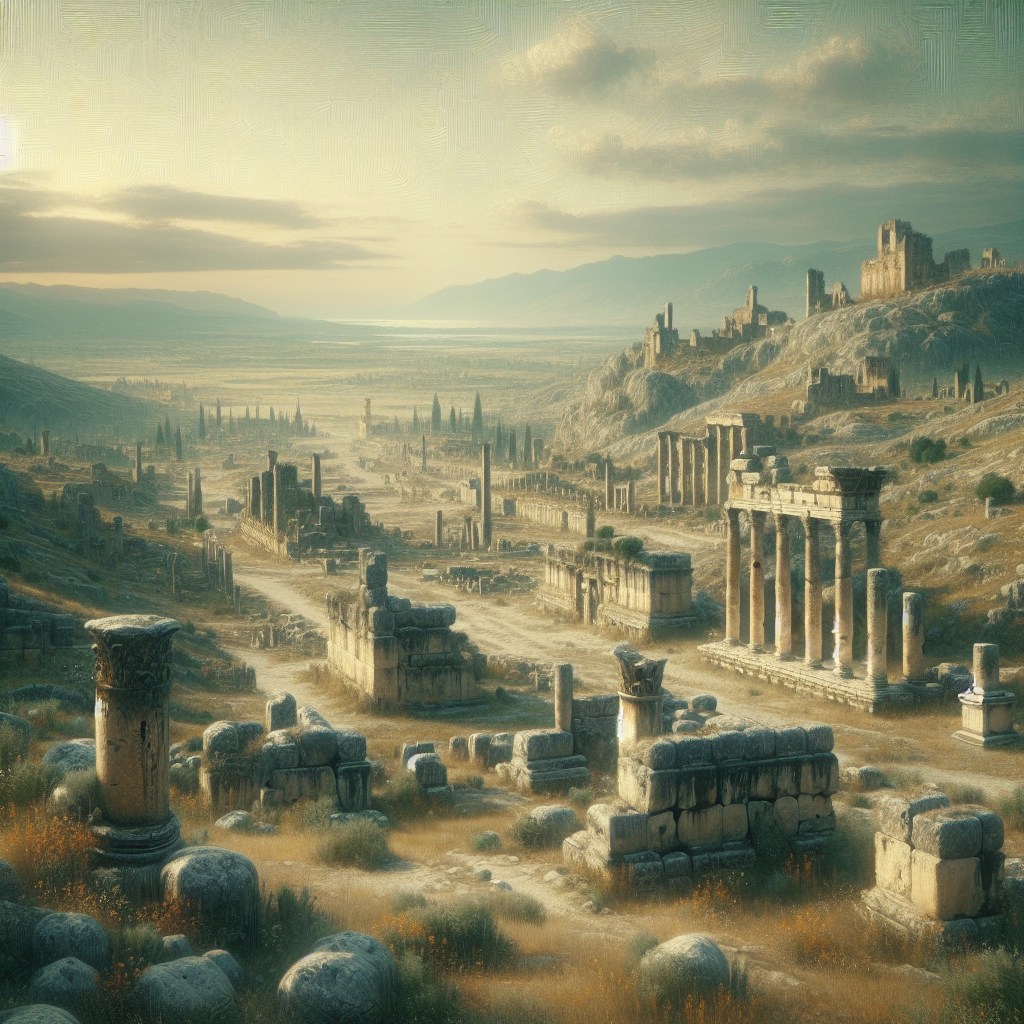

Have you ever stumbled upon a lost city that feels like a time capsule buried beneath the sands of history? Apamea in Phrygia is one such enchanting ancient city, which, at its zenith, was a bustling urban hub of commerce and culture. Nestled in modern-day Turkey, Apamea's tale begins in the 3rd century BCE, when it was founded by the command of King Antiochus I Soter of the Seleucid Empire. This enigmatic city was strategically located along trade routes that connected the east and west, making it a melting pot where merchants, scholars, and artisans gathered like bees to honey.
Apamea was named after the king's mother, Apama, and swiftly rose to prominence due to its fertile surroundings and advantageous position. Imagine a city where the murmurs of Greek merchants mingled with the chants of Phrygian priests—within its walls, a vibrant tableau of cultural and economic life unfolded. Much like modern cities that thrive on diversity, Apamea was a testament to human ingenuity and cooperation.
Archaeology buffs, are you ready to embark on a journey through Apamea's ruins? The city's remnants offer a tantalizing glimpse into its glorious past. One might start their exploration at the vast agora, the beating heart of any ancient city. This central marketplace was more than just a place to buy goods; it was a social forum where ideas were exchanged as readily as currency. Imagine rows of bustling stalls filled with silk, spices, and pottery, with the air thick with chatter and the scent of exotic herbs.
A short walk from the agora lies the theater of Apamea, a majestic venue where the echoes of past performances still stir the imagination. Capable of seating over 15,000 spectators, this theater showcased plays and competitions, reinforcing the cultural vibrancy of Apamean life. The architectural prowess evident in its construction is a tribute to human creativity, reminding us that art has always been an integral part of human civilization.
Yet, the marvels of Apamea did not stop at commerce and entertainment. This city was also a nurturing ground for scholarly pursuits and religion. The philosophical debates and learned discussions that occurred within its halls reveal a society deeply engaged with intellectual pursuits. Apamea's connection to ancient religions, particularly the cult of Zeus, is evidenced by inscriptions and artifacts that still whisper stories of divine supplication.
Through its pulsating life, Apamea's influence extended far beyond its physical borders, shaping trade and ideas across Phrygia and beyond. However, like many ancient cities, Apamea's trajectory was influenced by a series of tumultuous events. Roman conquest, natural disasters like earthquakes, and shifting trade routes all played roles in the city's gradual decline.
Today, visiting Apamea is akin to walking through the pages of an ancient history book. Archaeologists continue to unveil its secrets, piecing together a picture of daily life from pottery shards, coins, and architectural debris. Each artifact recovered speaks to our interconnectedness, underscoring that the threads of human civilization are deeply woven together through time and space.
From a scientific perspective, studying Apamea is like unwrapping a gift that keeps on giving. The site provides insights into urban planning, economic systems, and cross-cultural interactions, contributing to our understanding of ancient world dynamics. For the optimist in all of us, Apamea stands as a reminder of the potential that emerges from blending diverse cultures and ideas—a legacy still reflected in today’s multicultural societies.
In conclusion, Apamea in Phrygia is more than just an archaeological site; it is a vibrant reminder of humanity's enduring spirit. As we decipher its story stone by stone, we learn about our past and gain perspectives that illuminate our future. This journey of learning and discovery is one that we, as a global community, continue to undertake with excitement—a voyage through time that remains endlessly hopeful and enlightening.