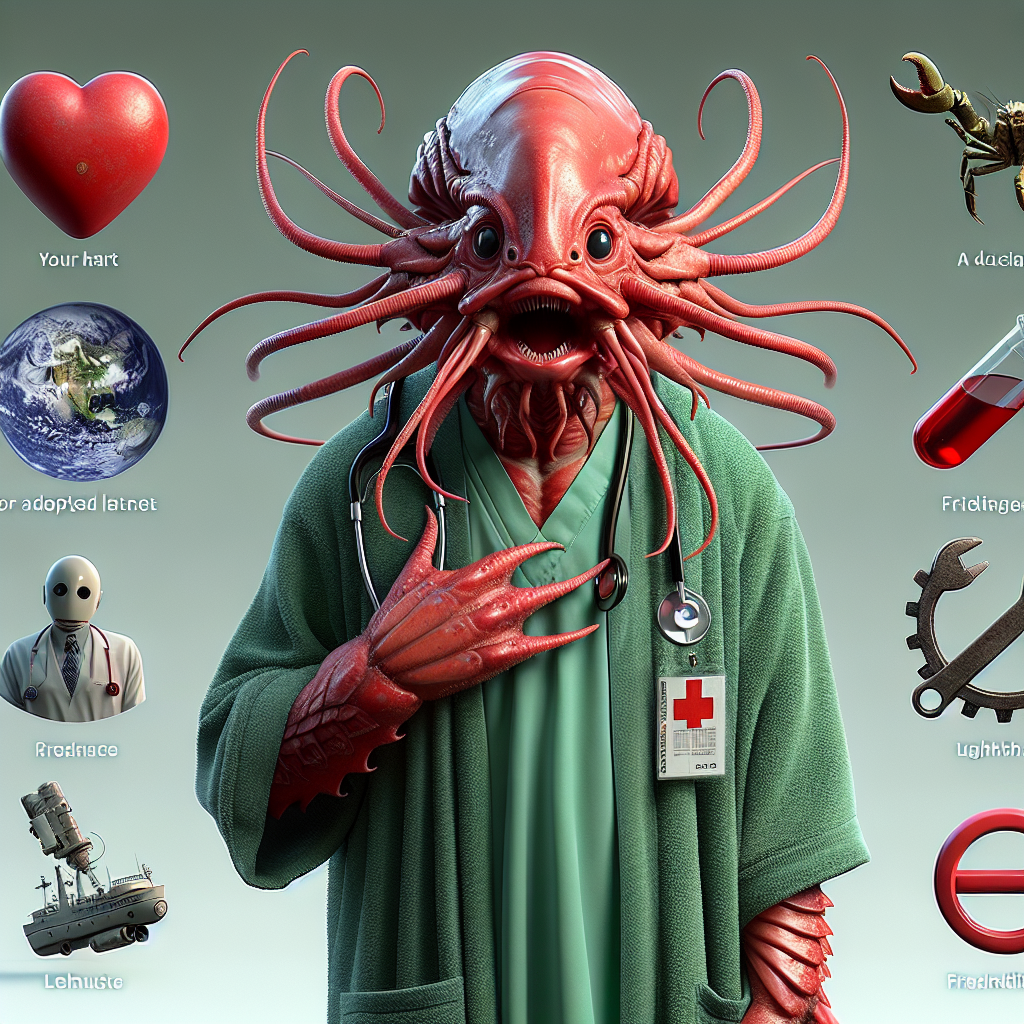

Imagine living in a future where you're an alien doctor with a penchant for seafood and a questionable medical degree. Enter Zoidberg, the eccentric crustacean-like alien from the animated series 'Futurama'. Created by Matt Groening and debuting in 1999, 'Futurama' introduced viewers to a world full of futuristic gadgets and bizarre science fiction scenarios, with Zoidberg often as the butt of the joke. Living in New New York, Zoidberg works at Planet Express, a delivery service company, where he manages to botch almost every medical procedure. Yet, fans have a soft spot for his bumbling antics, underscoring how the show effortlessly blended humor with social commentary on contemporary issues.
Zoidberg's character is a fascinating study in contrasts. Despite having the title of a doctor, Zoidberg's actual proficiency in human medicine is as dubious as his understanding of social cues. His unfortunate financial status—one of the running gags of the series—is a poignant reflection of economic disparities exacerbated by systemic capitalism. This juxtaposition of Zoidberg's professional ineptitude and his dire economic situation strikes a balance between comedy and critique, leading audiences to appreciate his unassuming charm while considering the ridiculousness of societal norms.
Zoidberg's unique appearance—with his lobster-like qualities and quivering tentacles—sets him apart in the universe of 'Futurama'. Yet behind the humorous exterior is a character often depicted as lonely and longing for connection. This speaks volumes about the human condition and our own desires for companionship and acceptance. In a world that seems to prioritize personal gain and social status, Zoidberg's struggles are undeniably relatable, especially to younger audiences who may feel alienated by societal standards.
One can easily argue that Zoidberg is intended to be a critique of healthcare systems' deficiencies. His constant failure as a doctor could be seen as a commentary on how knowledge and skill in medical fields shouldn't be measured solely by titles or degrees. His inability to heal his friends only adds to the comedic layers of the show but also serves as an allegory for how the healthcare system often fails those in need.
Given the world we live in today, marked by rapid technological advancement and digital communication, Zoidberg is an intriguing symbol of what it means to feel outdated or left behind. Representing those overlooked by progress or regarded as irrelevant, Zoidberg beautifully portrays both the hopefulness and sadness that coexist in such a reality. His jovial nature and earnest attempts at friendship make him a figure of empathy, drawing laughter with one claw and offering a somber reminder of isolation with the other.
Even with the humor, it's clear that Zoidberg maintains a naïve optimism that hints at a more profound resilience. This quality resonates with audiences, especially Gen Z, who face the harsh confluence of hyperconnectivity and social disconnection. These aspects of Zoidberg highlight the irony of the digital age—where communication is instantaneous, yet true connection feels elusive. It serves as a reminder of the importance of embracing imperfections and fostering meaningful relationships.
Critics have pointed out that Zoidberg's shtick might be overdone, a tired punchline in a highly technologically advanced setting. Yet, supporters of the character argue that he embodies the essential need to laugh at one's flaws and incompetence. 'Futurama', through Zoidberg's misadventures, portrays how society often treats those who don't fit neatly into boxes of success and competency. This acknowledgment of the outliers and misfits is particularly significant for fans who don't subscribe to conventional paths defined by external expectations.
Despite the show's comedic lens, Zoidberg's portrayal is nuanced enough to make viewers question their perceptions of worth, intelligence, and societal value. The societal embrace of productivity and success as proxies for worth are deftly criticized with Zoidberg's character, who in his perpetual state of failure, reveals the absurdity in valuing people this way. While the laughter he incites is one of embarrassment and discomfort, it opens a dialogue on inclusivity and self-worth.
Ultimately, Zoidberg stands as an anti-hero, challenging capitalist connotations of success and drawing attention to the beauty of failure and resilience. His simplicity and absurdity offer a profound narrative beneath the laughter, asserting that even amid futuristic dreams and technological fantasies, there is space for self-reflection and empathy.