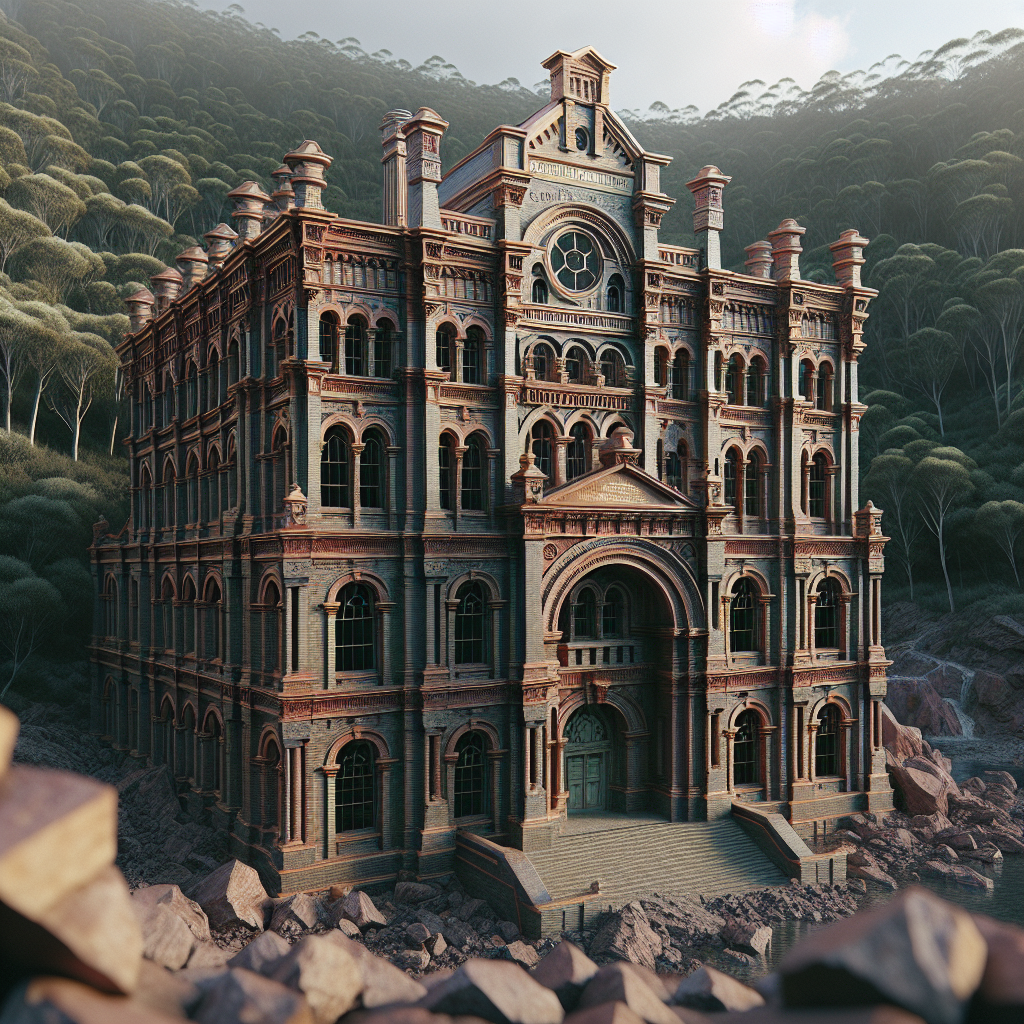

Nestled in the rugged terrain of Tasmania, the Zeehan School of Mines and Metallurgy might sound like the backdrop for a steampunk novel, but its real-world impact was nothing short of revolutionary. Established in 1892, during a booming period for Australian mining, the school was created to formally educate and upskill the flood of prospectors who flocked to this mineral-rich region. Housed in the mining town of Zeehan, the school was strategically placed at the heart of Tasmania's mining industry, fully embracing the culture of innovation and education that defined that era.
The minds behind this institution knew that digging for precious metals required more than sheer muscle. It required training—a sophisticated understanding of geology, chemistry, and engineering. The school opened its doors to students eager to mine the depths of knowledge as much as the ground beneath their feet. Courses included the inscrutable alchemy of metallurgical science and the structured logic of engineering principles, all designed to create a new breed of professionals who could bring method to the madness of mineral extraction.
Zeehan, during this time, wasn’t just a location; it was a bustling hub of industry. The Silver City, as it was known, flourished with the comings-and-goings of miners, engineers, and intellectuals. The school wasn’t just a place for academic learning but also a community focal point that drew people from varying walks of life to share their insights and experiences.
Despite its promise and strategic location, the school's lifespan was relatively short, closing in 1910. The closure was due to the depletion of accessible minerals and a shift in the mining industry's epicenter elsewhere. Yet, even its closure cannot overshadow the impact it had during its 18 years of operation. Students from different backgrounds had a place to learn not only about harnessing natural resources but also about the pioneering spirit that powered one of the world's richest mining districts.
From a modern perspective, remnants of the Zeehan School of Mines and Metallurgy continue to serve as educational artifacts. They represent both the zeal for discovery prevalent in that age and a pivotal moment in Tasmanian education history. Even in its absence, the school contributed significantly to the mining industry’s development, having trained individuals who once charted the course of metallurgical advances and geological discovery.
Historical snapshots like these remind us of the important role educational institutions play in their communities. Education is not just about reading books and passing exams. It’s about engaging with the world, promoting progress, and achieving innovation. Institutions like the Zeehan School of Mines and Metallurgy stand as testaments to education’s power in fostering economic, social, and technological growth.
Gen Z, often dubbed digital natives, may find it curious to comprehend how education could be tied so intrinsically to a location and a moment in time. Today’s learning is virtual and boundless, breaking free from geographic constraints. Yet, looking back at places like Zeehan offers a powerful perspective on how communities once grounded their identity and future in very physical spaces of learning.
This perspective presents its own dichotomy. The convenience of online education today is undeniable, allowing us to juggle multiple commitments with ease. Yet, some argue it lacks the in-person community engagement and shared sense of purpose that schools like Zeehan facilitated. They suggest that while digital forums are abundant, they might not replicate the closeness of real communities formed around shared educational missions.
Balancing these views, we might ponder: can we draw inspiration from the past, adapting its community-centric approach to align with contemporary needs? In many ways, history and modernity are already melding. We've seen the rise of co-working spaces that encapsulate a homely feel reminiscent of community schools. Online learning platforms create forums and discussion areas that emulate campus interactions.
Though the Zeehan School of Mines and Metallurgy is long gone, its legacy within educational domains remains. It wasn’t simply a school of rocks, but a landmark in learning, transformation, and community resilience. As the minerals it taught students to extract, its narrative is valuable—etched into Tasmania's history, embedded in educational philosophies, and inspiring future generations to leverage learning as a pillar for societal progress.