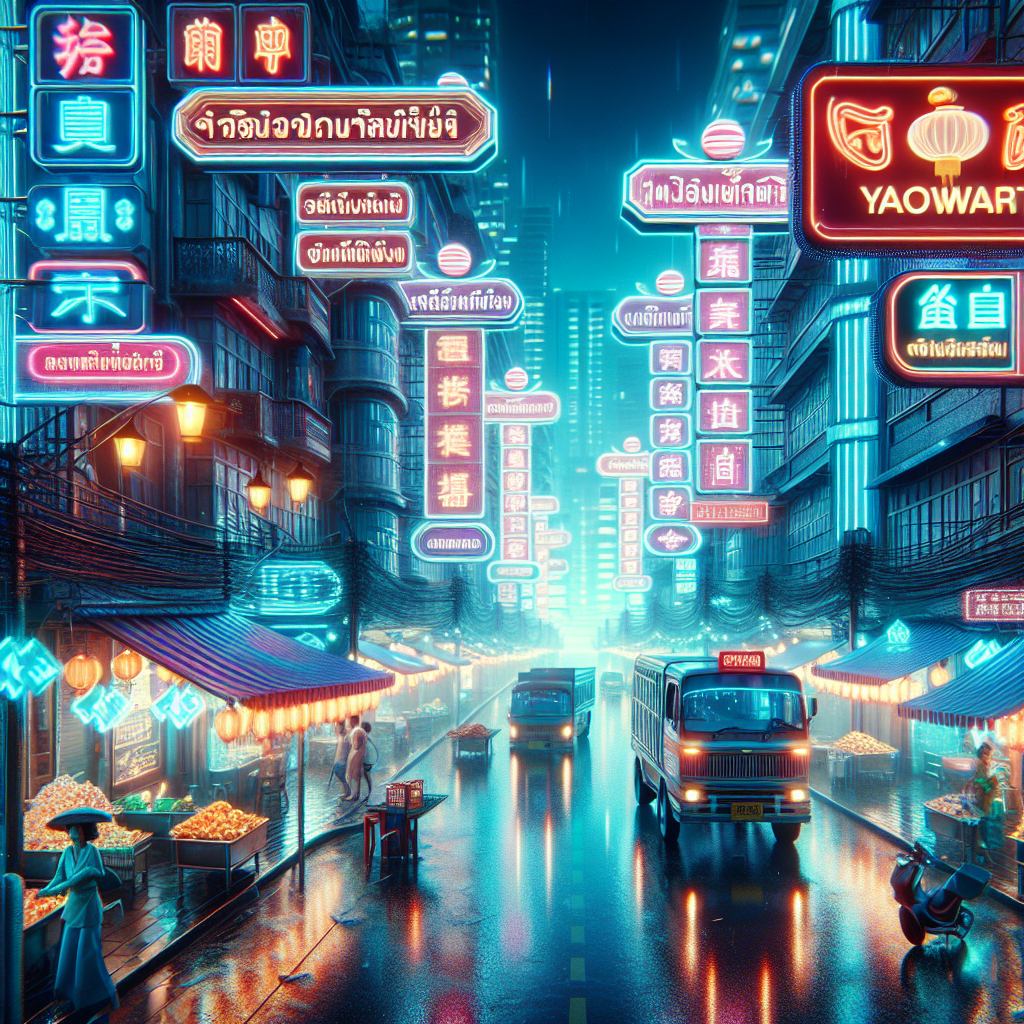

Yaowarat Road, often described as the noisy and nourishing artery of Bangkok, is where tradition meets modernity, creating a vibrant pulse of life at every corner. This street, nestled in Bangkok's revered Chinatown, is a kaleidoscope of colorful street food, historic architectural gems, and the persistent hum of activity, day and night. Whether you’re a local or a traveler, stepping onto Yaowarat Road is stepping into a world where the past and present collide in the most delicious way. This bustling district is not just loved by Bangkok's residents; it’s a global fascination. Since the 19th century, Yaowarat has been the culinary and cultural core for Chinese immigrants, bringing with them their rich traditions and recipes. Walk along its path, and you’ll encounter a sensory feast that includes the aromatic wafts of grilled meats, stir-fried noodles, and sweets soaked in rich, syrupy concoctions.
The heart of Yaowarat beats strongest at night, when flickering neon lights flicker beneath the moon’s gaze and food vendors set up their stalls. It's a place that doesn’t sleep. Tourists and city dwellers weave together in a frantic yet joyous dance across the sidewalks. There’s an infectious energy in this constant movement. Finding a seat at one of the many street-side eateries might challenge your patience, but what awaits is a gastronomic reward.
However, not every story here is without its complexity. While Yaowarat Road is a culinary paradise, it also reveals a narrative of struggle. Chinatown’s older population often grapples with the rapid urbanization and commercialization of their home. Many small traditional businesses, the backbone of this community, face closure due to rising real estate prices and a younger population seeking opportunities elsewhere. This isn't just a Bangkok phenomenon but a global narrative as cities evolve and heritage struggles to find its place.
The food is where Yaowarat shines brightest. Sticky rice with mangoes, an array of dim sum, and comforting bowls of fish ball noodles are just a taste of what one can expect. Each dish tells a story of the rich cultural tapestry and history of its people. Street hawkers, skilled in their craft, pass down recipes that are decades, if not centuries, old. The hustle of preparing food right in front of your eyes adds to the allure and authenticity of the experience. You’re not just eating here; you’re part of a living tradition.
Beyond food, you’ll find temples and gold shops, symbols of the community's deep-rooted beliefs and their entrepreneurial spirit. The Chinese temple Wat Traimit, housing the world’s largest solid gold Buddha statue, and the small, incense-filled stalls invite you into a quieter realm amidst the street’s chaos. They serve as reminders of cultural heritage resilience and the significance of spirituality in daily life.
The visual aesthetic of Yaowarat, with its narrow roads and tightly packed stalls, tells its own story. The architecture mixes old and new, creating a feeling of nostalgia alongside a vibrant zest for the future. The bustling road is lined with signs in diverse arrays of color and script, sometimes hard to decipher yet impossible to resist reading. It’s a reflection of the intersection where history meets progress.
Critics of the tourist swarm argue it dilutes the authenticity, transforming Yaowarat into a commercial spectacle rather than preserving its integrity. Yet, there’s something powerful in witnessing this cultural exchange and understanding the balance between preservation and adaptation. For many locals, tourism has become a lifeline in uncertain economic times.
Navigating Yaowarat Road’s dense network can be overwhelming, especially where the roads taper and the sidewalks narrow. Yet, in the chaos, there’s an intimacy you won’t find elsewhere. As you dodge the scooters and slip past crowds, you’re learning to inhabit a shared space and embrace the community’s openness.
Despite its challenges, Yaowarat remains a testament to human connection, ingenuity, and the city’s ability to mold tradition within its modern framework. It’s an embodiment of a living, breathing community bustling with activity. It beckons the curious to explore, taste, and understand its deep-rooted cultural significance, whether you find yourself there on a humid afternoon or beneath a starlit sky, with neon-streaked signboards casting an unending glow over its street.