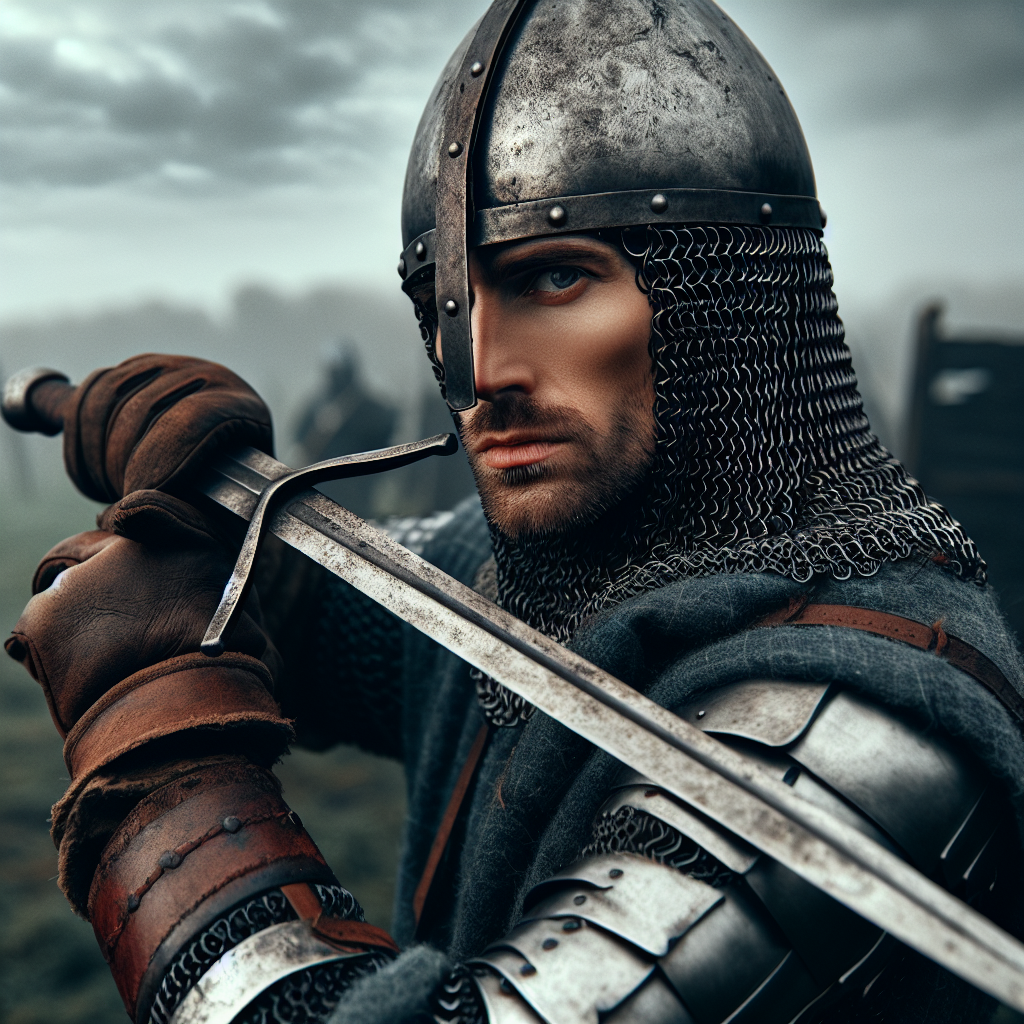

Imagine a world where knights rode across the battlefield with courage burning brighter than the sun. One such legendary knight was Jean Poton de Xaintrailles, a striking figure of medieval warfare and the chivalric romances that color our imaginations. A hero of the Hundred Years' War, Xaintrailles joined the ranks of those who defended France against English incursions, a mission championed by the charismatic Joan of Arc.
Jean Poton de Xaintrailles was born in the late 14th century, around 1390, in Gascony, a region known for its fierce warriors and wine. He became a key military commander during the tumultuous period of conflict between England and France from 1337 to 1453. His role was pivotal during campaigns to reclaim French territory, making him a resilient figure of resistance and national pride.
Xaintrailles's story blends the valor of real military endeavors with the romance of imagining a past rich with loyalty and honor. He fought alongside and sometimes against other great figures of his time, under difficult conditions that tested his mettle and shaped his reputation. From sword-drawn skirmishes to grand sieges, every battle was tinged with the emotion of liberation that swept through France during his tenure.
Xaintrailles's association with Joan of Arc places him firmly in the narrative of legends. His victories added to the momentum that Joan's religious and nationalist fervor inspired. Together, their united front was instrumental in lifting the Siege of Orléans in 1429, a turning point in the war. As her chief lieutenant, he never hesitated on the battlefield, driven by loyalty to Joan’s cause and their shared vision for a free France. His actions at Orléans symbolized the fierce spirit that Joan embodied, showcasing his ability to adapt strategies, rally troops, and provide crucial support that would lead to victory.
Beyond the battlefield, Xaintrailles's life was marked by shifting allegiances and political intrigue. His involvement in various negotiations speaks to his ability to navigate the complex web of feudal loyalties and rivalries that defined the era. While his martial exploits are well-documented, it is fascinating to think about the personal sacrifices that came with his dedication to his nation. Like any historical figure, Xaintrailles was a man of his time, bound by the limitations and opportunities provided by his social position.
However, Xaintrailles wasn’t just about banner-waving bravado. His legacy, while primarily remembered through tales of warfare, also includes moments of peacemaking and diplomacy. After years of conflict, he participated in negotiations that contributed to the Treaty of Arras in 1435, a major milestone that helped taper fighting. This ability to shift from sword to pen paints a picture of a leader well-versed in the dual arts of war and peace.
Acknowledging the spectrum of human experience, some might argue that glorifying military leaders does little to address the broader challenges of the era, like systemic poverty and the sheer human cost of war. The suffering civilians faced during such lengthy conflicts often goes unmentioned, though it's crucial to acknowledge this reality. In that regard, history demands compassion from us, urging reflection on both the heroics and the tragedies of the past.
Nevertheless, the life of Xaintrailles offers a window into the challenges and triumphs that defined his time. It serves as a reminder of the complexity of human motivation and action, beyond simple narratives of good versus evil. Today’s world still grapples with the shadows of war, and revisiting stories like Xaintrailles’s can guide us toward understanding human resilience and the relentless pursuit of peace.
It’s important to recognize multiple perspectives, including the critics' views, who might contest the romanticized depiction of knights and wars. Acknowledging the lack of power faced by women and peasants during these times is vital. People who filled these roles add layers of depth to historical narratives, prompting us to look beyond stereotypes to understand the full human cost and experience.
Historical stories like Xaintrailles's illuminate paths to understanding the past's complexity, inviting us to think critically about what is celebrated and why. In our reflections on the past, we also craft sustainable strategies for progress. Indeed, while tales of valor highlight triumphs, they also caution us against the simplest solutions to complicated conflicts. Truly, reflecting on such stories can guide Gen Z—those shaping the future—toward advocacy for peace, justice, and equality across boundaries and borders.