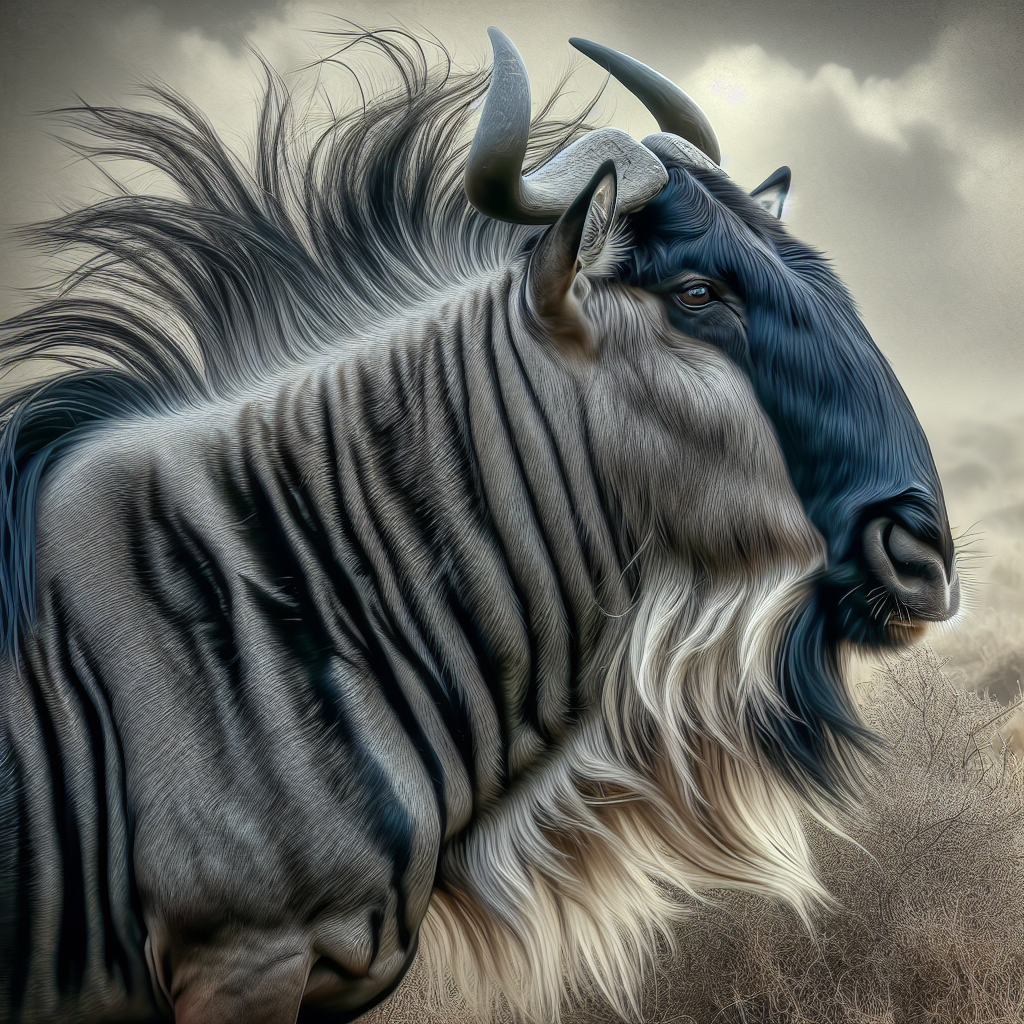

The Great Migration: Western White-Bearded Wildebeest on the Move
Imagine a sea of hooves and horns, stretching as far as the eye can see, moving in unison across the vast plains of Africa. This is the spectacle of the Great Migration, a natural phenomenon involving the Western white-bearded wildebeest. These remarkable creatures, known scientifically as Connochaetes taurinus mearnsi, embark on an epic journey each year, primarily across the Serengeti in Tanzania and the Maasai Mara in Kenya. This migration, which occurs annually, is driven by the search for fresh grazing and water, as the seasons change and resources become scarce.
The Western white-bearded wildebeest is a subspecies of the blue wildebeest, distinguished by its distinctive white facial hair. These animals are not just a marvel to behold; they play a crucial role in the ecosystem. Their migration patterns help maintain the balance of the savannah, as they graze on grasses, which in turn promotes new growth and provides food for other species. The migration also supports a diverse range of predators, including lions, hyenas, and crocodiles, which rely on the wildebeest as a primary food source.
The journey of the wildebeest is fraught with danger. As they traverse the plains, they face numerous threats, from predators lurking in the shadows to the perilous river crossings where many are lost to the jaws of waiting crocodiles. Yet, despite these challenges, the wildebeest continue their journey, driven by an instinctual need to survive and thrive. This migration is not just a test of endurance for the wildebeest but also a testament to the resilience of nature.
While the migration is a natural wonder, it is not without its controversies. Conservationists and local communities often find themselves at odds over the management of the land and resources. The migration routes of the wildebeest can sometimes clash with human activities, such as agriculture and development. This has led to debates about how best to protect the migration while also respecting the needs and livelihoods of local people. It's a delicate balance that requires cooperation and understanding from all parties involved.
From a conservation perspective, the Great Migration is a reminder of the importance of preserving natural habitats. The wildebeest's journey is a symbol of the interconnectedness of life on Earth, highlighting how the actions of one species can have far-reaching impacts on others. Protecting the migration routes and the ecosystems they support is crucial for maintaining biodiversity and ensuring the survival of countless species.
For those fortunate enough to witness the migration, it is an awe-inspiring experience. The sight of thousands of wildebeest moving as one, driven by an ancient rhythm, is a powerful reminder of the beauty and complexity of the natural world. It is a spectacle that draws tourists from around the globe, providing a significant boost to the local economies of Tanzania and Kenya. This influx of visitors underscores the importance of sustainable tourism practices that benefit both the environment and the communities that call these regions home.
The Great Migration of the Western white-bearded wildebeest is more than just a journey; it is a story of survival, adaptation, and the enduring power of nature. It challenges us to think about our role in the world and how we can coexist with the incredible diversity of life that surrounds us. As we continue to grapple with environmental challenges, the migration serves as a poignant reminder of what is at stake and the urgent need to protect our planet for future generations.