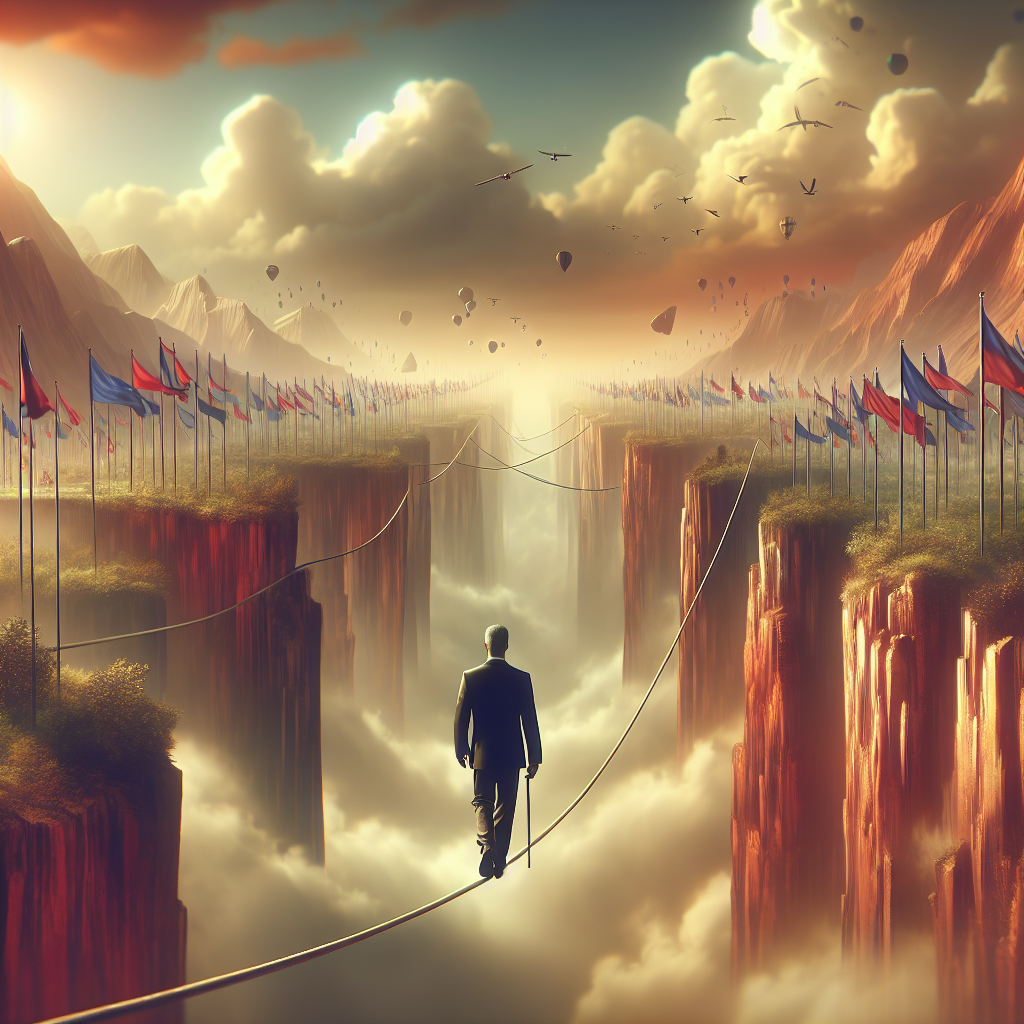

Walking a Tightrope: The Balancing Act of Modern Politics
Imagine trying to balance on a tightrope while juggling flaming torches; that's what modern politics feels like today. In the United States, the political landscape has become increasingly polarized, with Democrats and Republicans often finding themselves on opposite sides of the spectrum. This division has been particularly evident since the 2016 presidential election, which took place across the country and highlighted the deep-seated differences in political ideology. The reasons for this polarization are complex, involving a mix of social, economic, and cultural factors that have evolved over time.
The rise of social media has played a significant role in amplifying these divisions. Platforms like Twitter and Facebook have become battlegrounds for political discourse, where echo chambers often reinforce existing beliefs rather than encourage open dialogue. This has made it challenging for individuals to engage with opposing viewpoints, as algorithms tend to show content that aligns with one's existing beliefs. As a result, people are less likely to encounter differing opinions, which can lead to a more entrenched and divided society.
On the other hand, there are those who argue that this polarization is not entirely negative. Some believe that it has brought important issues to the forefront, forcing politicians and citizens alike to confront topics that were previously ignored or downplayed. Issues such as racial inequality, climate change, and healthcare have gained significant attention, prompting necessary discussions and, in some cases, action. This perspective suggests that polarization can be a catalyst for change, pushing society to address its most pressing challenges.
However, the downside of this division is the gridlock it creates in government. With both parties often unwilling to compromise, passing legislation becomes a Herculean task. This has led to frustration among citizens who feel that their government is not effectively addressing their needs. The inability to find common ground has resulted in a lack of progress on critical issues, leaving many feeling disillusioned with the political process.
Despite these challenges, there are efforts to bridge the gap between opposing sides. Grassroots movements and organizations dedicated to fostering dialogue and understanding are emerging across the country. These initiatives aim to create spaces where individuals can engage in meaningful conversations, share their perspectives, and find common ground. By focusing on shared values and goals, these efforts hope to reduce polarization and promote a more collaborative political environment.
It's important to recognize that while polarization presents significant challenges, it also offers an opportunity for growth and change. By acknowledging the complexities of the issues at hand and striving to understand opposing viewpoints, individuals can work towards a more inclusive and equitable society. This requires empathy, open-mindedness, and a willingness to engage in difficult conversations.
Ultimately, walking the tightrope of modern politics requires balance, patience, and a commitment to finding solutions that benefit everyone. While the path may be fraught with challenges, it also holds the potential for progress and positive change. By embracing the diversity of perspectives and working together, society can navigate the complexities of the political landscape and build a brighter future for all.