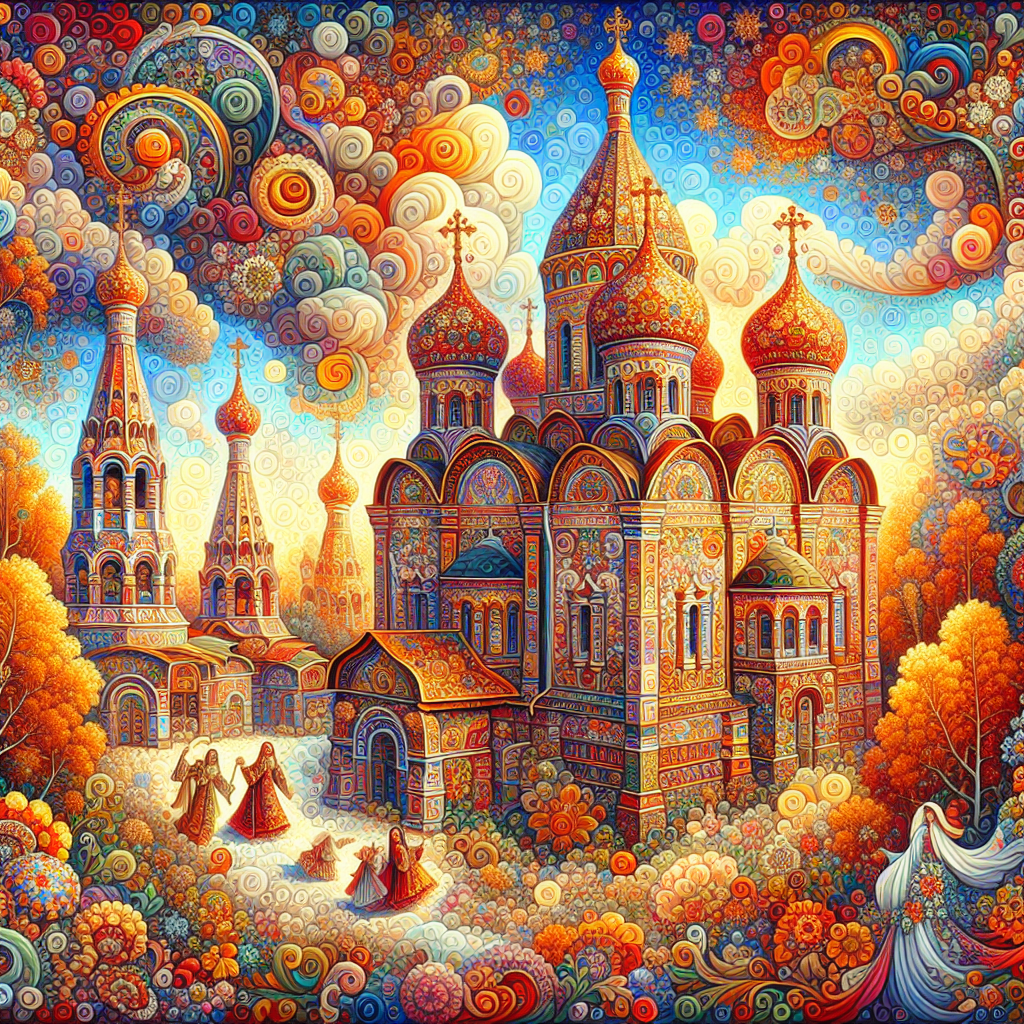

The Enigmatic World of Vladimir Krantz
Vladimir Krantz, a name that might not ring a bell for everyone, was a Russian artist whose work captured the serene beauty of the Russian landscape. Born in 1913 in the small town of Mozdok, Krantz's life spanned a tumultuous period in Russian history, including the Russian Revolution, World War II, and the Cold War. Despite the chaos around him, Krantz found solace in painting, creating works that depicted the tranquil and untouched nature of his homeland. His art became a refuge not only for himself but also for those who viewed it, offering a glimpse into a world of peace and natural beauty.
Krantz's journey into the art world was not straightforward. He initially pursued a career in engineering, a path that was more stable and practical during the Soviet era. However, his passion for painting could not be suppressed. He began to study art in his spare time, eventually enrolling in the Leningrad Institute of Painting, Sculpture, and Architecture. This decision marked a turning point in his life, allowing him to fully embrace his artistic talents. His dedication to his craft was evident in the meticulous detail and vibrant colors that characterized his landscapes.
The landscapes Krantz painted were often of the Russian countryside, a subject that resonated deeply with him. He had a unique ability to capture the essence of the seasons, from the lush greens of summer to the stark whites of winter. His paintings were not just representations of nature but were imbued with emotion and a sense of nostalgia. For many Russians, his work evoked memories of a simpler time, a connection to the land that was often lost in the rapid industrialization and urbanization of the Soviet Union.
While Krantz's work was celebrated in Russia, it did not gain the same level of recognition internationally. This was partly due to the political climate of the time, which limited the exposure of Soviet artists to the Western world. However, those who did encounter his work were often captivated by its beauty and tranquility. In recent years, there has been a renewed interest in Krantz's paintings, as art collectors and enthusiasts seek out pieces that offer a sense of calm in an increasingly chaotic world.
Critics of Krantz's work might argue that his focus on idyllic landscapes was an escape from the harsh realities of Soviet life. They might suggest that his art lacked the political and social commentary that was prevalent in the work of many of his contemporaries. However, supporters of Krantz would counter that his paintings provided a necessary respite from the struggles of daily life, offering viewers a moment of peace and reflection. In a way, his art was a form of quiet resistance, a reminder of the enduring beauty of the natural world amidst the turmoil of human affairs.
Vladimir Krantz's legacy is one of understated elegance and profound appreciation for the natural world. His paintings continue to inspire those who seek beauty and tranquility, serving as a testament to the power of art to transcend time and place. As we navigate our own complex and often chaotic world, the serene landscapes of Krantz offer a gentle reminder of the simple joys that can be found in nature.