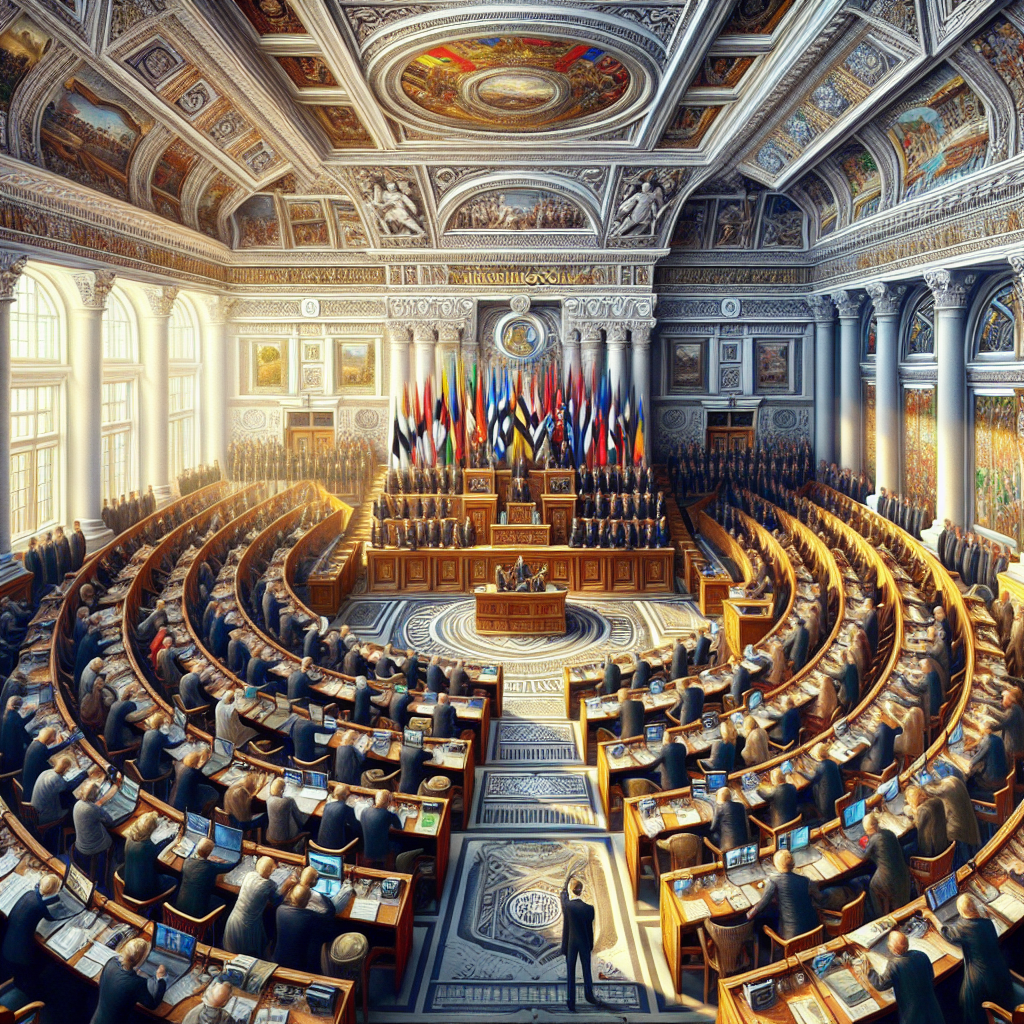

Imagine a political stage set in the dynamic Baltic region, where Estonia was crafting its identity amid a newfound parliamentary democracy. The heart of this setting is the VII Riigikogu, Estonia’s national legislature, which embarked on its journey from 1992 to 1995 in Tallinn. Emerging after the fall of the Soviet Union, the VII Riigikogu holds a pivotal position in Estonian history, acting as an important bridge between eras—one foot in the past and another striving towards a democratic future.
Here's the scene: Early 1990s Estonia, just reclaimed its independence, bustling with the revolutionary spirit of change. The Riigikogu, inaugurated in the autumn of 1992, was the first of its kind to truly express the Estonian people's aspirations after decades of Soviet control. Its mission was to lay down the bedrock of a democratic establishment, sans the autocratic overtones of previous regimes. The initial gathering of 101 members was reminiscent of a collective getting reacquainted with the breath of freedom. Their job wasn't just usual governance; it was crafting a nation anew.
What set the VII Riigikogu apart was its diverse set of political figures. A mix of seasoned politicians and fresh faces from different backgrounds created a dynamic yet sometimes chaotic political atmosphere. Among the significant players, there were quite a few who had experienced the restrictive grip of Soviet rule. They were intent on fostering openness and transparency. However, it wasn't an easy journey. Democracy is not just about elections but about everyday governance. It was tough to transition from controlled decision-making to a more decentralized, transparent, and sometimes messy democratic process.
The elections that led to the formation of the VII Riigikogu were a testament to the Estonian interest in representing various points of view. Voter turnout was enthusiastic, as the citizens were eager for change. Political actors from across the spectrum, from liberals to conservatives, nationalists to progressives, found seats in the assembly. This was both a boon and a challenge. Having a spectrum of parties in parliament ensured that multiple voices were heard. Yet, it also meant challenges in forming a stable government, given the ideological differences.
Much of the Riigikogu's focus was on building a state infrastructure that aligned with Western European standards. They were racing against time to establish a robust legal framework that would facilitate Estonia’s acceptance in broader European institutions. This included fundamental reforms in market regulations, administrative frameworks, and making sure they met the EU's stringent standards for potential accession.
Economic reform was at the top of the agenda for the VII Riigikogu. Estonia needed an economic reboot, and it aimed to become one of the most technologically advanced and business-friendly environments in Europe. Legislators worked on laws that promoted entrepreneurship, nurtured a budding tech industry, and opened up the economy to global markets. The liberal market reforms set Estonia on a path that today sees it as a tech-savvy leader globally.
An exciting piece of this tech revolution was Estonia's launch of its digital services concept, which aimed to make governance more transparent and efficient. Early blueprints for e-governance took shape during this period, planting seeds for what would later blossom into one of the most advanced digital societies.
On the flip side, there was skepticism about these profound political and economic shifts. Transition is rarely painless. Critics worried about the rapid transformations, fearing a loss of traditional values and increased social inequality. Concerns were raised about whether the rush towards Westernization was overshadowing Estonia’s unique cultural identity.
Moving from skepticism to reality, some flaws of such transitions are visible. With every reform, there were opposers and supporters in equal measure. But it’s this dialogue and debate that enriched the Estonian democracy. Disputes and protests were not uncommon, yet they symbolized a healthy democratic atmosphere where freedom of speech was finally respected.
The VII Riigikogu period can also be marked by significant constitutional developments. The adoption of the new Estonian Constitution in 1992 laid the groundwork for all future governance structures. It was revolutionary, legalizing the republic's governance model, affirming fundamental rights, and ensuring checks and balances in the political system.
Fast forward, the VII Riigikogu is seen as more than just a historical period; it's a testament to Estonia’s resilience and capability to transform itself against odds. It provided not just a governance model but also an identity—a footprint on the political and digital global arena.
Looking back, the VII Riigikogu shaped the course for a robust political and economic system, fostering a spirit of innovation. It reminds us how nations can evolve and adapt, no matter the challenges. Witnessing this evolution is like reading a compelling book where each chapter unveils a new side of Estonia's quest for identity and stability. The story of the VII Riigikogu is both a reminder of the past struggles and a beacon for future endeavors.