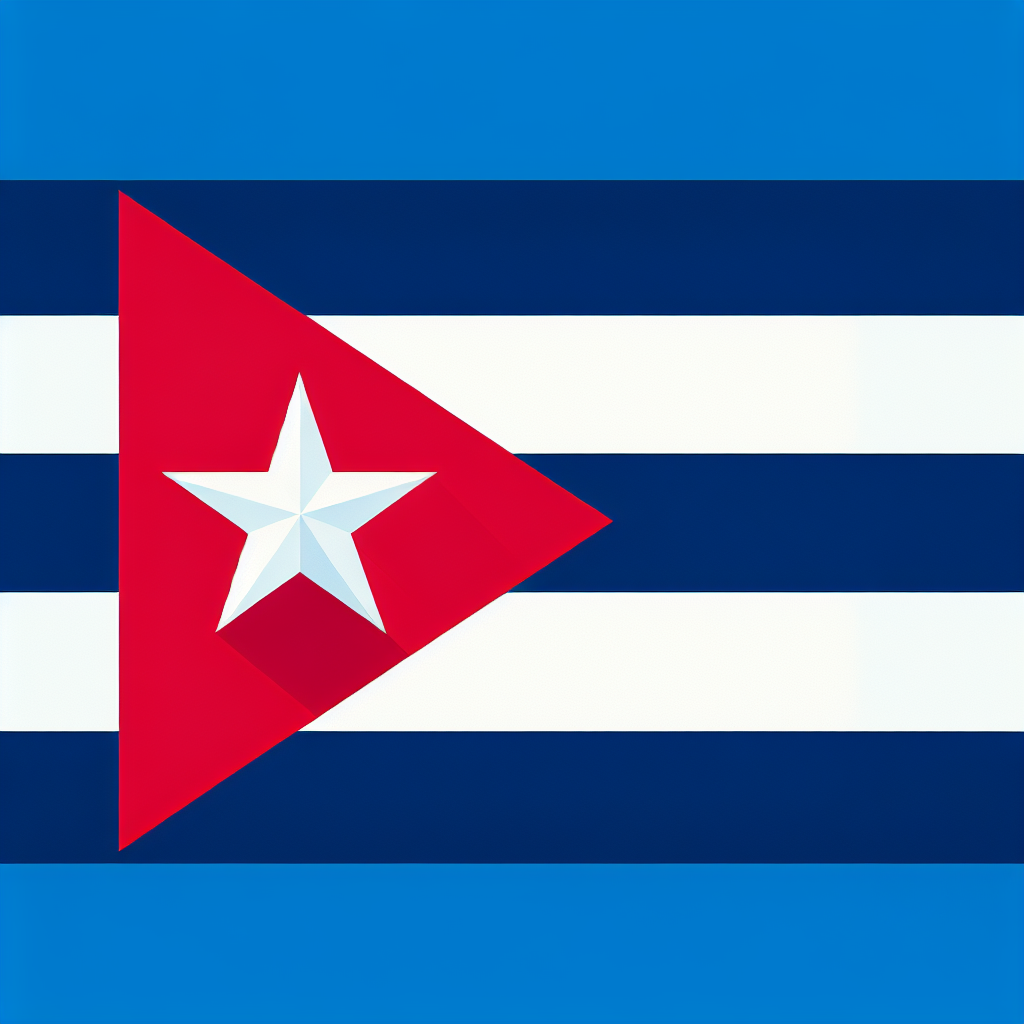

The Vexillum Cubanum: A Symbol of Resilience and Revolution
Imagine a flag that has witnessed revolutions, inspired hope, and stood as a symbol of resilience for over a century. The Vexillum Cubanum, or the Cuban flag, is precisely that. Designed in 1849 by Narciso López, a Venezuelan-born general, and Miguel Teurbe Tolón, a Cuban poet, the flag was first raised in Cárdenas, Cuba, on May 19, 1850. It was officially adopted as the national flag of Cuba on May 20, 1902, when the country gained independence from the United States. The flag's design, with its five alternating blue and white stripes, a red triangle, and a white star, represents the ideals and struggles of the Cuban people.
The Cuban flag's design is rich with symbolism. The three blue stripes represent the three departments into which Cuba was divided at the time: Occidental, Central, and Oriental. The two white stripes symbolize the purity and justice of the patriotic cause. The red triangle stands for the blood shed in the fight for independence, while the lone white star within the triangle signifies freedom and independence. This flag has become a powerful emblem of Cuban identity and pride, both within the country and among the Cuban diaspora worldwide.
The history of the Cuban flag is intertwined with the island's tumultuous past. During the 19th century, Cuba was a Spanish colony, and the desire for independence was growing among its people. The flag was first used by López during his failed attempt to liberate Cuba from Spanish rule. Although his efforts were unsuccessful, the flag became a symbol of the Cuban struggle for independence. It was later adopted by the Cuban Revolutionary Party, led by José Martí, who played a crucial role in the fight against Spanish colonialism.
The Cuban flag's journey did not end with the country's independence from Spain. In the 20th century, Cuba faced new challenges, including political instability and foreign intervention. The flag continued to be a symbol of resistance and resilience, especially during the Cuban Revolution of 1959. Led by Fidel Castro, the revolutionaries overthrew the US-backed dictator Fulgencio Batista, establishing a socialist state. The flag, with its revolutionary connotations, became an emblem of the new Cuba and its defiance against imperialism.
While the Cuban flag is a source of pride for many, it also evokes mixed emotions. For some, it represents a government that has been criticized for its human rights record and lack of political freedoms. The Cuban government, under Castro and his successors, has been accused of suppressing dissent and limiting freedom of expression. For those who fled the country seeking political asylum, the flag can be a reminder of the hardships they endured. However, for others, it remains a symbol of hope and the enduring spirit of the Cuban people.
The Cuban flag's significance extends beyond the island's borders. It has become a symbol of solidarity for leftist movements worldwide, representing the fight against colonialism and imperialism. The flag is often seen at protests and rallies, carried by those who identify with its revolutionary spirit. It serves as a reminder of the power of symbols in uniting people and inspiring change.
In recent years, the Cuban flag has also become a popular cultural icon. It is featured in art, music, and fashion, often used to express Cuban identity and pride. The flag's vibrant colors and bold design make it a striking visual element, capturing the attention of people around the world. It is a testament to the enduring legacy of the Cuban struggle for independence and the resilience of its people.
The Vexillum Cubanum is more than just a piece of fabric; it is a symbol of a nation's history, struggles, and aspirations. It represents the resilience and determination of the Cuban people, who have faced numerous challenges throughout their history. Whether viewed as a symbol of hope or a reminder of past hardships, the Cuban flag continues to inspire and unite people across the globe.