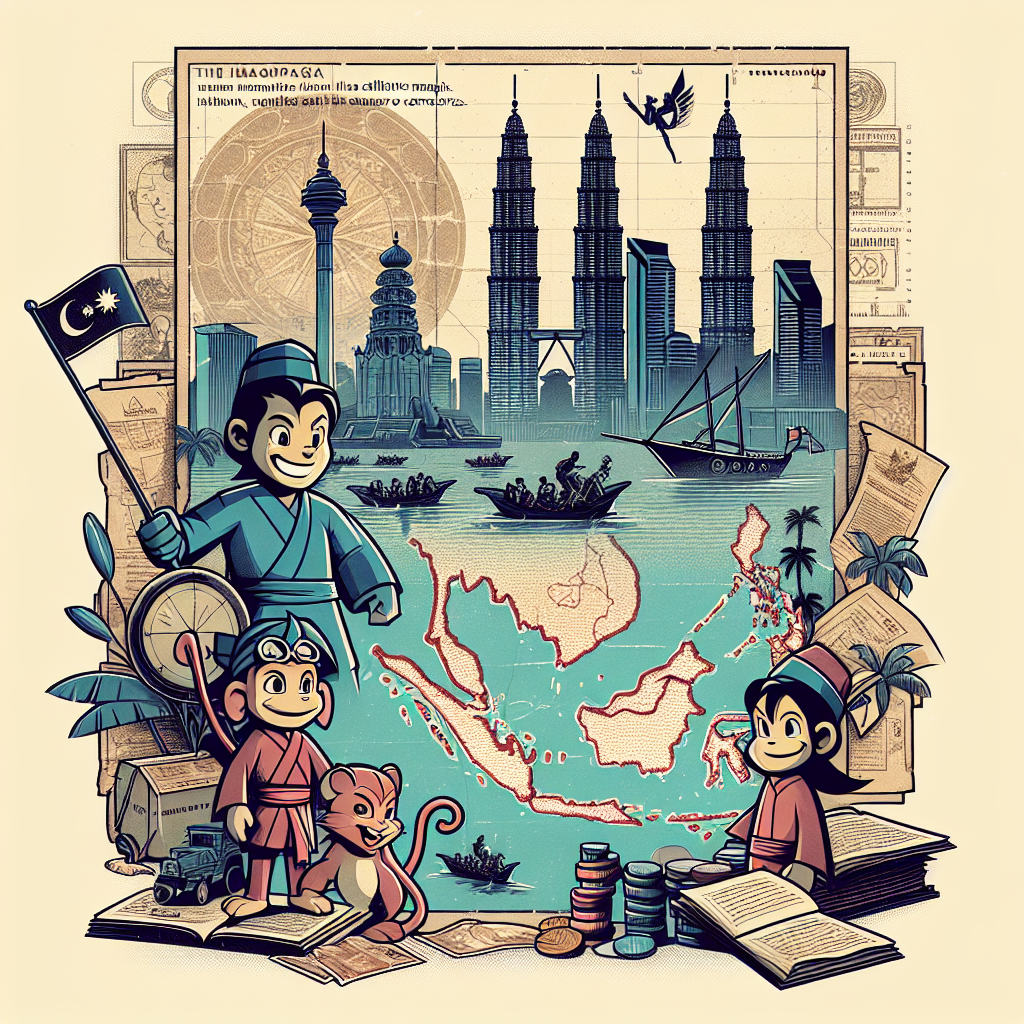

In a world dominated by Mickey Mouse and Dragon Ball Z, could a small fishing village in Malaysia have spawned an animated icon? Usop Sontorian, a name that might not ring a bell for those outside the Southeast Asian circuit, is Malaysia's first locally produced animated series, premiering in 1996. Created by the ingenious Kamn Ismail, this groundbreaking show was the brainchild of managing to capture the essence of kampung life – the simple yet eventful rural lifestyle that forms the backbone of Malaysian culture.
Usop, the protagonist, is much like the typical young Malaysian boy; spirited, curious, and with a knack for finding adventure in the everyday world of his village. He, along with his friends Abu, Dol, and Mei Mei, represents the multicultural tapestry of Malaysia itself, each character bringing their cultural nuances to life in a vibrant, animated form.
But what makes Usop Sontorian truly special is not just its lighthearted, humorous tales. The series stands out because it was more than just a cartoon; it was a cultural milestone. It offered Malaysian children relatable heroes who looked like them, spoke their language, and tackled issues relevant to their day-to-day lives. This was not merely an animated series, but a cultural artifact that resonated with an entire generation.
Many regard Usop Sontorian as a notable example of non-western media capturing the hearts of a local audience. It served as an answer to the prevailing dominance of Western shows that were often Eurocentric in theme and perspective. Young audiences could finally see themselves represented, and this was vital to building local pride and identity.
Usop Sontorian's impact was not just confined to the nostalgic hearts of Malaysian millennials and Gen Zers. By critically exploring social themes such as family dynamics, friendship, and respect across cultural and religious divides, the series skillfully provided life lessons without being preachy. This highlights the revolutionary potential of local media in reflecting shared values and influencing societal perspectives.
Yet, any cultural artifact, especially a politically liberal one, isn't immune to criticism. While some viewers embraced its candid approach to cultural diversity, others found certain portrayals stereotypical or oversimplified. This highlights the delicate balance creators needed to strike between humor and sensitivity – a balance that continues to be relevant in media today as discussions around representation grow more nuanced.
Furthermore, the series faced challenges, particularly as digital media became prevalent. The animation style, innovative for its time, began to look outdated compared to international standards growing rapidly in technological sophistication. This shift left Usop Sontorian as a fond memory for those who grew up with it, rather than a continually evolving series capable of captivating a new generation wired into the digital age.
Economic constraints and limited global reach also played a role in the show's stagnation. Despite its initial success, domestic support for local productions wavered, often overshadowed by the draw of international franchises. The industry surrounding Usop Sontorian did not grow as rapidly as it could due to a lack of substantial investment and policy support, issues that echo broader struggles within many local arts scenes worldwide.
On a broader spectrum, Usop Sontorian's story is a lesson on the importance of fostering creative industries in non-western contexts. It demonstrates how local stories can shape global perceptions and foster cultural pride – actions that inspire a sense of belonging and identity within communities. From a politically liberal perspective, advocating for these kinds of narratives encourages a more diverse world media landscape that speaks for varied human experiences, transcending not just borders, but biased storytelling.
Ultimately, Usop Sontorian was more than an endearing animation. It was a stepping-stone towards stronger local representation within media, paving the way for Malaysian content creators to explore and express crucial narratives reflecting their realities. These efforts inch us closer to a media environment where kids anywhere can see heroes that truly reflect them – a world where storytelling becomes a powerful force for social cohesion and understanding.