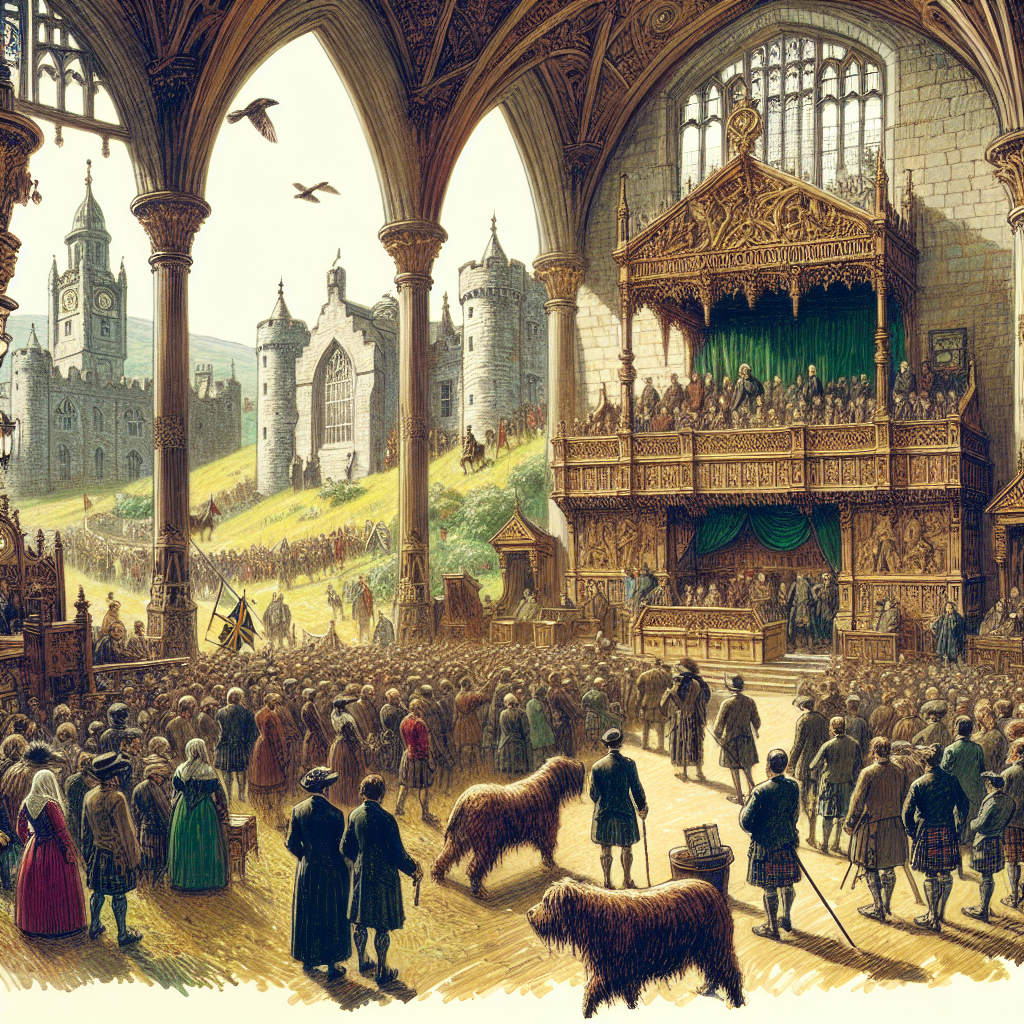

Imagine a political assembly so ancient it's like the Game of Thrones with way fewer dragons and more democracy. Enter Tynwald, the parliament of the Isle of Man, believed to be the oldest continuous parliamentary body in the world, tracing its roots back over a millennium. Picture this: an island nestled in the Irish Sea, a mysterious place where Vikings once roamed and where politics have hardly aged at all.
Tynwald is fascinating not just because it's old but because it’s a living relic in a rapidly changing world. On July 5th, people gather at Tynwald Hill, a green mound rumored to be built from earth from each of the island’s parishes, to witness laws proclaimed in both English and Manx Gaelic. This ceremony nods to Viking traditions, as the hill itself may have served as a site for assemblies long before Tynwald became formalized. While the current Isle of Man legislative assembly dates back to 979 AD, who knows what decisions and declarations were made in hushed voices on that hill before records began?
Why does Tynwald persist? You could say it's a tribute to the steadfastness of heritage but also a testament to the adaptability of tradition. Political systems are constantly evolving, yet Tynwald has maintained its structure and purpose despite waves of modern politics washing upon its shores. In a world where liberal ideas often advocate for change and inclusion, Tynwald is an example of stability. Yet, its ritualistic gatherings serve as a reminder of how the past stays with us, shaping our present.
During its iconic outdoor meetings, the Lieutenant Governor, acting as the Queen’s representative, declares new legislation. Critics might argue this scene feels a tad ceremonial and archaic. And yes, while it oozes symbolism, the heart of Tynwald’s power beats within its House of Keys and Legislative Council, today treated much like any bicameral legislature elsewhere. Tynwald operates within familiar democratic frameworks, passing laws and debating policies, much like parliaments across the globe.
Tynwald Day celebrations might look a bit quirky to outsiders but for the locals, it’s a proud display of national identity. It's Manx National Day, a public holiday filled with official ceremonies, proud speeches, and lively festivities. Local artisans and performers showcase the island's culture, creating a vibrant tapestry of tradition and contemporary life. For someone attuned to a liberal political stance that emphasizes progressiveness, the spectacle might seem like an anomaly. Yet, in soaking up Tynwald's rich historical narrative, the day becomes a poignant celebration of human diversity and cultural heritage.
Engaging with the idea of Tynwald from a Generation Z perspective invites us to reflect on politics' role in culture and identity. Gen Z has grown up in a digital age where information is at fingertips, revolutionizing how they engage with politics. While many issues make the headlines, like climate change, social justice, and economic inequalities, Tynwald presents a slower political rhythm that defies today’s fast-paced media cycle. This ancient assembly acts as a gentle reminder that while some systems seem ancient, they still have relevance when adapted to reflect the current ethos.
Yet, there's no shying away from the critiques. Some view Tynwald as antiquated. In an era where pressing issues demand immediate attention, the slow-moving processes of traditional parliament can appear not only obsolete but ineffective. Detractors might point to global environmental and social crises and argue the need for more agile governance structures. However, adaptability doesn’t always mean uprooting entirely. Modernizing within the bounds of tradition can yield the best of both worlds—preserving history while addressing today's needs.
Interestingly, Tynwald isn’t just a historical artifact. It's symbolic. It presents a counter-narrative to the ideas shared by liberal politics encouraging reshaping society. Tynwald stands as proof that ancient systems can survive with adaptability. It’s less about shunning modernity and more about ensuring continuity and respecting the past.
Both sides of the political spectrum can find something of value in Tynwald’s story. Conservatives might appreciate its steadfastness and regard for tradition, while those with more liberal inclinations might see its age as a call to innovation, ensuring it stays aligned with contemporary society.
This Manx institution prompts thought about how societies value tradition against the march of progress. It echoes a need to forge paths that doesn’t simply erase the past but incorporates history into the evolution of ideas. In the end, Tynwald is a testament to enduring customs coexisting harmoniously with change. It teaches us that whether in large or small ways, alignment of the old and new can create a society that honors its roots while reaching for the future.