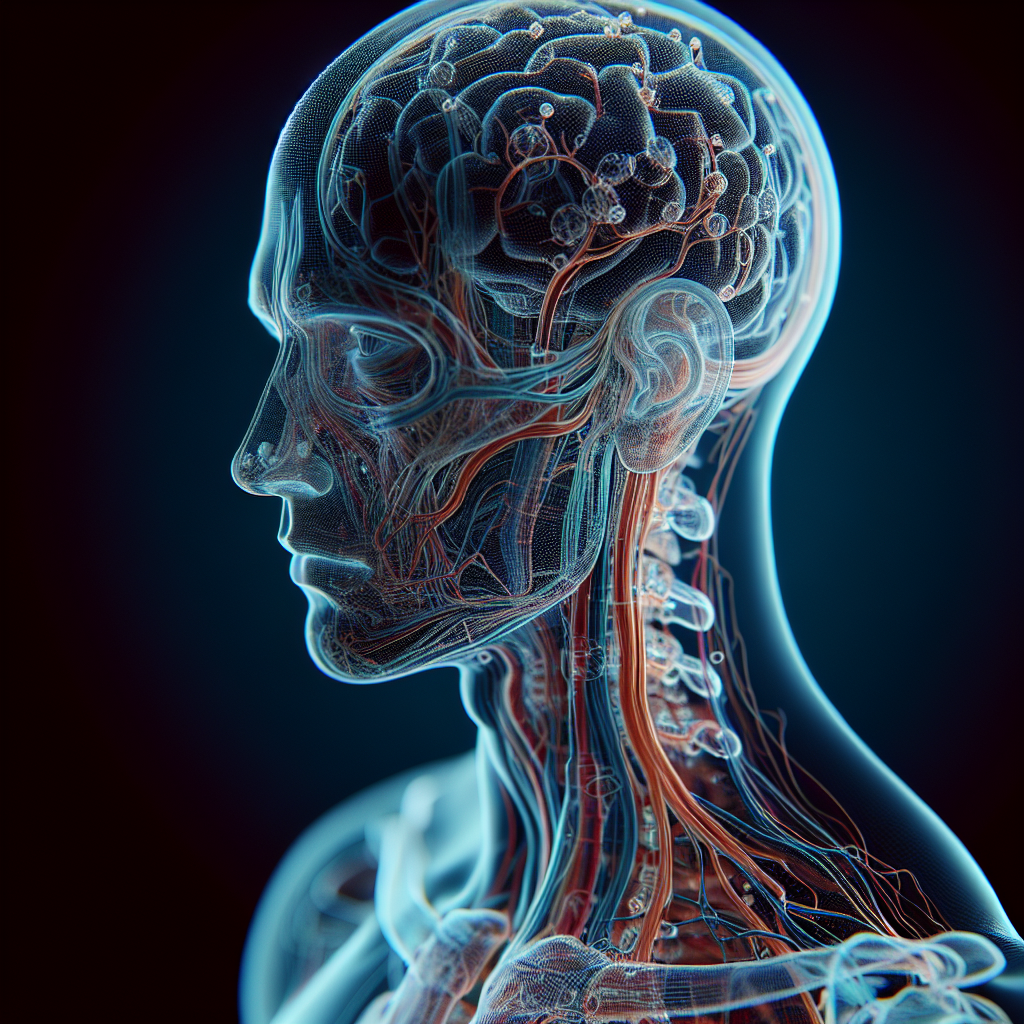

Imagine a world where you can literally see through someone, and not in the metaphorical sense we're so used to saying when trying to understand another's feelings. The Transparent Anatomical Manikin (TAM) offers a peek into the intricacies of the human body that changed the educational landscape in a strikingly visual way. Developed in the mid-20th century, these lifelike educational models offered insights at exhibitions and science museums, especially flourishing in the United States. With their eerie transparency, TAMs have always attracted fascination—becoming not only a tool for learning but a cultural artifact stretching across several decades.
TAMs came into existence because of the demand for an innovative teaching method that went beyond textbooks and static images. In an era when visual education started gaining traction, these manikins showed the human body’s complexity in a format that was engaging, intuitive, and novel. This hands-on experience brought about a sense of wonder and clearer understanding, drawing in learners of all backgrounds, making science accessible, especially to those who might struggle with abstract concepts.
Despite their impressive debut during a time when words couldn’t describe the marvel of seeing a heart setup neatly amid a web of arteries and veins, there are those who critique TAMs as oversimplifying the human body. Skeptics argue these models, while useful, could lead to misconceptions without proper context. Body systems in such manikins are often reduced to colored wires and bulbs that light up, a far cry from the immensely complex, living systems they aim to represent. From that perspective, science educators are reminded of the importance of pairing such models with detailed scientific explanations.
The allure of TAMs isn't just about their educational value; they remain iconic as cultural artifacts, relics of an imaginative past where technology met clay and fiberglass. Collectors and historians alike find themselves captivated by the nostalgia of the models, representing a curious blend of art and science. Some might say this is a testament to human ingenuity and our relentless pursuit of understanding life through any means possible.
In modern classrooms, digital technology now often takes the spotlight where TAMs once gleamed. Virtual reality and sophisticated computer models provide a level of interaction and detail that even the most intricately built manikins cannot. Advanced software can simulate blood flow, cellular processes, and other dynamic biological functions in real time. Proponents of this technology argue that such systems are far superior, offering personalized, interactive experiences that static manikins cannot match.
Yet, there's a charm in the tangible, something that a digital model cannot quite replicate. Holding these iconic models in modern times reminds us of the innovative steps taken by generations before us, inviting Gen Z to reflect on the evolving ways humans have sought knowledge. TAMs might feel like relics, but they're so much more—reminders of our intellectual evolution, symbols of how far we've come in education.
Despite digital advances, TAMs haven’t lost their place in educational contexts for young learners. They serve as a bridge, connecting different learning styles and approaches, from visual to tactile. Even in the scope of augmented reality, the foundational principles introduced by these models persist. They’re testament to seemingly simple ideas leading to revolutionary educational trends.
To better understand TAMs' impact, it’s also enlightening to engage with those who fondly reminisce about seeing them for the first time. For many, these manikins were gateways to a lifelong journey in medicine or science, sparking initial curiosity and wannabe explorer’s delight. Educators recall how students huddled around TAMs, eyes wide with fascination, as a teacher animatedly toggled various systems within them, bringing a lifeless form to an understanding of life's astonishing inner beauty.
Meanwhile, skeptics might reexamine a viewpoint that overly criticizes TAMs' simplicity. Simplification can be a powerful tool, especially when teaching dense, complex subjects to younger audiences, who, after all, are still growing into more nuanced scientific understanding. Thus, a delicate balance must be struck, respecting the limitations of what TAMs can impart while appreciating the foundational spark they can offer.
The conversation about TAMs today might include voices that recognize the role of hybrid learning environments, mixing old tools with new advancements. It's not about one overpowering the other but rather about collaboration. Just as one's anatomical education shouldn't solely rely on a plastic and fiberglass model, neither should it solely depend on a tablet or VR headset.
So, the Transparent Anatomical Manikin is more than a curiosity. It's a symbol of the crossroad between technology and tradition that characterizes much of our contemporary educational landscape. As we continue to chase the future, these models remind us to appreciate the journeys already traveled and to consider how every tool, whether tactile or digital, plays a role in shaping our understanding. This approach allows different generations to connect, respect history while simultaneously embracing future possibilities, stepping forward with revived curiosity that echoes through an ever-continuing echo of educational history.