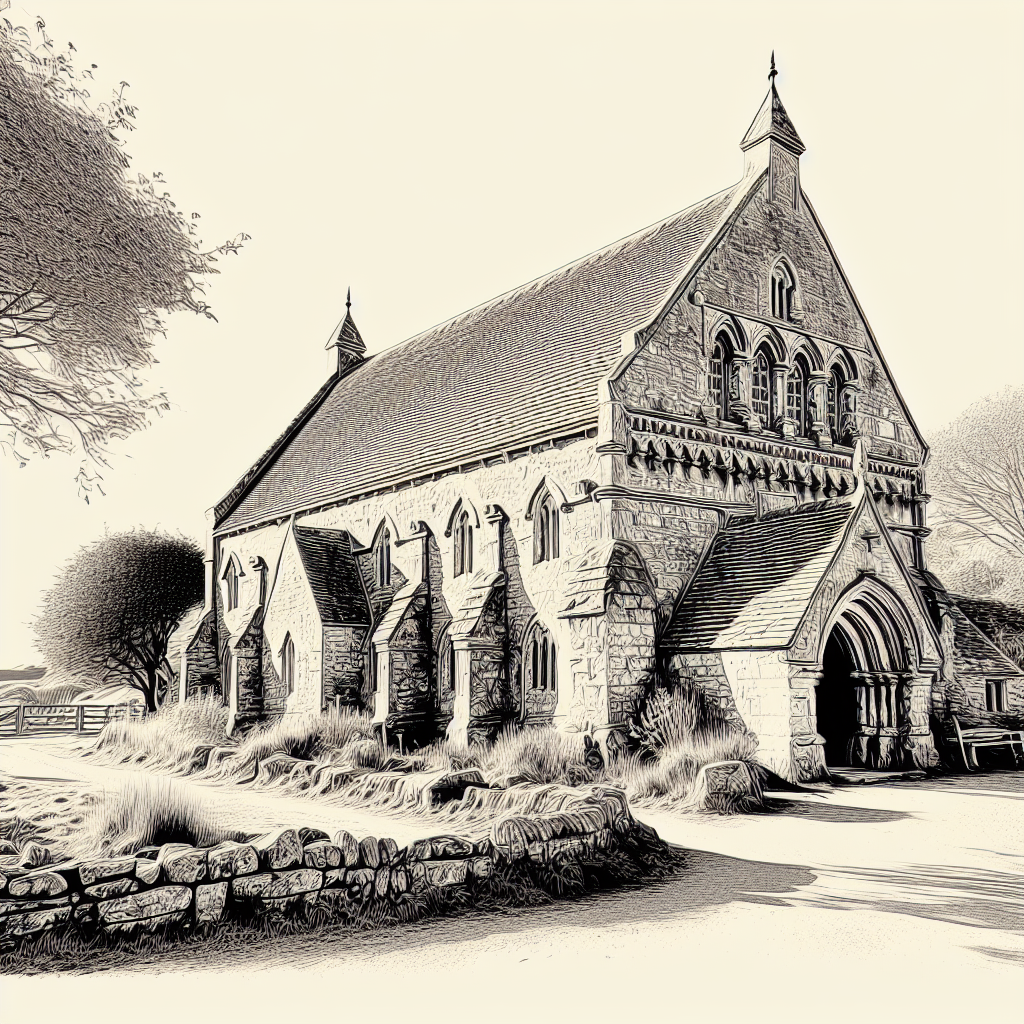

Nestled in the picturesque village of Pilton, there's a historic building that's more than just a set of bricks and stones; it's a relic of history that sparks the imagination. The Tithe Barn of Pilton is a medieval structure with a storybook charm and a past that's woven tightly with the community's fabric. Dating back to as early as the 14th century, this barn was initially a storage house for the church's 'tithes' – a form of tax paid in kind, such as crops, grains, and livestock. Today, it stands just a stone's throw from Glastonbury, a place famous for its music festival, and offers a glimpse into a time when paying one's dues literally meant picking from the earth or tending to the flock.
For centuries, this monumental building with its enduring stone walls and timeless timber roof has held onto stories of the past. Perhaps it's the barn's sheer size that makes it so impressive. Its vastness echoes whispers of yesteryears and holds potential for so many future stories. But these days, the Tithe Barn in Pilton is not just reminding us of the past – it's a vibrant community hub. You might ask why a Gen Z reader should care about an ancient barn standing in a quaint English village. Well, consider this: it’s more than a relic; it’s a testament to sustainable living, a concept now echoing louder than ever in today's climate-conscious conversations.
Imagine this barn as a meeting point where history engages with contemporary culture. It serves as an example of sustainable architecture – buildings that lasted for centuries without making the climate or economic sacrifices associated with modern structures. Stone walls to insulate, natural airflows keeping things cool and dry, it utilized nothing fossil-fuel-driven HVAC systems would be involved in today. These were constructions that respected resources and took the long view, presaging our current debates over climate change.
Yet, beyond the eco-friendly marvel that this barn represents, its role in Pilton has evolved significantly. The Tithe Barn is not just about preserving the past; it's about creating a future rooted in the community and connectivity. Today, it's a favored venue for events, be they weddings, local gatherings, or art exhibitions. In essence, it's become a scene of life’s moments – a place where milestones are celebrated and memories are made. This shift highlights the broader theme of adaptive reuse of historical buildings, integrating the old with today’s needs while maintaining cultural identity.
But let’s also pause and think about the opposing viewpoint: before us is a building that once symbolized a not-so-fair tax system. Paying by tithe was not the same as paying a low-interest loan. It was the church taking a slice of whatever you cultivated – sometimes quite a burden. Was it fair? Medieval farmers might debate that notion with grimaces. The contrast between the barn’s past life and today is stark, as it's now celebrated for its heritage and contribution to the arts. Today, it serves the community by generating revenue through events, reinvesting in the area, and thus turning its history of taking into a future of giving.
While many historical structures face threats of neglect or redevelopment, the Tithe Barn is a shining example of preservation done right. It's championed by those who see historical structures as beacons of educational value and cultural heritage, educational in its practicality, and soulful in its history. The battalion of support it has garnered reminds us of the shared responsibility in conserving our past - a core tenet in progressive beliefs of sharing knowledge.
The barn sits as a relic amid a present where technology often takes precedence. Yet it serves as a reminder, urging visitors to consider what it means to be sustainable, conscious of historical roots while nurturing growth and progress. For the Gen Z reader, who's examining the intersections of past and present, Pilton's barn represents a chance to literally step into history while drawing newer, more relevant connections. It's an invitation to wander between the walls of yesterday while pacing towards the future, instilling a deep appreciation of both where we come from and where we are going.
Ultimately, the Pilton Tithe Barn is more than ancient architecture and history. It's a living, breathing entity of its village - a point of reflection, a pillar of community, and a bridge between eras. Seeing how it stands today as a renovated communal space proves it: preserved past fosters modern creativity. And perhaps, next time when setting foot in the time-weathered barn, one may take a step back and let imagination lithely wander the vast spans of its rustic rafters, pondering stories past, and future possibilities.