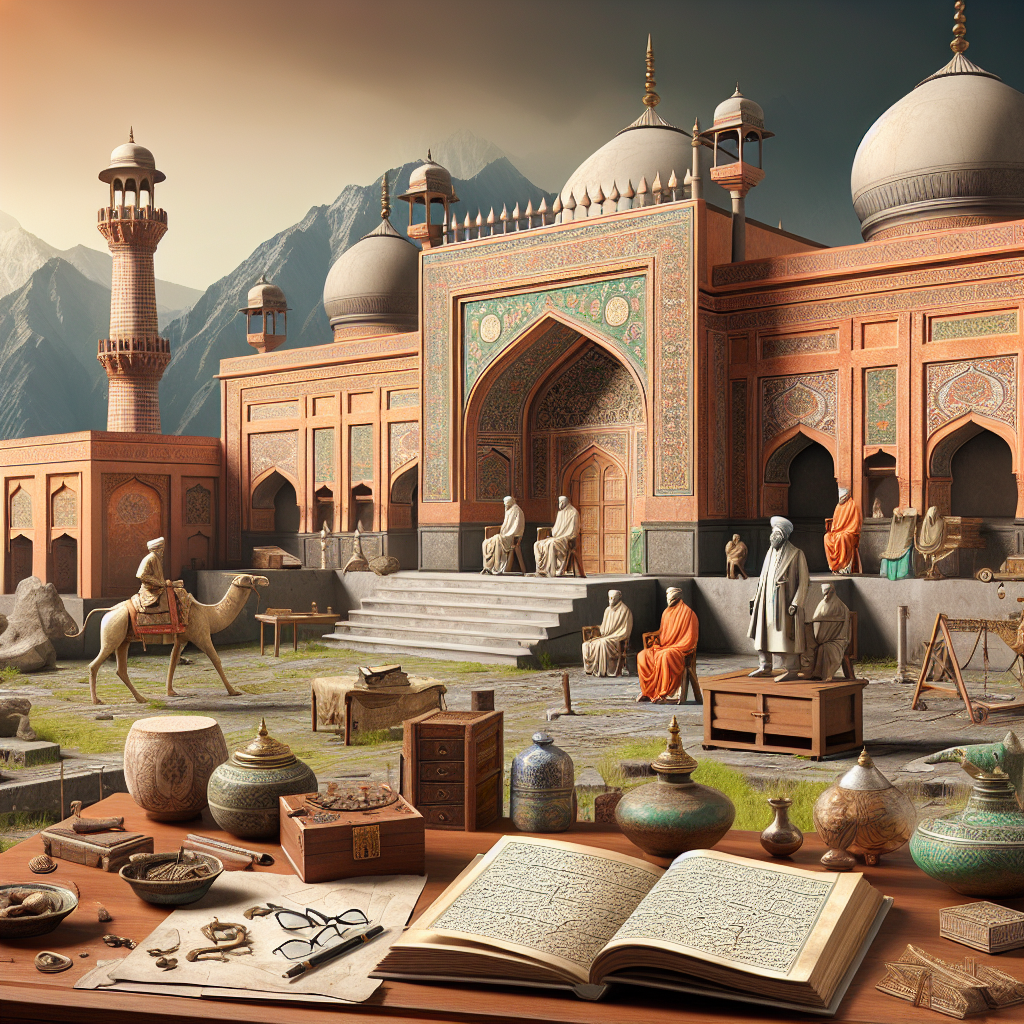

Fancy a leap back to the 19th century where empires ebbed and flowed with the vigor of a streaming river? Enter Bahadur Shah Zafar, the last symbol of an era decaying under its own weight, as he reigned over a shrinking Mughal Empire during the upheaval of India's Indian Rebellion of 1857. It was a period defined by not just territorial wars but cultural shift and existential crisis, right in the heartland of the modern-day Indian subcontinent, Delhi. The why? Because the empire's fading glory juxtaposed against the rise of British imperialism created a perfect storm of promise and despair.
Born in 1775, Bahadur Shah Zafar wasn't merely a ruler in the traditional sense. He was a gentle soul ensnared in the turbulent politics of a dying empire. His persona was more of a poet than a king who wielded a sword. For the citizens of Delhi, he was a remnant of former glory, a cultural beacon of an empire known for its opulence and grandeur. In 1837, Zafar ascended the throne but with little power; the real strings of control lay in the hands of the British East India Company. Imagine this—a king without a kingdom in essence, leading a life more symbolic than sovereign.
And why does Zafar matter? Because his reign became the final chapter in the Mughal saga. A fascinating one, too, as he became an icon of resistance during the Indian Rebellion of 1857. The rebellion, also labeled as India's First War of Independence, sought to reclaim from British control the soil and soul of the nation. Zafar, who was more of a philosophical figure than a political one, reluctantly became the rebellion's figurehead.
The uprising wasn't merely about political independence. It marked a collision of cultures—traditional India clashing with British colonial ambitions. British economic policies wreaked havoc on local artisans and farmers. And then came the spark: the introduction of the Enfield rifle which required sepoys to bite off the end of lubricated cartridges—said to be greased with cow and pig fat—against religious confinements.
It's essential to consider the other side. For the British, India was an essential asset of trade, resources, and profits. From their perspective, the rebellion seemed an ill-advised attempt at revolt against an orderly administration. For many British, the empire was a gift of civilization, bringing a sense of alignment, economy, and the rule of law to chaos.
But the rebellion took a different note as it painted Zafar as a vanguard, despite his reticence. For months, Delhi found itself in the throes of struggle—soldiers, citizens, everyone mobilized to push back against the seemingly unstoppable British forces. Zafar, however, was caught in the intricacies of betrayal and backroom politics soon realizing the complexities of leading such a vast and diverse uprising.
What happened after the rebellion is a ghost story haunting the landscape even today. The British quashed the uprising. They captured Delhi, leading to catastrophic consequences for Zafar. Exiled to Rangoon, his life tragically dwindled in isolation and ignominy, dying in 1862 far removed from the poetic and resonant legacy of Delhi. But his death was more than personal tragedy; it underscored the end of an era. The Mughals, once flourishing under emperors like Akbar and Shah Jahan, drew to a close.
For India's young, history holds lessons of resilience and re-assessment. Zafar's tale is more than an ancient anecdote—it’s a narrative churning in relevance. Nations may rise with towering ambitions, but they are sustained through simple acts of cultural and human solidarity. The Last Mughal’s story is about facing down colonial force, no matter the odds, yet it's also about introspection over power structures.
Gen Z can look to history not just to mirror victories but to learn why failures occurred, understanding that development isn't just economic growth but spans across dimensions of cultural respect and political inclusivity. Zafar's poetry, with its aching lines reflecting on loss yet hope, resonates with challenges seen today. Could the cultural imaginings of poets and artists guide political movements in more empathetic directions?
In a way, the story of the Last Mughal is a dialogue inviting diverse thoughts to interact. What would the world look like if narratives like Zafar’s weren’t mere relics but abiding truths? Seeing history for its breadth might forge a path where culture isn't sidelined for the allure of economic gains, where inclusivity is the core upon which societies flourish.
By revisiting lives like Zafar's, we aren't just walking into the dust of history but find ourselves reimagining the kind of world that we strive to build. A world where empires aren’t celebrated for their might but critiqued for their humanity.