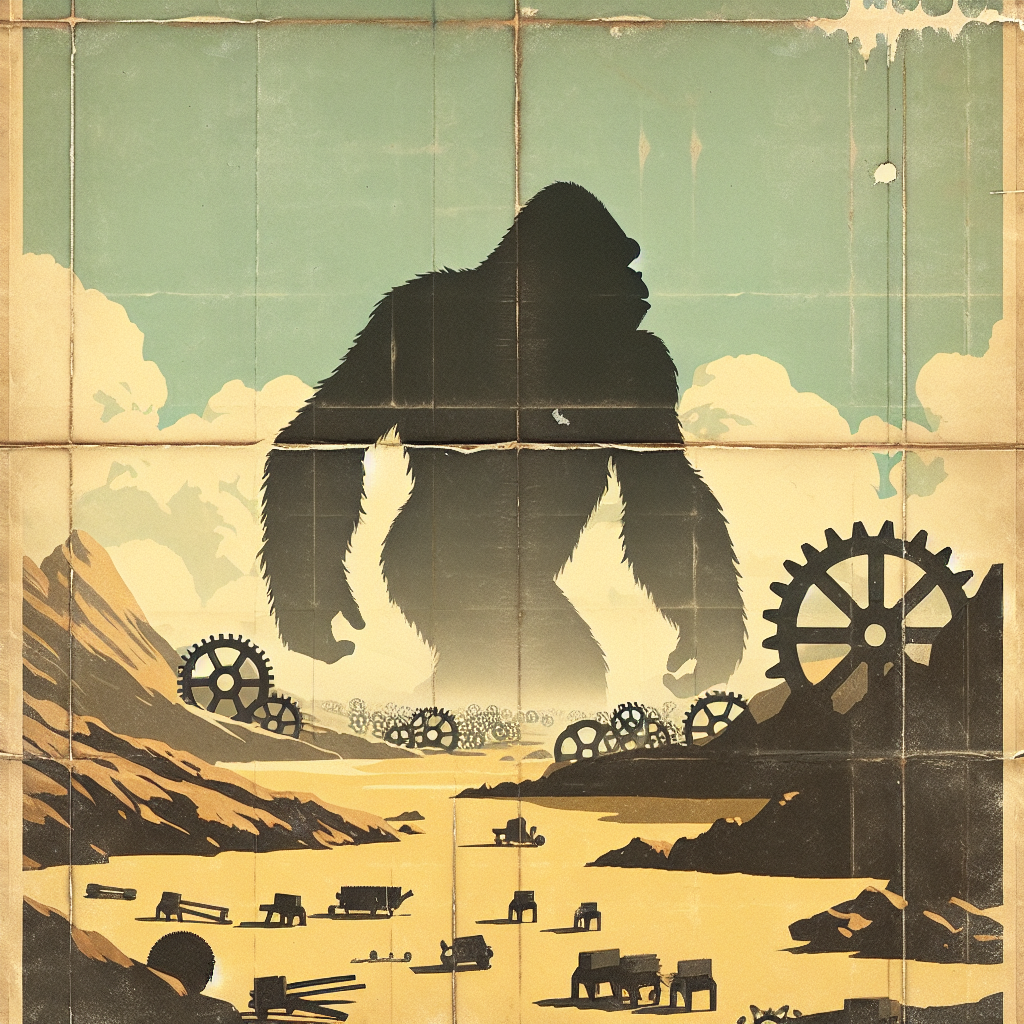

In a world where coal is king and industrialism reigns supreme, a beast lurks not in the shadows, but among the metal and steam of early 20th-century America. This beast is Eugene O'Neill’s character Yank, from the play "The Hairy Ape". Written in 1922, O'Neill's work presents us with an intense exploration of class struggle and personal identity, set against the backdrop of a rapidly industrializing society. The play is centered around Yank, a brutish but sentient fireman working in the boiler room of a transatlantic ship. His confrontation with Mildred Douglas, a wealthy young woman repulsed by the working class, fearlessly enters into themes of alienation and the search for identity.
"The Hairy Ape" is more than just a dramatic work; it's an unsettling mirror reflecting the social dynamics of its time. Yank, whose strength and ferocity make him a king in the engine room, is a misfit everywhere else. The incident with Mildred shatters his perceived identity, leaving him bewildered and angry. This represents a broader commentary on the crushing power of class hierarchies.
Yank's quest for belonging takes him through the heart of New York City, where he encounters both disbelief and disdain from the upper classes whose world he barely understands. O'Neill uses Yank's journey to highlight the harsh divisions between social strata, suggesting that the mechanical age has dehumanized everyone, making the rich blind to the needs of the poor and the working class like Yank confused about their place in society.
Eugene O'Neill, often seen as the father of American drama, compiled a monumental body of work characterized by its deep emotional and existential themes. His politically charged content reflects his own liberal inclinations, while never straying from an honest portrayal of human suffering and isolation. "The Hairy Ape" fits seamlessly into O'Neill's oeuvre, presenting a story that is as relevant now as it was when it first premiered.
The complexities of class and identity in "The Hairy Ape" resonate heavily with contemporary audiences, especially amidst ongoing debates on economic inequality and social justice. Many people, particularly Gen Z, can identify with Yank's feelings of displacement and his struggle to fit into a system that seems tailored against them. This generation, socially conscious and digitally connected, often faces similar disillusionments when confronting established structures that prioritize certain groups over others.
Yet, it’s important to also consider the opposing viewpoints that O'Neill so creatively weaves into his narrative. Some may argue that "The Hairy Ape" paints an overly bleak picture of industrialism and society. Supporters of the technological revolution might point out that these advancements have, overall, increased living standards and connected the world in unprecedented ways. They may view Yank's story as an exaggeration, emphasizing that opportunities for upward mobility exist and that many people have transitioned successfully from humble beginnings to prosperous lives.
However, O'Neill's work remains a powerful critique of how industrial progress can dehumanize when it widens the gap between social classes. This vision may feel exaggerated, but it serves as a sobering reminder of the consequences that unchecked progress can have on human lives. It urges consideration of individuals who, despite technological advancements, might still feel left behind.
For those straddling both worlds, like Gen Z, "The Hairy Ape" poses questions about identity in an era that's both advanced and regressive. How do we find our place in a world that's constantly evolving? How do we ensure our voices are heard amid the noise of social and economic change? These questions are critical as younger generations navigate a landscape where traditional job roles fade away, and gig economies rise.
Eugene O'Neill's Yank might be trapped in a metaphorical cage, but the story implores us to challenge the status quo and shape a future that’s inclusive and fair. It calls for dialogue between all classes, fostering understanding and action. As society continues to grapple with issues of inequality and identity, "The Hairy Ape" remains a haunting yet valuable piece of literature.
The search for identity is universal and timeless, as Yank’s journey illustrates. We can draw inspiration from this literary beast to sow seeds of compassion and change. Gen Z, with its inherent sense of social justice, technology savviness, and interconnectedness, is poised to tackle these challenges head-on. "The Hairy Ape" speaks loudly to those ready to listen, ready to empathize, and ready to act.