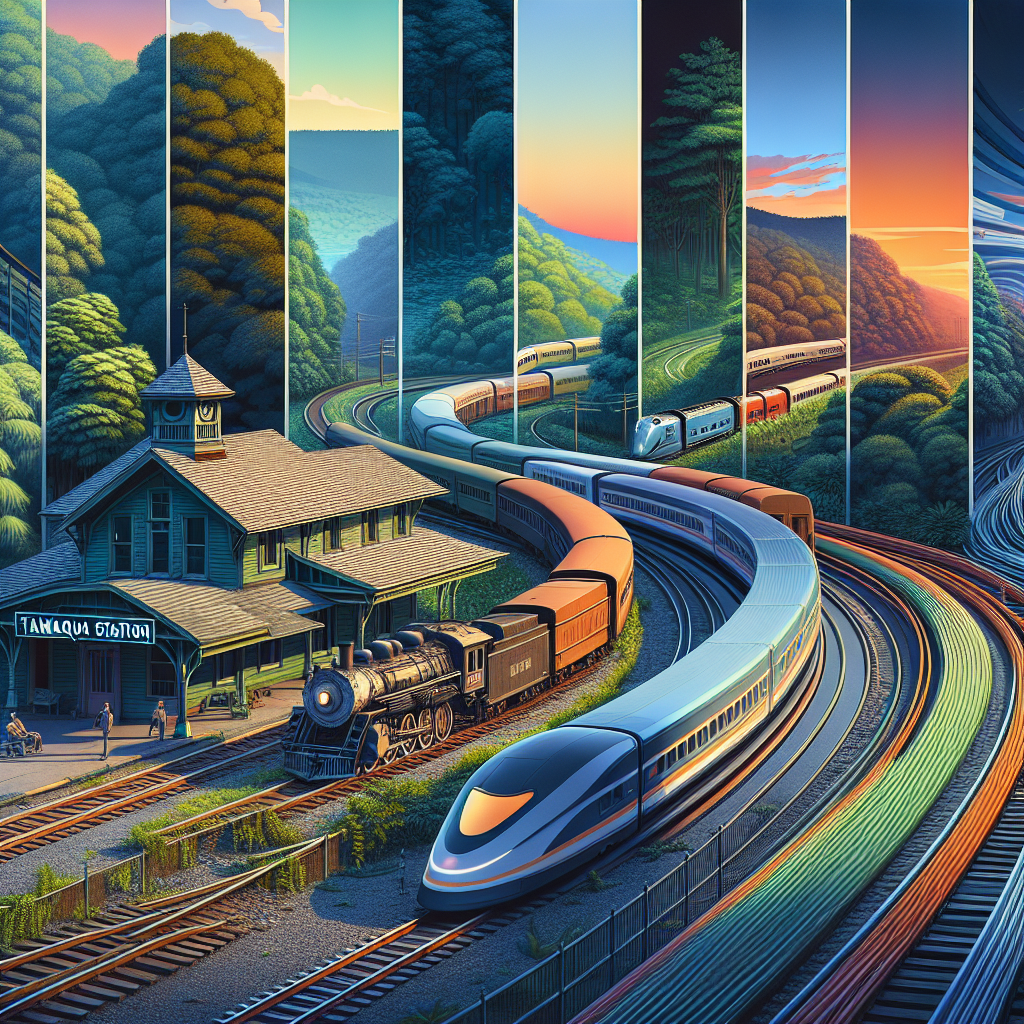

The Tale of Tamaqua Station: A Journey Through Time
Imagine a place where the echoes of steam engines and the hustle of passengers once filled the air, a place that now stands as a testament to history and community spirit. Tamaqua Station, located in the heart of Tamaqua, Pennsylvania, is a historic train station that has seen the rise and fall of the railroad era. Built in 1874, this station was a bustling hub during the golden age of rail travel, serving as a critical junction for the Philadelphia and Reading Railroad. Today, it stands as a symbol of the town's rich heritage and a reminder of the transformative power of transportation.
Tamaqua Station's story is one of resilience and adaptation. In its heyday, the station was a vital part of the coal transportation network, connecting the anthracite coal fields of northeastern Pennsylvania to major cities. The station's architecture, with its Victorian design and intricate woodwork, reflects the grandeur of the era. However, as the demand for coal declined and automobiles became the preferred mode of transport, the station's significance waned. By the mid-20th century, the once-bustling platform saw fewer and fewer passengers, eventually leading to its closure.
Despite its decline, the community of Tamaqua never forgot the station's importance. In the late 20th century, local preservationists and history enthusiasts rallied to save the station from demolition. Their efforts paid off, and the station was restored to its former glory. Today, it serves as a community center and a venue for events, breathing new life into the historic building. The station's restoration is a testament to the community's dedication to preserving its history and identity.
While Tamaqua Station is a source of pride for many, it's essential to acknowledge the differing perspectives on historical preservation. Some argue that resources spent on restoring old buildings could be better used for modern infrastructure or social programs. They believe that while history is important, the focus should be on addressing current needs and challenges. This viewpoint emphasizes practicality and forward-thinking, prioritizing the immediate well-being of the community over nostalgia.
On the other hand, supporters of historical preservation argue that places like Tamaqua Station are invaluable cultural assets. They believe that preserving history fosters a sense of identity and continuity, connecting present and future generations to their roots. For them, the station is not just a building but a living museum that tells the story of the town's past, offering educational opportunities and promoting tourism. This perspective values the lessons and inspiration that history can provide, seeing it as a foundation for building a better future.
The debate over historical preservation versus modernization is a complex one, with valid points on both sides. However, Tamaqua Station stands as an example of how these two perspectives can coexist. By repurposing the station as a community center, the town has found a way to honor its history while also serving current needs. This compromise highlights the potential for creative solutions that respect the past while embracing the future.
Tamaqua Station's journey from a bustling railroad hub to a cherished community landmark is a story of transformation and resilience. It reminds us of the power of community action and the importance of preserving our shared heritage. As we navigate the challenges of the modern world, Tamaqua Station serves as a beacon of hope, showing that with dedication and creativity, we can honor our past while building a brighter future.