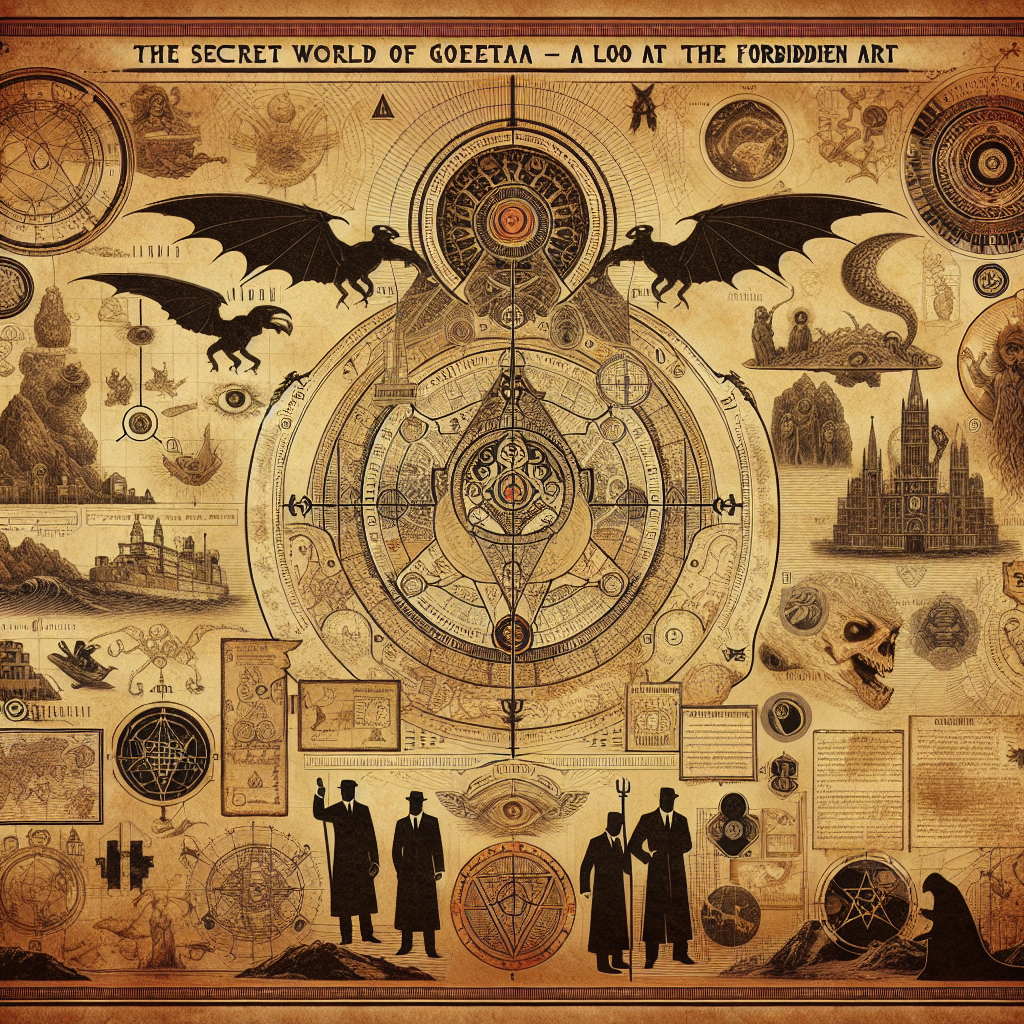

Ever wanted to sneak a peek into a world where the supernatural feels as real as your morning coffee? Welcome to sorcery, specifically Goetia – a mystical venture that buzzed through medieval Europe. Historically, Goetia is often linked to grimoires, hefty books filled with spells and invocations thought to control demons. We're talking about a practice stemming from ancient traditions, with roots that weave through various cultures like those of the Greeks and Judaic mysticism. As thrilling as this sounds, Goetia faced significant pushback from both religious and political bodies. Despite such opposition, its allure persisted, even finding a place in occult literature.
Goetia represents a branch of the esoteric practice where practitioners engage in what's understood as the evocation of demons. Sounds intense, right? This tradition is associated with the Solomonian magic system, famously preserved in the "Ars Goetia", the first section of a 17th-century grimoire known as "The Lesser Key of Solomon". This text lists seventy-two demons supposedly commanded by King Solomon, a legendary figure carrying both biblical and mythic weight. The text reportedly includes detailed descriptions of these entities, instructions for rituals, and magical symbols to summon and control these ancient beings. Users often see it as a guide to harnessing formidable forces.
The context of Goetia's emergence is crucial. Picture a time when science was intertwined with mystery and religion was a domineering force in shaping worldviews. With the Renaissance, Goetia ballooned in popularity as part of a larger cultural shift towards seeking knowledge outside strict religious parameters. This was no small feat given how the medieval church held sway over spirituality and intellect. But Goetia wasn’t just about the thrill of dabbling in dark arts; it was about asserting one's curiosity against the tide of rigid orthodoxy. Some folks of the era sought to express autonomy over their spiritual journeys, exploring what's often labeled today as "forbidden".
Today, among Gen Z and other modern audiences, Goetia is cloaked in interests ranging from historical curiosity to spiritual exploration, and yes, sometimes just a touch of pop culture intrigue. Movies, books, and games have romanticized or villainized these mystical practices, creating a jumbled mix of apprehension and fascination. It’s important to recall, however, that fascination shouldn't dissolve into romanticizing power without understanding the consequences. Forgotten in our Netflix-binged tales is the fact that grand and mystical ideas often come with profound responsibility, much like that hefty college loan you wish to forget.
Many millennials and Gen Z'ers find the idea of radical self-exploration and autonomy inspirational. However, there’s a necessity in approaching sorcery, especially Goetia, with a lens that’s cautious and informed, lest curiosity spirals into unsafe territories. Skeptics argue that belief in such practices simply distracts from reality, urging a more empirical view of the world. They present Goetia as archaic superstition repackaged by misinterpretations and intrigue. It's a view worth considering, particularly in a world plastered with claims of rationality and pragmatism.
Despite the skepticism, those intrigued by Goetia might find themselves drawn to its perennial themes: power, control, and the human desire to unlock hidden messages of existence. Panels of historians and theologians highlight how Goetia reflects universal themes that span cultures and epochs. Its appeal suggests a rebellious, iconoclastic spirit, resonating with those disenchanted with mainstream ideologies. In some ways, it aligns with protest movements against societal norms, thriving on questions that nudge the boundaries of established order.
There’s no singular path to understanding Goetia, as perspectives vary from dismissive skepticism to earnest spiritual journeying. Its examination offers a mirror for our collective need to navigate life’s mysteries, whether through science or sorcery. When reshaping the narratives around Goetia, one angle to consider is how this intersects with today's youth grappling with issues of power, identity, and belonging. The enactment of summoning narratives might feel like precarious ground, yet, through nuanced exploration, it offers much-needed reflection.
History remembers practices like Goetia not because they're indisputably ‘true’ or ‘false’ but because they spark critical dialogues about the essence of humanity. These dialogues, deeply intertwined with cultural imagination, reveal much about societal shifts. The appeal lies not in literal belief but in the allegorical exploration of power dynamics.
Studying Goetia today, especially if you're a reader from Gen Z or any digital-native cohort, is reflective of a broader engagement with eclectic spiritualities. You're a part of a generation skillfully balancing skepticism and belief, shaping hybrid identities. Immersed in the language of symbols, you explore themes ancient and new, pondering existence as deeply as those who first traced the circles. And through all this, Goetia reminds us that curiosity is ceaseless and infinitely more expansive than we imagine.