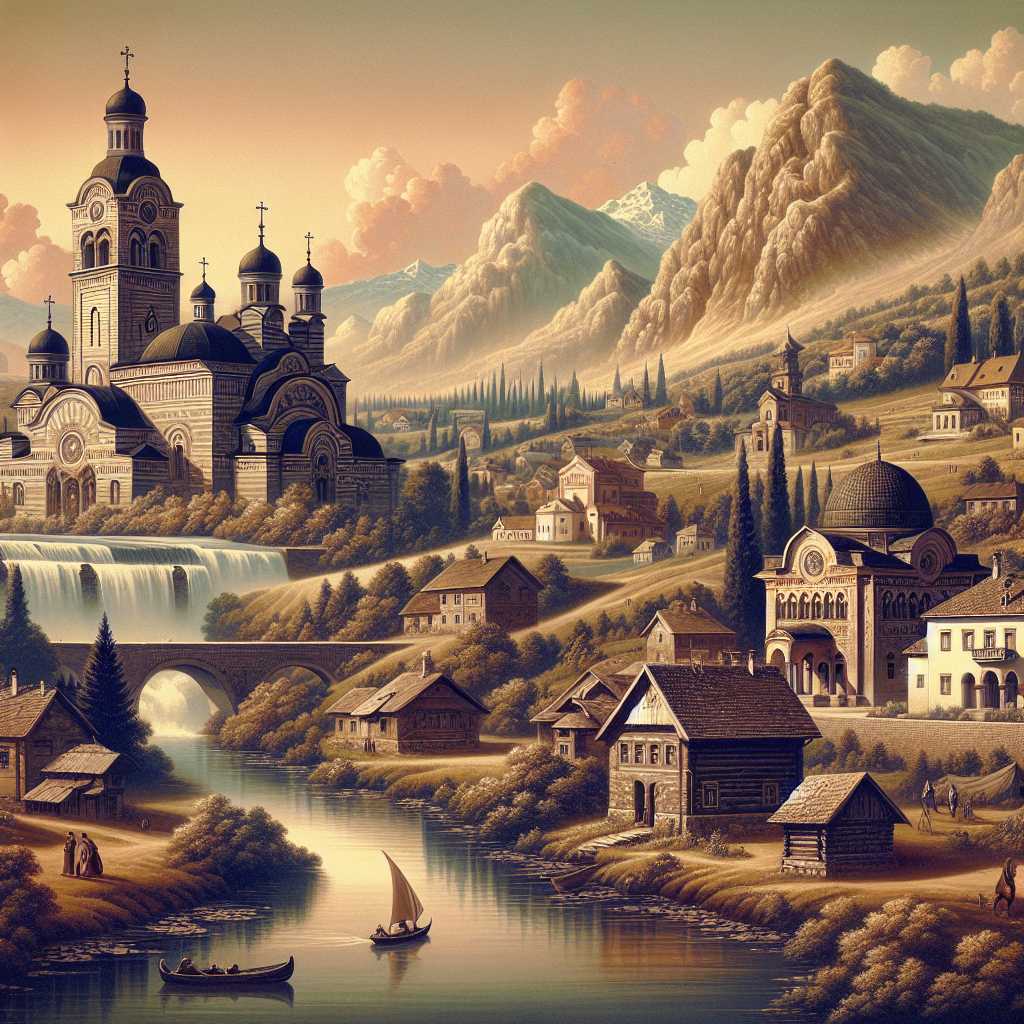

Imagine a place where cultures and histories have interwoven over time, crafting a region unlike any other. That's Vojvodina, an area grounded in the rich tapestry of the Socialist Autonomous Province within Serbia. Known for its diverse nationalities and languages, Vojvodina is a vivid testament to coexistence and resilience. In the throes of socialism, spanning years from 1945 to the early 1990s, it existed as an integral entity of Yugoslavia, playing a unique role in the political landscape of Europe.
Tucked in the northern part of Serbia, Vojvodina’s charm lies in its multicultural character, hosting over 25 ethnic groups. It's a literal collection of towns that speak a mosaic of tongues, including Serbian, Hungarian, Slovak, Romanian, and Croatian. Heritage here isn’t just about the past; it’s the continuous heartbeat of its people. After World War II, Yugoslav leader Josip Broz Tito set out to redefine regions, including Vojvodina, as part of his vision of a socialist federal republic. Acclaimed for embracing diversity, Tito’s Yugoslavia offered autonomy to Vojvodina, allowing for self-management and cultural preservation amid the larger socialist framework.
The draw of Vojvodina isn’t just its past and policies. It’s the harmonious blend of Danube meanders, Pannonian plains, and baroque streetscapes that attract many today. Liberals might celebrate its past as a haven of diversity and social progress, while conservatives might point to the challenges faced under a socialist regimen. Recognizing both sides offers a full view of how history and policy shape people’s lives. Vojvodina’s early socialist days are marked by Yugoslavia’s attempts at peaceable diversity, but they were also shadowed by economic challenges and disputes that tested the system’s strength.
The socialist era in Vojvodina involved a complex balancing act of federal and local interests, with its status evolving with the political tides of the broader Yugoslav federation. Tito's vision, on paper, was one of unification in diversity. Still, the late 20th century bore witness to tension and eventual fragmentation, underlining the difficulty of melding varied ethnic enclaves under a single socialist umbrella. In time, Vojvodina's autonomy waned, reflecting the tensions of central control versus regional independence — a dynamic familiar to many regions worldwide.
Vojvodina remains a focal point for discussions on socialism and autonomy. While some highlight its positives, such as prioritizing minority rights and cultural autonomy, others critique the economic stagnation and central controls imposed from Belgrade. Tito’s socialist model fostered an image of unity, yet people in Vojvodina experienced varying degrees of freedom and restriction, depending on the broader political climate.
The 1980s and 1990s brought substantial change, reflecting a global shift towards market economies. For Vojvodina, this era meant grappling with a turbulent backdrop of Yugoslavia’s disintegration. While many outside the region might not associate Vojvodina with the intense conflicts seen in the Balkans, it played a strategic role and faced economic struggles. The collapse of centralized socialist systems across Eastern Europe reverberated through Vojvodina’s towns and farmlands, challenging its people to adapt and redefine their place in a reshaped Europe.
Today, Vojvodina reflects a blend of historical legacy and modern aspirations. It stands as a reminder of socialism’s footprint in Europe, highlighting both its dreams of unity and its struggles with execution. Gen Z might see in Vojvodina an example of how diverse communities can coexist, illustrating the power and pitfalls of political systems attempting equity and autonomy. Vojvodina's journey is a narrative ripe with lessons on diversity, governance, and resilience — themes that resonate well beyond its borders as societies the world over grapple with similar issues.
The legacy of the Socialist Autonomous Province of Vojvodina offers more than just a look at past policies. It invites reflection on how societies can better accommodate diverse voices while pursuing shared goals. As we navigate contemporary debates on governance and autonomy, revisiting Vojvodina's history deepens understanding and enriches the discourse. The region's enduring mosaic of cultures offers a living testament to the enduring value of diversity, reminding us how integrally our histories connect us and shape the future.