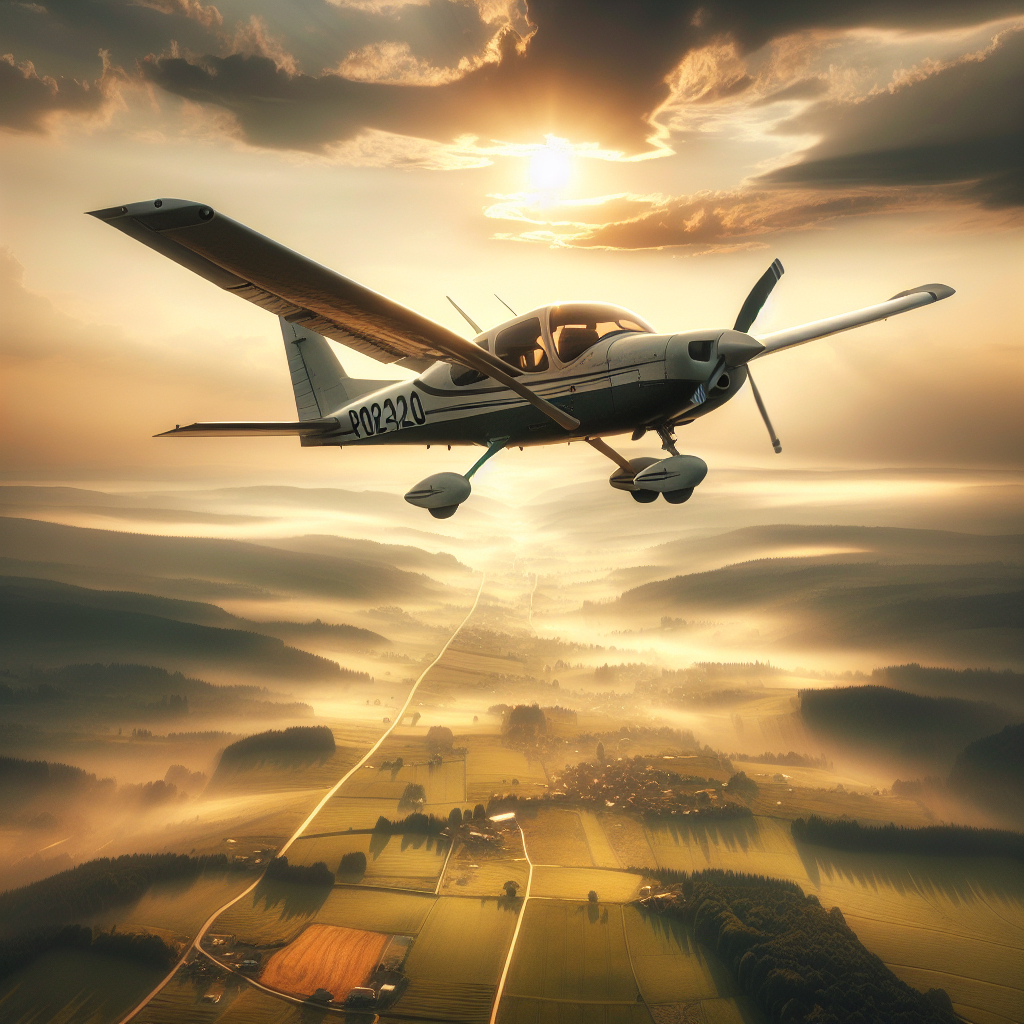

Once upon a sky, there was a plane family that made flying feel like a cozy road trip in the clouds: the SOCATA Rallye family. Born in France, where baguettes, art, and fashion thrive, this family of lightweight aircraft took to the skies in the mid-20th century and won hearts around the globe with their charm and utility. Developed initially by Morane-Saulnier and afterward by its successor SOCATA, these planes emerged in a post-war world thirsty for innovative and reliable aviation. Designed for both civilian and military purposes, the Rallye lineage offered something for everyone, proving that versatility really is the spice of life.
SOCATA, a breakthrough French aviation manufacturer, launched the Rallye series in the 1950s, a time when aviation was taking off like never before. They answered a fundamental ‘why’ that existed at the time: the need for light aircraft that could handle short takeoffs and landings with ease. This was crucial for pilots who needed to access small airstrips or prepare for unexpected situations. These planes became beloved across Europe and further, with their popularity being somewhat akin to a cult following surrounding a favorite indie band.
The Rallye family, besides being versatile, was notable for its rugged design. It featured fixed main landing gear and slotted wings, which allowed it to shine in short-field performance. It was this very design that struck a chord with many flight schools, aero clubs, and private owners who valued not just performance, but reliability and simple maintenance. Imagine a plane that’s as cool under pressure as that one friend who always keeps their head during a crisis. Essentially, the SOCATA Rallye promised to be the plane that would ‘have your back’ in tough flying conditions.
However, like any beloved creation, SOCATA faced its share of criticisms. Some aviators and aviation enthusiasts, particularly those leaning towards cutting-edge technology, felt the Rallye series was too basic. As the world marched towards more advanced avionics and increasingly sophisticated aircraft designs, the Rallye's straightforward approach seemed insufficient to satisfy tech-hungry users. The luxury-car-like appeal of aircraft snazzy with gadgets was missing, generating debates around its relevance in a modernizing world.
Yet, what some saw as obsoleteness could easily be viewed instead as a timeless simplicity. A plane that could be repaired easily by pilots who didn’t need a sophisticated international support network was something like comfort food for aviators. The Rallye series made people treasure simplicity and understand that less can sometimes be more. It wasn't just about flying from point A to B; it was about experiencing the freedom the sky offers without all the complications.
Fast forward to today, and SOCATA aircraft, including the Rallye series, linger on in aviation history as reminders of an era where craftsmanship, user-friendliness, and accessibility ruled the air. What the Rallye may lack in technological frills, it over-delivered in reliability and experience. It’s like that one band from the '90s who might not have had the top spot on every chart but undeniably played a significant role in shaping music through sheer talent and authenticity.
Given today's aviation technology, it's interesting to reflect on whether there's still a place for the Rallye style of aircraft in our incredibly fast-paced world. Could less complexity and more dependability remind us of slower, perhaps more cherished journeys? Advocates of cutting-edge innovation argue for the need to stay ahead, push boundaries, and consistently climb new heights. However, appreciating models like the SOCATA Rallye also shows that sometimes, the old craftsmanship still matters, especially when it pertains to safety, training, and connectivity within communities of aviation enthusiasts.
The SOCATA Rallye family leaves a legacy not just in manuals and museum exhibitions but in the hearts of those who piloted them and taught others to do so. They served as a stepping stone for budding pilots and provided a trusty alternative for many whose adventurous spirits gravitated to the skies via these incredible machines. Sometimes, reconnecting with the foundational aspects of a craft adds a profound depth to our understanding of where new innovation will take us.
Taking a glance back at such aviation milestones, we see it’s not always about the loudest engines or the shiniest glitters blazing across the sky. It's about the journeys taken—both in terms of physical travel and the experiences gained. As flying tech pushes forward into horizons of the unknown, isn’t it comforting to know that the SOCATA Rallye family once helped carry the dreamers, the learners, and the occasional adventurer from yesteryears to tomorrow?