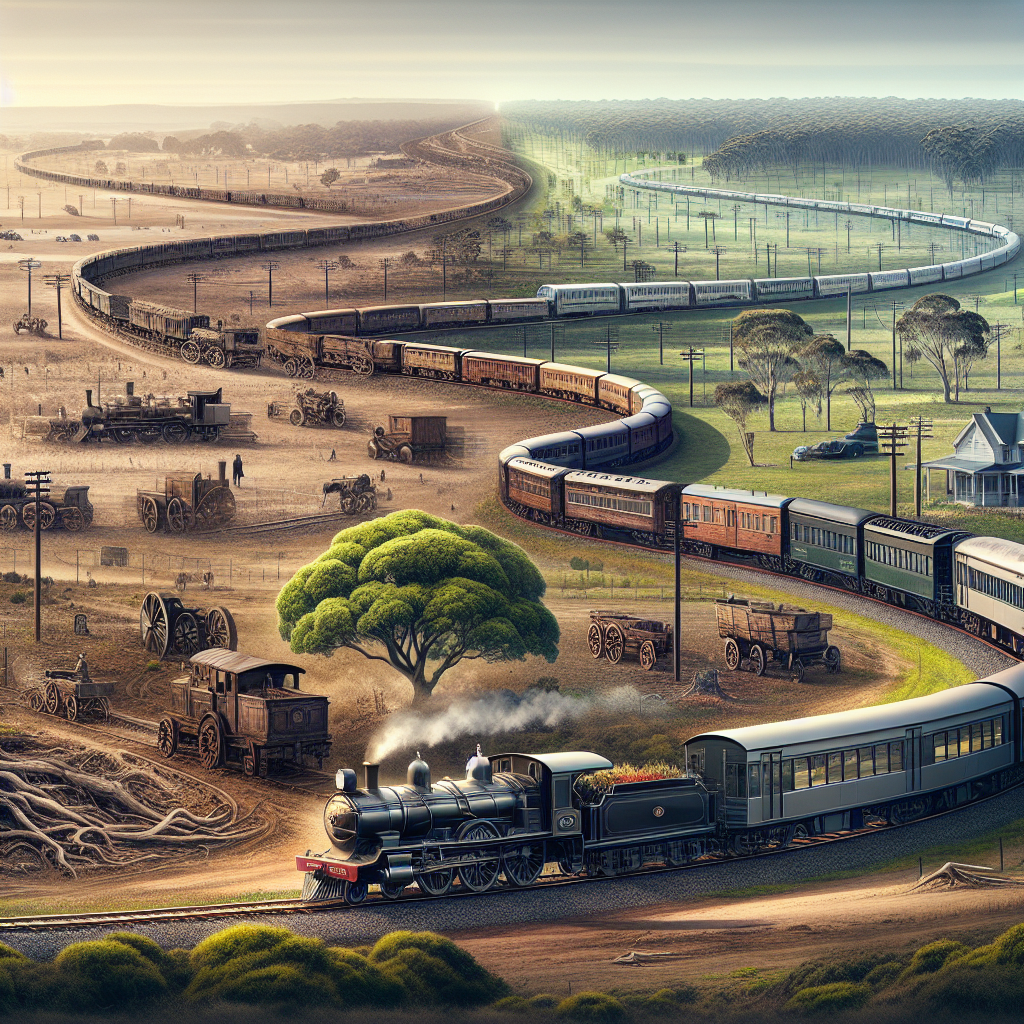

Imagine hopping on a train that whisks you away to sun-drenched coastal vistas and takes you through the charming suburbs of Brisbane, Australia. That's exactly what the Shorncliffe railway line does. This commuter railway, inaugurated in October 1882, serves as a vital connection from the bustling heart of Brisbane to the tranquil waters of Moreton Bay. Its tracks begin at Roma Street and make their way through northern suburbs to Shorncliffe, a place where time seems to walk just a little bit slower than the city center.
The Shorncliffe line's history is as rich as its scenic landscapes. Originally built to support the growing transport needs of a booming city, it now caters to both daily commuters and weekend tourists. Whether you're a local heading to work or a traveler exploring Brisbane’s outskirts, the train provides a window into the blend of old-world charm and modern progress. Each station along the line offers a mini destination in itself, from the historic buildings in Eagle Junction to the lush green spaces around Sandgate.
It's hard to ignore the line's role in supporting sustainable transit solutions amidst growing climate concerns. Trains remain one of the most environmentally friendly modes of transportation, reducing individual carbon footprints significantly compared to cars. Yet, there’s always room for improvement in the public transport sector as the demand for greener, smarter solutions continues to rise. The Shorncliffe line stands as a reminder that historical infrastructure can adapt and persist, contributing positively to the city’s ecological goals.
For the Shorncliffe line’s regulars, the journey is more than just getting from point A to B. It's part of their daily rhythm, the backdrop to their morning coffee or evening contemplation. The familiarity of seeing the same faces adds a sense of community that isn’t commonly found in urban settings. Stations like Nundah and Northgate are not merely transit points; they’re neighborhoods with their own stories, complete with weekend markets and local cafes.
One cannot forget that alongside the supporters of the railway line, there are voices that question the allocation of resources and the necessity for constant upgrades. There are those who argue for modernization of transportation infrastructure rather than preservation of historic sections. Rapid urban expansion fuels debates about whether increasing investment in urban transport really addresses the root causes of congestion or simply provides a temporary reprieve.
Additionally, in discussing improvements, accessibility often takes center stage. Making stations more accessible for people of all abilities must be a priority. Technology can play a crucial role here; innovating ticketing systems, improving real-time tracking apps, and ensuring safety measures with advanced surveillance systems can enhance user experience markedly.
It's also worth mentioning that train rides offer a rare space for reflection amid the fast-paced lifestyle of today. As passengers gaze out the windows, there is a unique opportunity to ponder personal journeys while physically moving through space and time. Sometimes, these transitions provide a much-needed pause, a chance to escape the usual frenzy of daily obligations.
While change is inevitable, it’s crucial to recognize the intrinsic value of spaces like the Shorncliffe line. It represents the intersections of history, community, and the inexorable march towards sustainable living. Its role in knitting together different facets of society—economic, social, and environmental—can’t be underestimated.
There’s always a balance to be struck between maintaining cultural heritage and fostering technological advancements. The Shorncliffe railway line continues to be an enduring part of Brisbane’s story. It serves not just as a transport route, but as a reminder of our collective journey forward, encouraging us to look at the bigger picture while appreciating the beautiful details along the way.