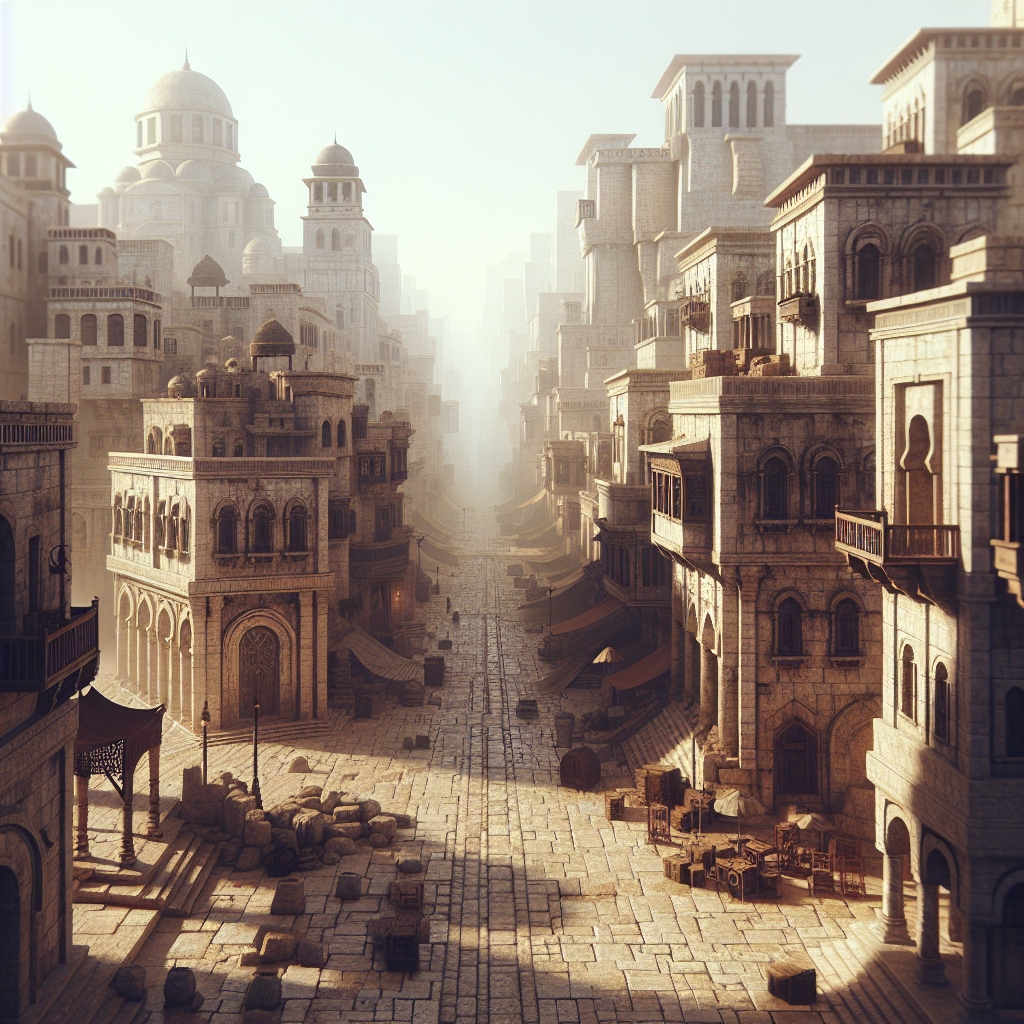

Ever wondered how a seemingly insignificant place could hold such powerful echoes of the past? Shaaraim, a town from ancient Judah, does precisely that. Nestled in the richness of Israel's Shephelah region, it dates back to biblical times, notably around the early Iron Age. Its name, meaning 'two gates,' pulls us into a time when history was being written with every battle fought and every alliance forged. The site is traditionally linked to the battle of David and Goliath, where David’s triumph against the giant echoed courage across millennia. This connection brings a layer of symbolism and intrigue—an intersection of geography and myth that serves as a canvas where multiple narratives of the past are painted.
Shaaraim isn't just about historical texts; archaeological findings here have further cemented its importance. Artifacts suggest that this was more than just a battle site. In 2007, excavations revealed structures and remnants, confirming its biblical significance. What stands out about Shaaraim is that it wasn't a major city like Jerusalem but still played a crucial part in ancient history. Heroes like David, who might have traversed these grounds, transitioned from legend into a semblance of tangible reality. These findings have brought critics and supporters to the same archaeological trench, debating whether science is finally catching up with myth, asking how much truth lies buried beneath these stones.
In exploring the Shaaraim site, historians and archaeologists thrust themselves into the dynamic, ever-contentious world of biblical archaeology. Supporters of the historicity of ancient texts point to sites like Shaaraim as proof that these stories are more than mere poetic constructs. For them, the evidence found shines a light on historical accuracies documented long ago. Meanwhile, another school of thought urges caution, suggesting that while exciting, such finds should be interpreted with an understanding of the broader historical and cultural contexts—a nod toward interdisciplinary efforts to truly grasp the past.
Unsurprisingly, Shaaraim evokes debate beyond scholarly circles, touching on issues of cultural heritage and historical ownership. The intersection of archaeology with political narratives is sensitive, particularly in regions where both history and territory are intensely contested. In these discussions, the place of ancient Israel is often used to forge modern identity. This appropriation of historical sites by various groups can affect communal relationships and even national policies. Shaaraim, thereby, becomes a microcosm where history, politics, and identity intermingle.
Looking through the lens of a globally connected, knowledge-sharing generation like Gen Z, there is a growing interest in how history influences present-day narratives. Shaaraim provides a direct link to understanding how ancient stories help cultures shape themselves and carry their legacies forward. The allure lies not just in the facts uncovered but in the evolving stories that continue to be written from them. Young people, responsible for future policy-making and societal shaping, are at a crucial juncture to understand the importance of these narratives and their power.
Critics often argue that young generations are disconnected from their past, yet, observable interest in history suggests otherwise. The digital world has opened access to endless historical resources, enabling young people to engage dynamically with their past. Shaaraim is accessible through virtual tours, online universities, and global discussions. This accessibility breaks barriers, allowing narratives to be unmasked, understood, and even challenged.
Looking forward, Shaaraim's role is not just confined to textbooks or fragments in a museum display case. It rests on a digital platform where ancient tales are retold, across screens that captivate the minds of the curious and passionate. A rich tapestry of truth-seeking social environments on platforms like social media and YouTube is redefining how history is consumed and perceived. Discussions about sites like Shaaraim will continue to shape our understanding of human nature, confrontation, morality, and triumph.
The conversation around Shaaraim is emblematic of how we approach history—right where fact meets legend, and ancient cultural heritage touches today's identities. Gen Z, the torchbearers of future narratives, seem poised to care for and critique the crossroads of myth and reality, guided by an empathy rooted in inquiry. For Shaaraim is a reminder: we sift through starlit skies from ancient battles, to understand stories of courage, loss, and the simple yet extraordinary steps forged by those who came before us.