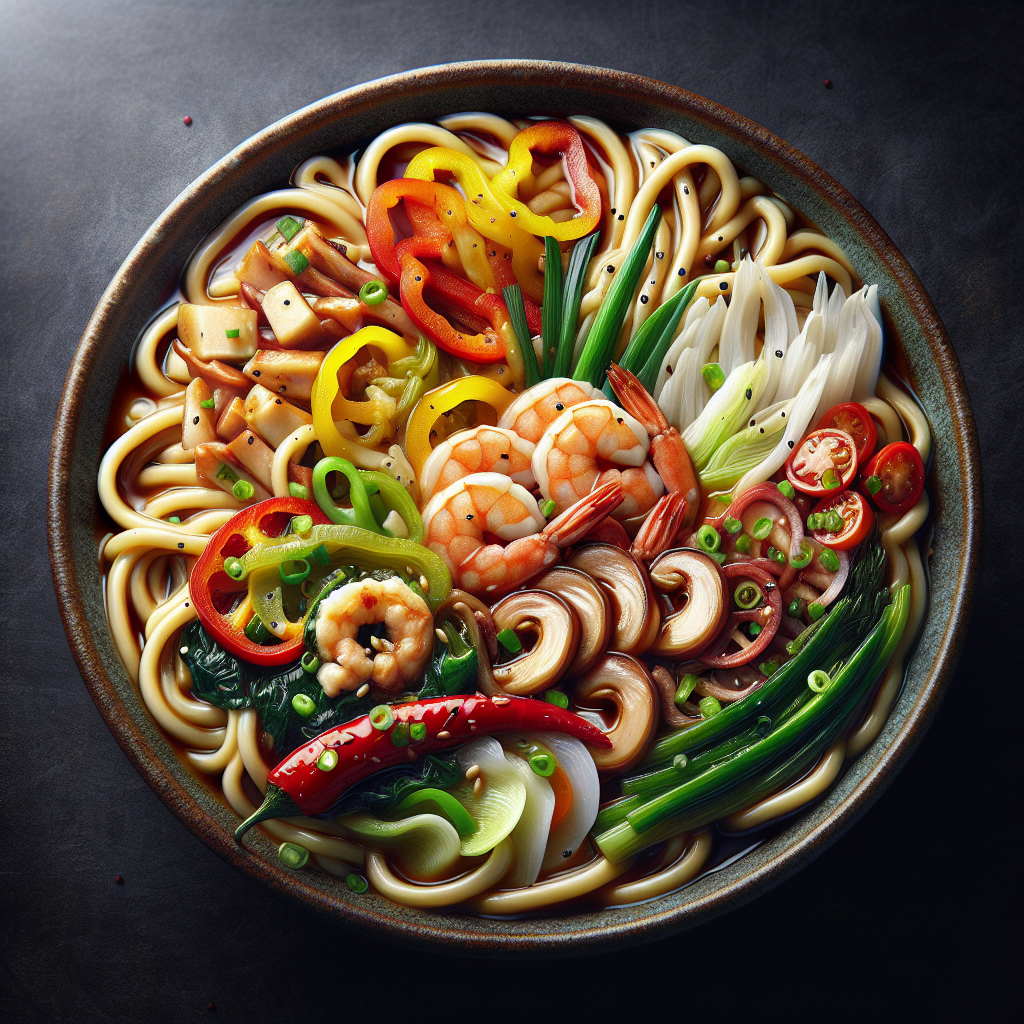

Sara udon might just be the ultimate comfort food you didn’t know you were missing out on. Picture this: a hot plate of crispy noodles topped with a flavorful mix of vegetables, seafood, and pork all bathed in a savory sauce. Originating from the vibrant Nagasaki cuisine in Japan, this dish has traveled far beyond its humble beginnings and mesmerized taste buds around the world.
Created in the 20th century by a Chinese restaurant owner in Nagasaki, Sara udon was inspired by Chinese culinary traditions and quickly adapted to Japan’s love for noodle dishes. It traditionally features thin and crispy deep-fried noodles, making it distinct from the equally beloved, but more soupy, udon variants. Imagine wandering through the bustling streets of Nagasaki; the aroma alone would entice you to try this enticing dish.
In Japan, food isn’t just fuel. It’s culture, history, and a medium for bringing people together. Sara udon fulfills that very purpose. The beauty of Sara udon lies not just in its taste, but in how accessible and adaptable it is. Since traditional Sara udon includes seafood, pork, and many vegetables, it accommodates diverse tastes and dietary preferences. Vegetarian versions replace proteins with tofu or more veggies, making it a dish that can easily bridge the gap between seafood lovers and those who prefer plant-based diets.
The complex flavor profile of Sara udon can be attributed to its eclectic group of ingredients. Typically, the dish includes cabbage, carrots, mushrooms, onions, squid, shrimp, and sometimes thin slices of pork. Each ingredient is prepared with care to avoid losing its distinct texture and flavor. The sauce, often a soy-based mixture blended with a hint of sweetness and acidity, ties all of these elements beautifully together.
As much as Japan cherishes its traditional recipes, it always finds exciting ways to embrace change. Take the crunchy noodles of Sara udon, for example. These noodles weren’t even traditional Japanese udon but instead a nod to the influence of Chinese immigrants in Nagasaki. There’s an interesting juxtaposition here — the Chinese-influenced dish has come to signify a key part of regional Japanese cuisine.
Now, let’s think about what a dish like Sara udon means for a global audience. We’re living in an age where boundaries in culinary arts are blurred. More than ever, people appreciate flavors from different cultures. Sara udon is part of this global culinary conversation. Dishes like this foster cultural appreciation and invite us all to celebrate diversity via the universal language of food.
However, not everyone is easily swayed by culinary novelties. Skepticism about trying new foods from different cultures is a common barrier. Some might even argue that the authenticity of such dishes is diluted when they travel across borders and are adapted. But authenticity itself is often in the eye of the beholder, and each adaptation can represent a meaningful blend of innovations that respect tradition while reflecting evolving tastes.
The celebration of dishes like Sara udon also stirs up conversations about cultural appropriation and appreciation. The spectrum is broad and complicated. When you include nods to cultural respect — understanding the dish’s origins and giving credit to its roots — it becomes a celebration rather than appropriation. Millennials and Gen Z are especially attuned to these sensitivities, pushing for more understanding and thoughtful consumption.
Why does all this matter? Because dishes like Sara udon give us an opportunity to talk about who we are, where we come from, and how we connect with the world. Engaging with different cuisines offers us a gateway to explore the multifaceted human experience. And as Gen Z individuals who see the world as a tapestry of intertwining narratives and flavors, it’s a chance to redefine what cuisine can mean to us.
Food is a powerful bridge that connects cultures, and Sara udon is no exception. It embodies a seamless fusion of Japanese and Chinese culinary traditions, offering a comforting yet exciting dish to those who dare to expand their palates. It’s not just about eating; it’s about tasting a part of history and participating in a shared human narrative.
Experience Sara udon with a curious mind and an appreciative palate. Seek out authentic first-hand experiences. Whether it’s a cozy small restaurant in Nagasaki or a culturally rich neighborhood restaurant halfway across the globe, indulge in this dish with an awareness of its history and the stories it tells. Because in each bite of Sara udon, you’re savoring more than taste — you’re enjoying a moment in a culinary journey.