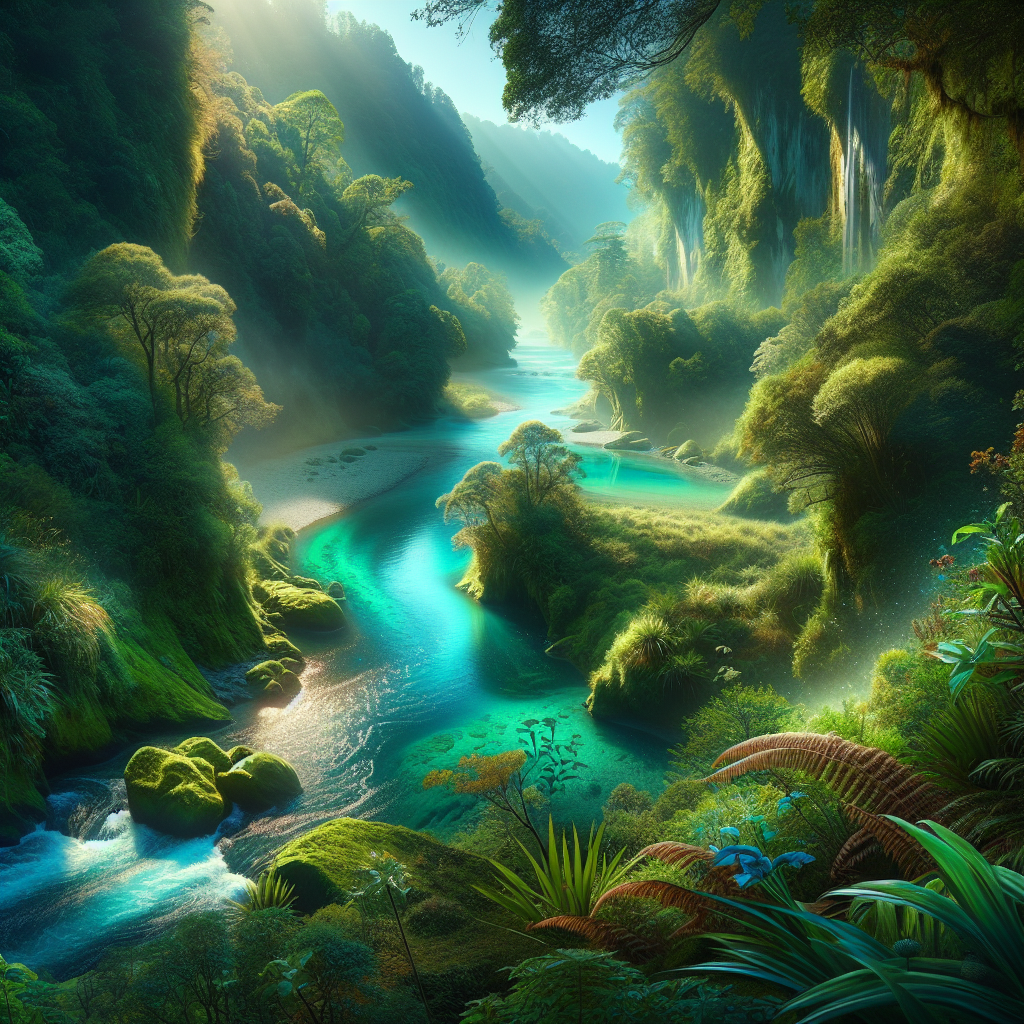

Nestled among the lush landscapes of New Zealand's South Island, the Riuwaka River meanders its way through a kaleidoscope of greenery, inviting adventurers and nature lovers alike. This enchanting river holds both historical and ecological significance and serves as a testament to the rich tapestry of the country nestled in the heart of Tasman District. The Riuwaka River is more than just a waterway; it’s a crucial habitat, a cultural treasure, and a natural playground.
The origins of the Riuwaka River trace back to the Marble Hill, where it dramatically springs from a network of underground caves. This unique geological feature is a result of New Zealand's dynamic limestone formations dating back millions of years. The river then carves its path through an array of native flora and fauna, providing visitors a tantalizing glimpse of Aotearoa's untouched wilderness.
Local iwi (Māori tribes) have long recognized the sacred nature of this place, considering it a taonga, or treasure. For the Māori, rivers and waterways are imbued with spiritual essence, nourishing both land and people. This cultural legacy remains integral as guardianship responsibilities continue to be held by local Māori, emphasizing the importance of preserving such ecosystems for future generations.
The Riuwaka River is particularly famous for the Riuwaka Resurgence, where the river emerges from the Takaka Hill after its subterranean journey. This spot is a favorite for explorers who are spellbound by the crystal-clear waters that seem almost surreal. It’s not uncommon to see people taking a dip in the naturally refreshing pools or taking a moment to soak in the tranquility amidst the surrounding forest.
Environmentalists have flagged the Riuwaka River's ecological value, stressing the importance of conservation efforts to maintain its pristine state. The river is home to numerous native species, including rare aquatic life. This fragile ecosystem is often a focal point of discussion for both environmental advocates and those who back developmental initiatives in the region. Striking a balance between preservation and progress remains a hot topic.
Beyond its ecological and cultural importance, the Riuwaka River is a reminder of the breathtaking beauty New Zealand has to offer. It caters to a range of recreational activities, from hiking along mesmerizing trails filled with native birdsong, to kayaking down its gentle currents. The mix of solitary peace and adrenaline-pumping adventure underscores the diverse experiences one can find.
Tourism is vital for New Zealand, and sites like the Riuwaka River play a key role in attracting visitors. Globally known as an adventure-lovers’ paradise, the river attracts everyone from Instagrammable moments seekers to die-hard eco-warriors. However, the influx of tourists also raises practical challenges, leading to ongoing dialogue about sustainable tourism practices. On the one hand, the economic benefits cannot be ignored, while on the other, the erosion and impact on the environment raises red flags for many advocates.
The narrative surrounding the Riuwaka River thus becomes a microcosm of broader issues faced by our generation. Issues of cultural preservation, environmental sustainability, and responsible tourism all intersect here. This nurturing river challenges us to rethink our interactions with nature and how we can better safeguard such irreplaceable ecosystems amid modern pressures.
Engagement with the Riuwaka River is an exploration of both nature and oneself. In its serene embrace, distractions melt away and one is left with clarity. It resonates with the Gen Z ethos of seeking authenticity and genuine experiences. As the world becomes increasingly digital and fast-paced, places like the Riuwaka River remind us to pause, reflect, and reconnect with nature and history. Our generation is not just inheriting these wonders, but also the task to protect and preserve them.
The allure of the Riuwaka River lies not in mere aesthetics, but in what it represents - a symbol of natural wonder and the collective responsibility we share to cherish it. It is a call to action to promote mindful stewardship, embracing both progress and conservation. Future generations deserve the chance to be awestruck by its beauty just as those today, and therein lies our challenge, our responsibility.