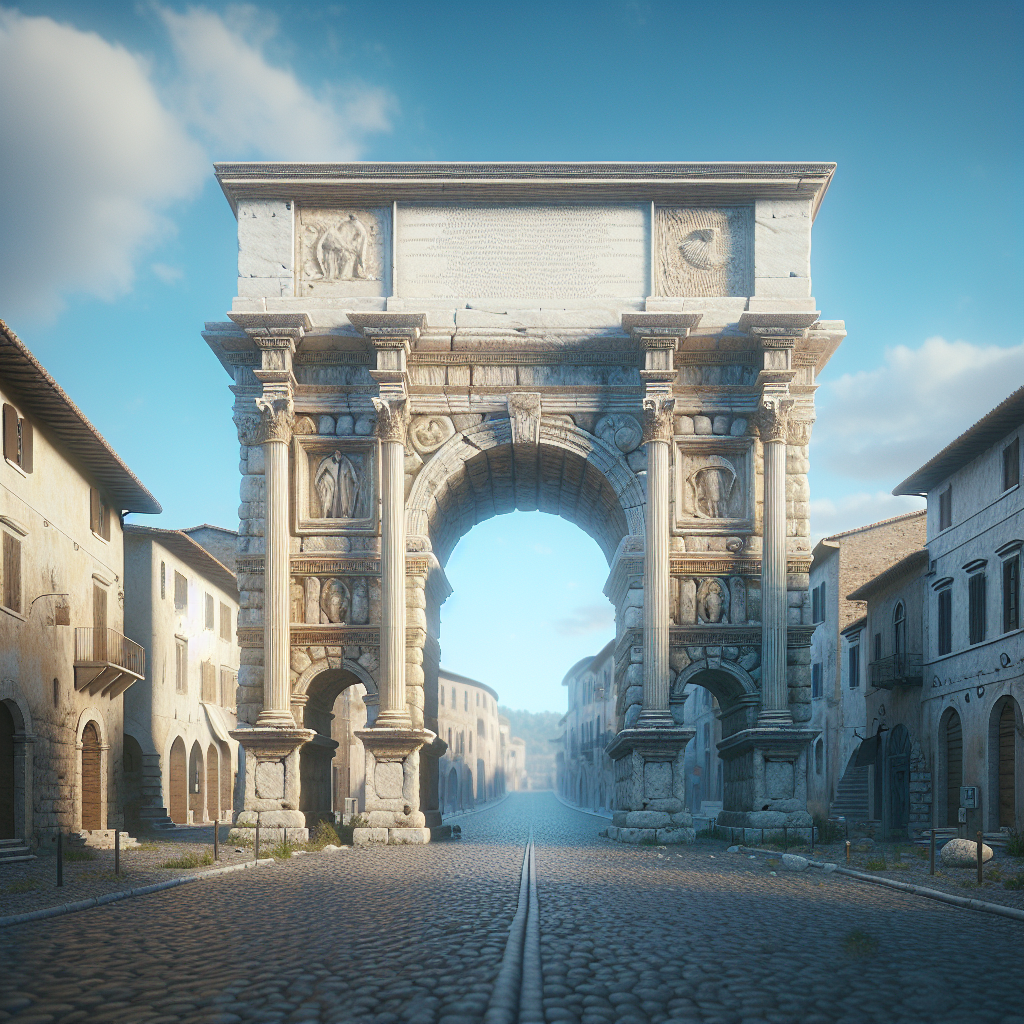

Walking through history feels quite literal in Rome, especially when you stand before the magnificent Porta Pia. This architectural gem, a gateway to the city etched with stories of revolution and reform, was conceptualized by none other than Michelangelo in the 16th century. It's not just any ordinary gate, but a symbol of an Italy eager to shake the chains of its past and stride into modernity. Constructed from 1561 to 1565 during the papacy of Pope Pius IV, this gate was not only meant for entry and exit, but also marked a visionary leap forward, bridging old Rome with the new emerging city. Located on the Aurelian Walls, it links the city’s legacy to the vibrant neighborhood of Nomentana.
Porta Pia bears witness to the pivotal Breach of Porta Pia event on September 20, 1870. On that day, Italian troops broke through, marking the momentous end of the Papal States and Rome’s annexation into the Kingdom of Italy. This wasn't just a physical breach; it was a tectonic shift signaling the unification of Italy. Picture the scene: a city under siege in a clash of ideals where tradition met change, and where faith stood against nationalism. The breach represents more than just a physical hole in the wall. It was a metaphorical opening into a new era where a unified Italy could begin to define itself outside the shadow of papal control.
Now, fast forward to the present, where Porta Pia stands as a monument not only of architectural beauty but also of cultural significance. It has inspired artists, historians, and tourists, each interpreting its story anew. To some, it is a testament to the resilience of people striving towards unification. To others, it symbolizes the conflict between religious authority and secular governance—a narrative still reverberating in today’s political dialogues.
The surrounding area offers a showcase of how much Italy has evolved—a bustling quarter filled with cafes, museums, and an eclectic mix of modern and vintage architecture. It’s a reminder of the constant tug between preserving the past and embracing the future. This is a point where history and everyday life converge, allowing us to reflect on our own journeys toward progress and unity.
In a broader sense, Porte Pia isn’t just about Italy. Its story resonates globally, signifying the universal struggle between tradition and progress, individual freedom and collective authority. It's about people everywhere searching for their identity amidst the pressures of political power shifts. As the dialogue between heritage and modern values continues around the world, Porta Pia serves as a beacon, a constant reminder of how past revolutions can guide current transformations.
Yet, the story of Porta Pia is not without its complexities. The annexation of Rome wasn't purely a harmonious affair. The breach forced the papacy into isolation, resulting in the Pope becoming a "prisoner" in the Vatican until the Lateran Treaty of 1929. Many Catholics saw this as a direct affront to the spiritual authority of the church. It’s worth understanding those on the other side of history—the devout defenders of the Papal States who felt their faith was under attack. Their loss mirrors the continuing struggles of communities worldwide dealing with imposing national changes.
From a politically liberal viewpoint, Porta Pia is a symbol of liberation and democracy, reflecting the foundational principles many nations strive to uphold today. Yet it’s also crucial to empathetically listen to those who were, and are, resistant to change. Their voices remind us of the pain that often accompanies progress. Even today, the discussion about balance between religious and secular domains fuels debates across the globe.
Imagining the sounds of cannon fire amidst cries for freedom, it’s awe-inspiring how Porta Pia accommodated the birth of a modern nation. This historical event and its physical remnants compel us to ponder the enduring human drive for unity and self-determination. As generations pass by Porta Pia, it’s humbling to think about the sacrifices made there. With its scars and triumphs, Porta Pia is not just a gateway but a tapestry of Italy's complex journey.
Today, it offers Gen Z a powerful lens to view the ongoing dance between past principles and modern urgencies. As you stand there, it’s hard to shake off the powerful impressions of forces—both seen and unseen—that shaped the gates and the stories behind them. Listening to these echoes can better equip us to face contemporary challenges with empathy, intelligence, and a readiness to embrace change.