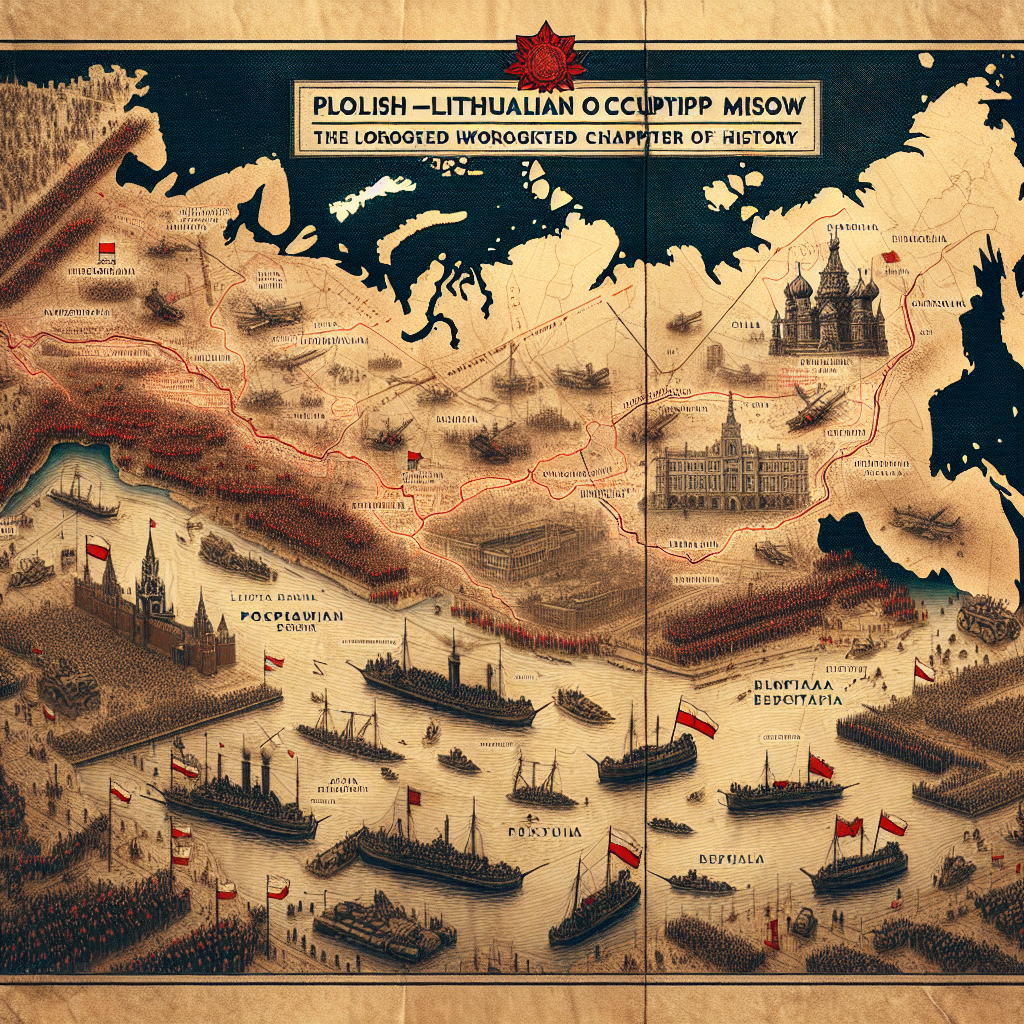

The year was 1610, a time when the world was as unpredictable as it is today, and Moscow was caught in perhaps the most unexpected plots of all—being seized by Polish and Lithuanian forces. Picture this: you've got tsars falling like dominos, unending civil chaos called the Time of Troubles, and in waltzes the Polish-Lithuanian Commonwealth, not just for a visit, but to take over. Driven by political ambition and a pinch of opportunistic fervor, they saw Moscow's vulnerability as a chance to expand their influence eastward.
Why did this happen? Well, it wasn’t sheer whim. The Polish-Lithuanian Commonwealth was a major European power at the time, known for its unique form of government, combining aspects of monarchy and republicanism. This fueled a competitive spirit in a Europe bustling with strategic jostling. Russia, meanwhile, was teetering on the edge due to internal strife—famines, uprisings, and a crisis of leadership following the demise of Tsar Ivan the Terrible. The political elites of Poland and Lithuania saw this as an opening to extend their borders and influence far into Russia, with dreams of a vast empire gleaming in their eyes.
They invaded Moscow with precision but also with a heavy heart for the humans caught in this geopolitical conflict. For a while, they even installed a puppet regime, setting up a temporary Polish prince on the Russian throne. The vision was pretty audacious: blending the Polish-Lithuanian ideals with Russian lands. It sounds like something ripped straight from a dramatic period series on Netflix, doesn't it?
Not everyone was thrilled by this occupation. One could argue the very idea of foreign control sparked nationalistic flames. Russians at the time were desperately yearning for a prince from within, especially after dealing with constant disruptions to their sovereignty. While some welcomed the order the Commonwealth brought to Moscow, many saw it as a national disgrace. Nobles and peasants alike were not too keen on being governed by foreign entities, especially when it felt like their cultural identity was at stake.
Yet, Polish-Lithuanian intervention wasn't just the story of an eastern expansion or a failed empire-building project. It highlighted the broader tensions simmering across Europe at that time. Religion played a big role here. The Commonwealth was predominantly Catholic, and Russia was staunchly Orthodox—these religious differences added an additional layer to the conflict, juxtaposing against the broader European Protestant and Catholic tensions.
Within Moscow, life teetered between cultural coexistence and outright rebellion. The occupation led to periods of both relative peace marked by administrative adjustments and brutal confrontations as part of the revolt against the occupiers. The internal dynamics in Moscow during Polish-Lithuanian control pushed locals to edge and called for unprecedented resilience. The opposing colonization viewpoint underscores a struggle for identity and governance.
Many Russians perceived the Polish and Lithuanians as mere foreign invaders, regardless of any administrative 'benefits'. Eventually, the wind of change swept in as Russians banded together to reclaim their freedom. Led by local figures like Kuzma Minin and Prince Dmitry Pozharsky, they pushed back aggressively. Finally, in 1612, the Polish-Lithuanian forces were ousted during the Siege of Moscow, a significant event leading to the end of the Time of Troubles and paving the way for the Romanov dynasty.
This turbulent chapter has left its mark on Polish-Russian relations throughout history, with each side interpreting the events through contrasting lenses. While the occupation proved ephemeral, the dialogues it started concerning sovereignty, national identity, and foreign influence have persisted.
From a liberal perspective, this historical saga could serve as a reminder of understanding and including multiple narratives in history. While it’s easier to categorize history into good and bad, oppressor and oppressed, real-world politics often unfolds in a more complex, tangled web—highlighting the mixture of ambition, opportunity, and resistance.
It's fascinating, really. History, as the Polish-Lithuanian adventures in Moscow reveal, is full of unexpected twists. Such stories challenge our understanding of nations and identities, enticing us to see beyond modern politics into historical depths, and reflect on our present-day views about who we are—or might still become.