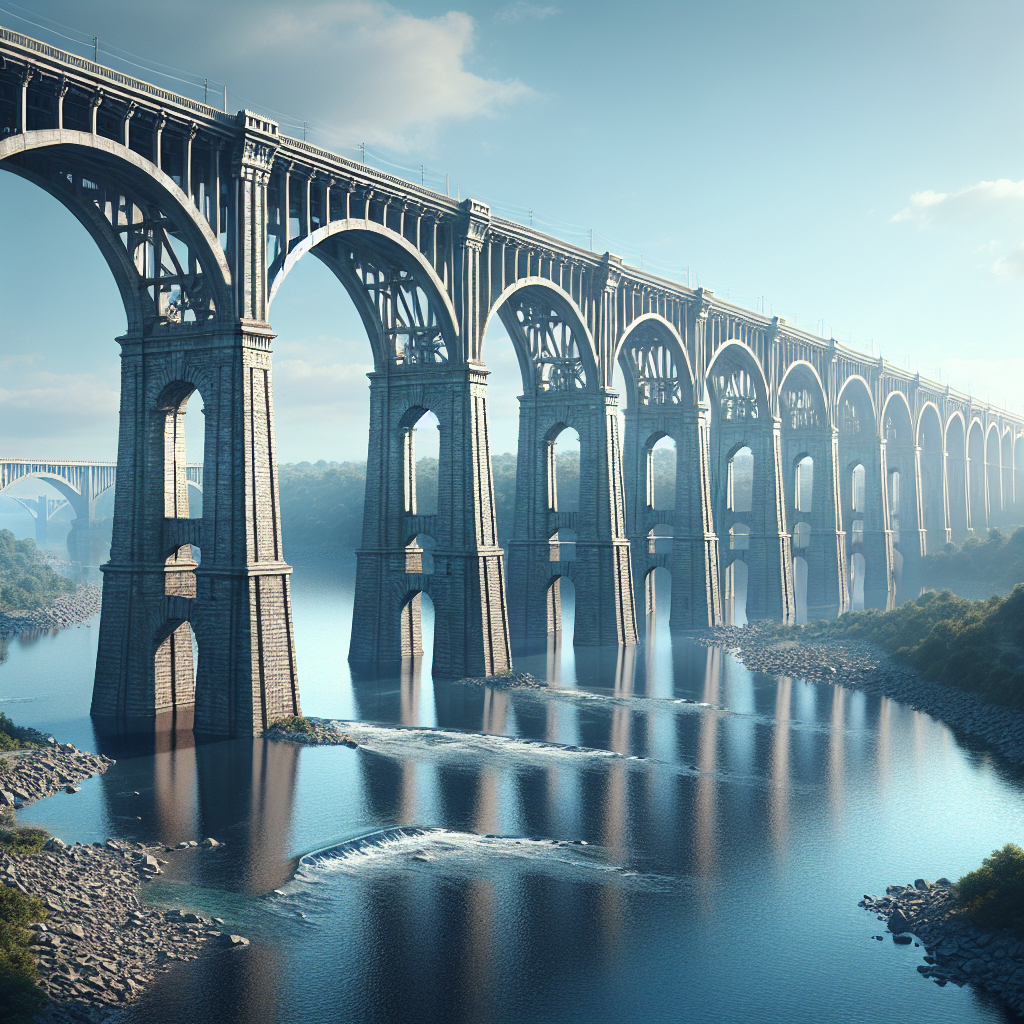

Picture a massive structure spanning across a river, a symbol of progress in one of America's oldest industrial cities—that’s the Schuylkill River Viaduct of the Philadelphia and Reading Railroad. Built in the mid-1800s, this imposing bridge was part of an era when railroads were the lifeline of the nation, connecting cities, fostering commerce, and symbolizing the cutting edge of technology of its time. Set in urban Philadelphia, this engineering marvel quickly became vital in linking the city with wider industrial regions.
Back in the day, train travel was the equivalent of today's app-driven, high-speed conveniences. In a rapidly industrializing America, the railroads were heralded as the arteries of the nation, offering unprecedented speeds compared to the horse-drawn carriages. Philadelphia, a bustling port with burgeoning industries, needed an efficient transport system. The viaduct helped meet this need, bridging the Schuylkill River and completing the link for the Philadelphia and Reading Railroad.
Yet, what makes the Schuylkill River Viaduct more than just another bridge is its story. It's not merely about iron, stone, and design; it represents economic progress, migration, and even controversy. Early industrial cities needed these infrastructures at a time when economic growth was synonymous with environmental degradation. The viaduct stands as a reminder of industrial achievements while also provoking thoughts about sustainable progress—an issue particularly pressing for environmentally conscious Gen Z.
From an architectural standpoint, this viaduct embodies the transformative period when railroads started using some of the most ingenious architectural styles. The use of stone and cast iron materials was typical in its construction. However, unlike modern bridges that often prioritize aesthetics alongside utility, the focus back then was predominantly functional. It was designed to withstand the heavy train traffic of its time and was appreciated more for what it could do than how it looked.
Controversies marked its construction, too. People protested due to the massive amount of public funds required, which invariably raised questions about political priorities and fiscal responsibility. It’s crucial to note that back then, infrastructure was inherently linked to corruption and cronyism—a perception not entirely alien even today when we talk about huge public works projects. Nonetheless, local authorities justified the costs by emphasizing the potential economic benefits that the railroads would rustle up.
During its heyday, the viaduct saw countless trains passing over, carrying goods and passengers to various destinations. It played a critical role in sustaining Philadelphia's economy by enabling efficient transshipment of coal, iron, and other resources crucial to industrial advancements. Yet today, as society gradually shifts towards eco-friendlier transport solutions, it invites us to reflect on how these monumental structures can be repurposed.
These relics of the past urge us to walk a fine line between preservation and innovation. As the generations focused on sustainability and urban planning become more prominent in decision-making roles, the challenge is to balance development with the need to preserve history. Transforming such structures into safe pedestrian walkways or green recreation spaces are just some of the creative ways cities can redefine their utilities.
Public interest in such historical landmarks often oscillates between fascination and apathy. Some folks love the cultural storytelling and nostalgia, while others see them as relics of a bygone era with limited utility. Cities evolving at breakneck speeds sometimes struggle to blend these historical elements into their modern skylines. Yet, these bridges provide a tangible link to our shared past, resonating with stories that can unite generations.
From a contemporary perspective, understanding the importance of such infrastructure involves more than admiring its historic value; it’s about realizing that the debates around it—economic feasibility, environmental impact, and community integration—are older than we think. Gen Z, who will shape policies in the coming decades, has much to learn from such debates and perhaps, can envision a future where infrastructure serves as a means of sustainable progress, not merely economic growth.
Despite its historical allure, the Schuylkill River Viaduct hasn't been immune to challenges wrought by time and neglect. Conservation efforts often face financial and bureaucratic hurdles, and public interest in preserving such bridges can wax and wane. But for young adults passionate about history, urban regeneration, and architecture, these challenges present opportunities for innovation and engagement.
Efforts must also consider the values that were both implicit in their creation and their existence today. Among these, the fight for progressive policies that prioritize equitable economic growth stands out. Communities demand solutions that do not just reminisce about the past but fuel sustainable visions for the future. As a school of thought, there's merit in considering how projects conceived with a heavy industrial ethos can coexist with our modern, more eco-conscious aspirations.
When you explore the Schuylkill River Viaduct—from the perspective of the trains that once thundered across it to the quiet, occasionally rundown appearance it sports today—it's clear that this structure is not just an old bridge. It’s an emblem of past challenges and achievements. Whether its future lies in providing lessons for development or staying intact as a beloved city memory, the viaduct is a symbol of how far we've come and how far we can still go.