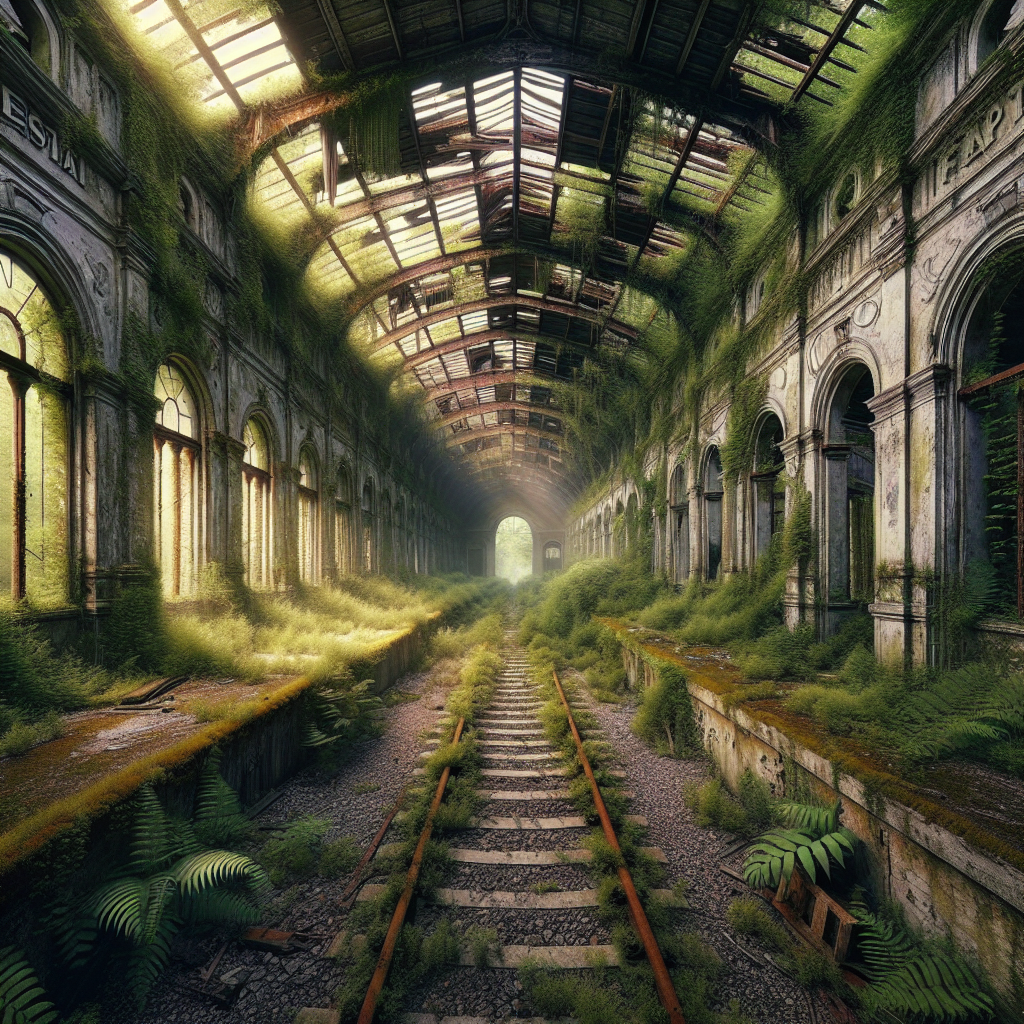

The Curious Case of Pettigo Railway Station
Imagine a railway station that straddles two countries, a place where you could step off a train and find yourself in a different nation. Pettigo Railway Station was just that—a unique stop on the map that connected Northern Ireland and the Republic of Ireland. This station, which opened in 1860, was located in the village of Pettigo, a place that itself is divided by the River Termon, with one side in County Donegal, Ireland, and the other in County Fermanagh, Northern Ireland. The station was part of the Great Northern Railway, a line that played a crucial role in connecting various parts of Ireland during a time when rail travel was the lifeblood of communication and commerce.
The station was more than just a stop along the tracks; it was a symbol of the interconnectedness of the Irish landscape, despite the political and cultural divisions that have long existed on the island. For nearly a century, Pettigo Railway Station served as a vital link for passengers and goods, facilitating travel and trade between the north and south. However, like many rural stations, it fell victim to the decline of rail travel in the mid-20th century. The station closed in 1957, a casualty of the increasing popularity of road transport and the economic challenges facing the railway industry at the time.
The closure of Pettigo Railway Station was part of a broader trend that saw many rural stations across Ireland and the UK shut their doors. The rise of the automobile and the expansion of road networks made rail travel less essential, particularly in less populated areas. For the people of Pettigo, the station's closure marked the end of an era. It was a loss not just of a transportation hub, but of a community gathering place, a site of countless hellos and goodbyes, and a tangible link to the wider world.
Despite its closure, the memory of Pettigo Railway Station lingers on. The station's unique position on the border made it a point of interest for historians and railway enthusiasts alike. It serves as a reminder of a time when the railways were the arteries of the nation, carrying people and goods across the landscape with a sense of purpose and possibility. The station's story is also a reflection of the broader historical and political changes that have shaped Ireland over the past century.
For those who lament the loss of such stations, there is a sense of nostalgia for a bygone era. The railways represented a form of travel that was both leisurely and communal, a stark contrast to the often isolating experience of modern car travel. There is also an appreciation for the engineering feats and the human effort that went into building and maintaining these rail networks, which were once the pride of nations.
While some may argue that the closure of stations like Pettigo was an inevitable consequence of progress, others see it as a missed opportunity to preserve a valuable part of our heritage. In recent years, there has been a renewed interest in rail travel, driven by concerns about climate change and a desire for more sustainable forms of transportation. This has led to discussions about the potential for reopening old lines and stations, though such projects face significant financial and logistical challenges.
The story of Pettigo Railway Station is a microcosm of the broader narrative of rail travel in Ireland and beyond. It highlights the ways in which transportation infrastructure can shape communities and connect people, even as it reflects the changing priorities and technologies of the times. As we look to the future, the lessons of the past can inform our decisions about how best to balance progress with preservation, ensuring that we remain connected in ways that are both meaningful and sustainable.