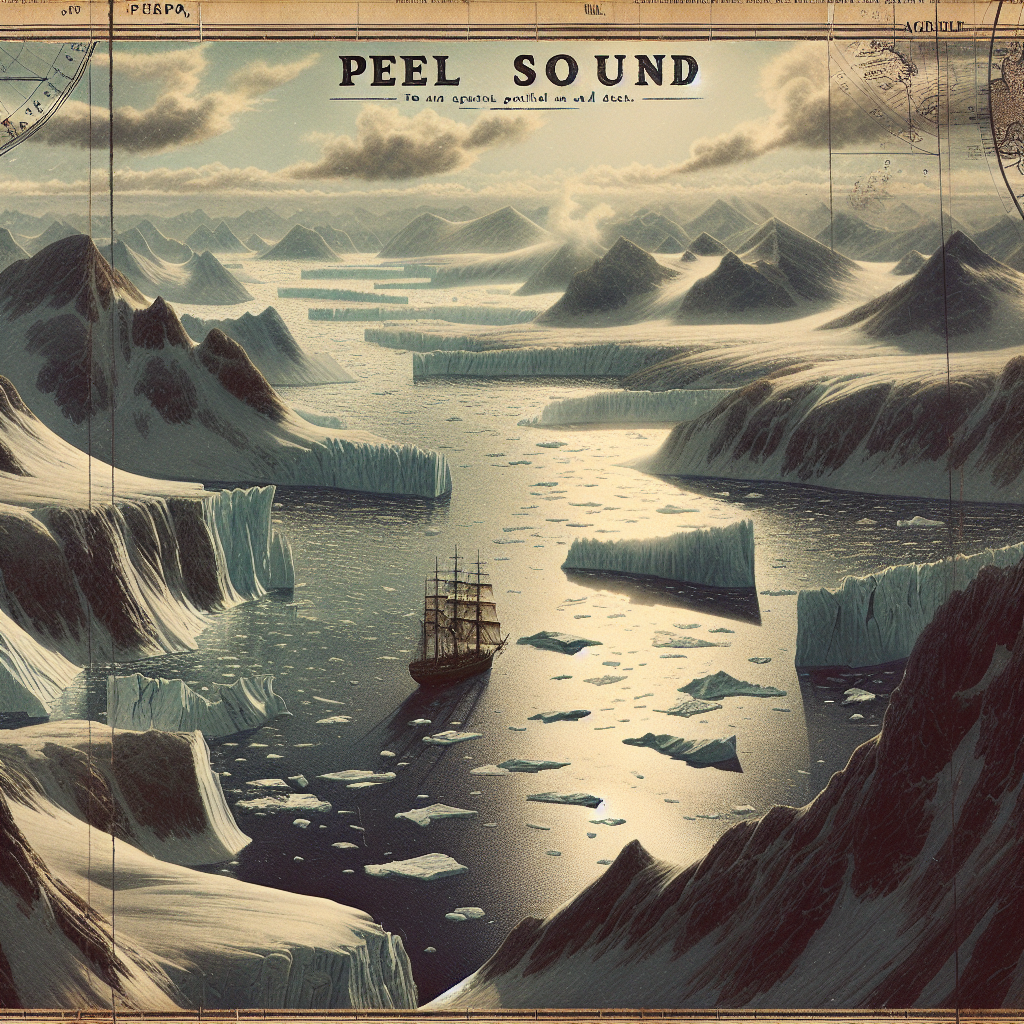

Imagine a vast sea passage shrouded in mystery and ice—Peel Sound offers precisely that enigmatic allure. Located in the Canadian Arctic Archipelago, Peel Sound stretches for about 150 miles, lying between Prince of Wales Island and Somerset Island. This narrow strait is a significant but scarcely traversed route for ships navigating through the Northwest Passage. Historically, this region became a point of fascination during the mid-19th century when explorers attempted to navigate these icy waters in search of new maritime routes and the allure of reaching distant continents. Named after British Prime Minister Sir Robert Peel, this body of water has much to say about resilience and struggle.
Peel Sound might seem detached from the bustling world, but its strategic importance and ecological value cannot be ignored. The sound is a part of the labyrinthine Northwest Passage—a sea route that connects the Atlantic and Pacific Oceans through the Canadian Arctic Archipelago. While it holds historical allure, it’s also a testament to contemporary issues like climate change. As ice caps thin and recede, the passage becomes more accessible to explorers, scientists, and cargo ships. Some argue that this is a new opportunity for global trade, while others worry about the environmental price we might pay.
The melting ice sheds light on how Peel Sound is a microcosm for larger climate challenges. Researchers observe that thinning ice and warmer temperatures threaten unique habitats not just for marine life but also for indigenous communities residing nearby. These communities have lived in harmony with the environment for generations. As outsiders vie for control and influence over the newly navigable routes, local voices often fade into the background, overshadowed by louder voices advocating development and exploration.
Despite its icy appearance, Peel Sound speaks volumes about the interconnectedness of global ecological systems. Every ice sheet that melts here contributes to rising sea levels elsewhere. Scientists are particularly interested in studying this seemingly remote region to better understand global warming. Data collected here serves as a benchmark for models predicting future climate patterns, influencing how countries prepare for environmental shifts.
Environmentalists are justifiably concerned. The exploration and increased marine traffic pose risks of oil spills, noise pollution, and disturbances to marine life. However, not all agree on the path forward. Some argue that controlled exploration can lead to scientific advancements and even solutions to climate crises. Advocates for development emphasize the untapped potential of shipping routes that could dramatically reduce travel times for commercial goods, linking Europe and Asia more directly.
Gen Z, with its characteristic passion for charged topics like climate change, views Peel Sound as more than just a navigational challenge. There’s a broader discourse about who gets to decide the future of such natural wonders. Should it be the industrialists seeking to capitalize on shorter shipping routes, or the scientists pushing for a hands-off approach to protect ecosystems? Perhaps it’s the indigenous communities who, understanding the land’s rhythms, might offer sustainable solutions grounded in a deeper respect for nature.
Navigating Peel Sound is not just a geographic endeavor; it’s also a metaphorical one. It reflects the narrowing gap between human ambitions and nature’s limits. Every decision made concerning this passage has ripples that affect people far removed from its icy edges. Coastal communities in far-off lands are gearing up for changes that originate from choices made in regions like this.
While advancements beckon explorers and nations to its icy stretch, Peel Sound is not just a frozen expanse but a vibrant living zone. Unlike most places on Earth, where land and life are visibly intertwined, Peel Sound challenges us to see life through ice's veiling. It’s a dance of delicate balances, where seals and polar bears tread lightly on the surface, supported by microscopic algae drifting beneath.
What this intricate ecosystem teaches the world is subtle but profound. Balancing exploration with responsibility is the real enduring legacy we can hope for. The voices calling for change from a distant icy expanse connect with those rallying in cities around the world, pleading for responsible stewardship of our planet.
In Peel Sound, the intersection of history, climate, and indigenous rights forms a narrative that continues to challenge policymakers and environmentalists alike. Its quiet, icy demeanor hides fierce debates that resonate globally. As ice continues to break in Peel Sound, so does the silence, giving rise to questions that demand answers—not just from those who sail through its waters, but from all of us who are joined by the threads of shared responsibility.