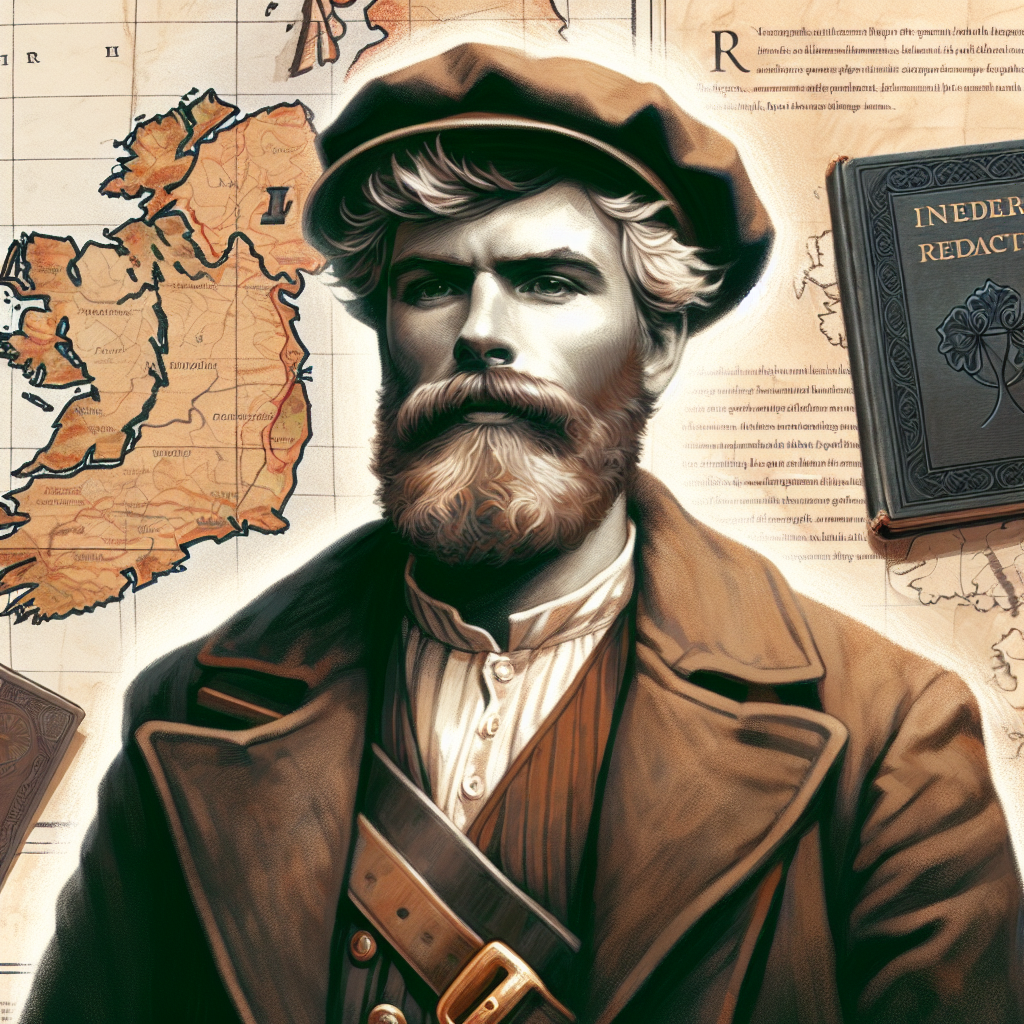

Peadar Kearney might not be a household name, but the impact of his craft has echoed through the hills and vales of Ireland, stirring hearts with a call for freedom. Born in Dublin in 1883, Kearney came of age during a time when Ireland was slowly simmering towards its revolutionary boiling point. As an ardent nationalist and a member of the Irish Republican Brotherhood, he penned some of the most stirring and iconic anthems of Ireland's fight for independence, most notably ‘The Soldier’s Song’ and ‘The Foggy Dew’. His work provided the soundtrack to a pivotal era of Irish history, becoming an essential part of Ireland's cultural tapestry.
Kearney was not just a lyricist; he was a passionate patriot whose words gave voice to a nation's aspirations. His journey began against the backdrop of a country yearning for self-determination, where every word and note carried the weight of a collective struggle. It is said that 'The Soldier's Song', written in 1907, encapsulated the spirit of the Irish people, so much so that in 1926, it was adopted as the national anthem of a newly independent Ireland. This song managed to transcend mere tunes and became a rallying cry that invigorated the hearts of those longing for freedom.
His contribution, however, goes beyond penning lyrics. The social, cultural, and political contexts in which he lived heavily influenced his work, allowing him to craft pieces that spoke to the heart of the Irish republicans in a way few others could. Kearney expressed the pain of suppression, the hope for change, and the dignity of rebellion—concepts that resonate even today.
For Gen Z, a generation often known for its pursuit of change and aversion to societal injustices, there's a relatable chord in Kearney’s story. He was a disruptor, challenging the status quo with words that would inspire revolutionary action. Today’s youth, with their digital reach and social media savvy, find innovative ways to drive change, just as Kearney wielded his pen to disrupt and transform.
Regrettably, the nuances of his political affiliations can spark divisive discourse. While some celebrate Kearney’s unwavering commitment to Irish nationalism, others point out the complexities of his association with armed conflict and the violence that often accompanies such revolutionary efforts. These are valid considerations, leaning towards a more pacifist approach to activism seen in many contemporary circles. Pacifism is a concept that many of today’s youth resonate with, fostering change through dialogue and empathy rather than armed resistance.
Nevertheless, understanding Kearney’s context, including the cultural and political landscape of early 20th-century Ireland, is pivotal. It's essential to empathize with the historical necessity of his actions; for those who lived under colonial rule, self-determination was non-negotiable. Kearney's work can be seen as a testament to the power of music and poetry to ignite social change, shedding light on how creative expression can lead to profound societal impacts.
Today, while the medium of protest has evolved, the underlying message of Kearney’s work remains as relevant as ever. His songs underscore that art is intrinsically linked to political expression. Music continues to be an agent for change, rallying people to causes and uniting them under a shared vision for a better future. The melodies of resistance, even if from a century ago, still reverberate in resonant frequencies among activists and musicians, who use their platforms to push boundaries and challenge norms.
Peadar Kearney may have passed away in 1942, but his legacy endures. His dedication to the cause of Irish freedom and his knack for infusing nationalistic fervor into his lyrics endures as expressions of cultural pride. Now more than ever, his life reflects the potential of one individual to catalyze change, to inspire a movement through the arts, and to leave a lasting impact on society. Just as Kearney imagined a free Ireland, today’s changemakers envision a world where equity, justice, and peace are not just aspirational ideals but tangible realities. They, too, sing their own soldier's songs in the hope of creating resounding echoes for future generations.