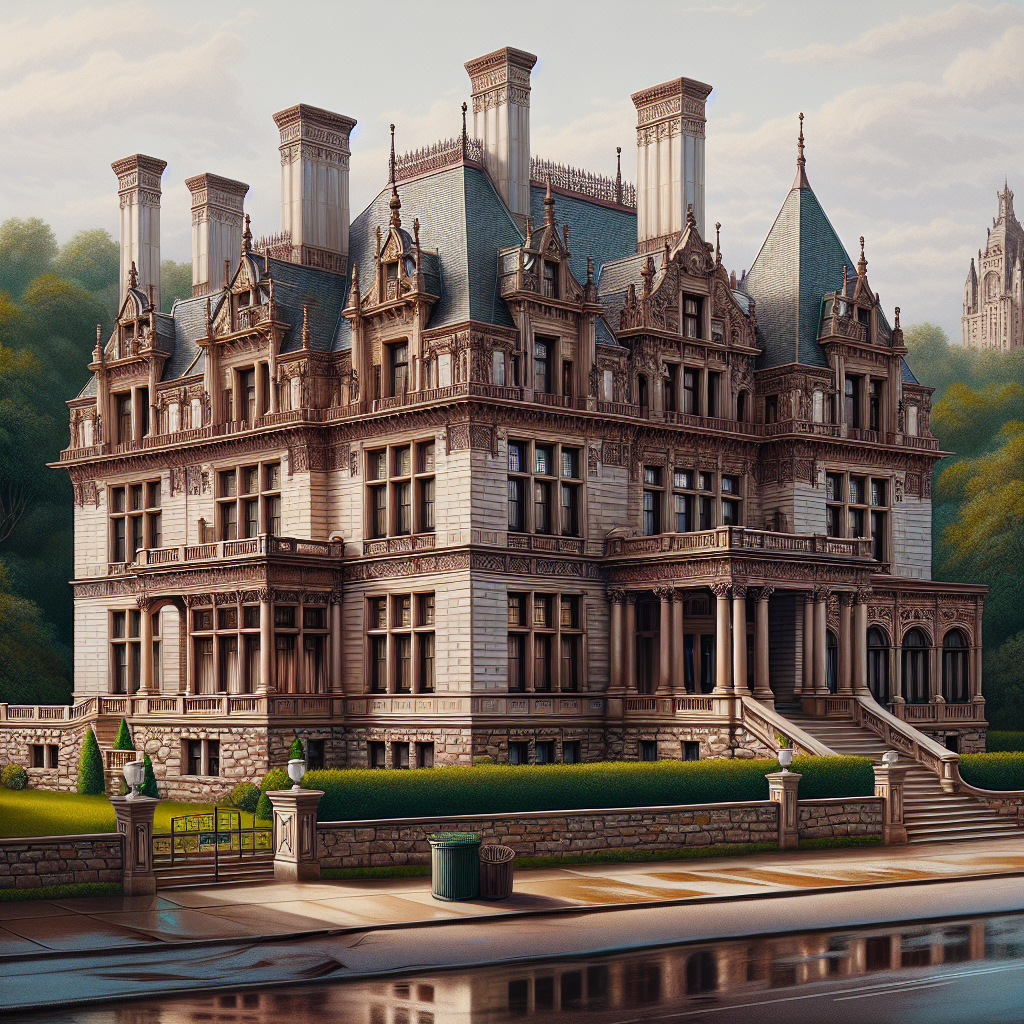

Nestled amidst the bustling streets of the Upper East Side of Manhattan lies a building with timeless allure and rich history - the Payne Whitney House. This architectural gem, built in the early 1900s, remains an emblem of grandeur and artistic expression. Designed by the renowned Stanford White and completed in 1909, the mansion was a wedding gift to Payne Whitney, a member of the prominent Whitney family, and his bride, Helen Hay. Constructed at 972 Fifth Avenue, it stood amidst the burgeoning wealth that defined New York's Gilded Age, reflecting a blend of opulence and cultural sophistication.
The Payne Whitney House is a masterpiece in its own right, capturing a classic style with its neo-Italian Renaissance architecture. The design reflects White's masterful balance of elegance and functionality, boasting detailed interiors that tell tales of a bygone era. What stands out in its exquisite aesthetics is the intricate artistry of the ceilings and the lavish use of imported marbles. Each corner of the mansion exudes a sense of indulgence, yet it's the nuances of its storied past that catch one’s imagination.
Fast forward to a few decades later, the Payne Whitney House's purpose would take an unexpected twist. The building was purchased by the Republic of France in 1952 to house its cultural services in the United States. Today, it is known as the Cultural Services of the French Embassy. While some may argue that a national treasure should remain within its cultural roots, others see the transition as a testament to the cross-cultural exchanges that enrich our global community.
The transformation from private mansion to a hub of cultural diplomacy marks a fascinating chapter in the property's history. It symbolizes the melting pot spirit so intrinsic to New York City, a place where different cultures, ideas, and people intersect. While its original grandeur has been respectful maintained, the shift in its function from a private residence to a public diplomacy venue underscores a broader narrative of historical repurposing.
Gen Z might relate to this change as a reflection of evolving identities in a world that's becoming increasingly borderless. The preservation of such a building provides a tangible connection to the past while serving modern purposes. It prompts consideration about how spaces and cultural landmarks can be recycled, adapted, and reused while preserving their inherent character.
However, not all viewpoints are aligned, as some purists advocate for conserving historical sites strictly for their original intents. They point out the importance of honoring the architectural intent and historical context in which such buildings were constructed. This perspective emphasizes a sort of puritanical stewardship, viewing any modification as a risk to historical authenticity. Yet, there's an argument to be made for adaptive reuse - a principle in modern architecture that retains a structure's historical context while revitalizing it for contemporary use.
In this dialogue of old versus new, the Payne Whitney House stands as a bridge between the two worlds. To some, it's a reminder of America's Gilded Age, a time of immense wealth and artistic experimentation. To others, it represents an evolving cultural landscape, a space now facilitating global dialogues and fostering understanding between nations.
Moreover, the mansion attracts attention not just for its beauty and history, but for the stories imbued within its walls. Helen Hay Whitney, a noted poet and philanthropist, once graced those very halls, a fact that adds an extra layer of cultural resonance. Her life alongside Payne Whitney reflects the symbiotic relationship between wealth and art, a narrative that continues to unfold within the house's current incarnation. Through exhibitions, cultural events, and collaborations, the embassy breathes new life into this iconic structure.
Ultimately, the character of the Payne Whitney House sparks important conversations about heritage, identity, and cultural exchange. Should heritage conservation prioritize the past, or should it consider adaptive strategies for modern relevance? The building, in its current guise, offers a case study on finding equilibrium between respecting history and embracing change. It is fascinating to consider how vividly it mirrors the ever-changing societal constructs around it.
For young people exploring identity and historical belonging, the Payne Whitney House serves as a beautiful metaphor for merging old worlds with new visions. It stands not merely as a relic of elite New York, but as a vibrant reminder of what’s possible when history and modernity meet. It's the kind of place that engages curiosity, invites questioning, and symbolizes a broader societal ethos—one that champions the beauty of difference and the potential of shared cultural spaces.