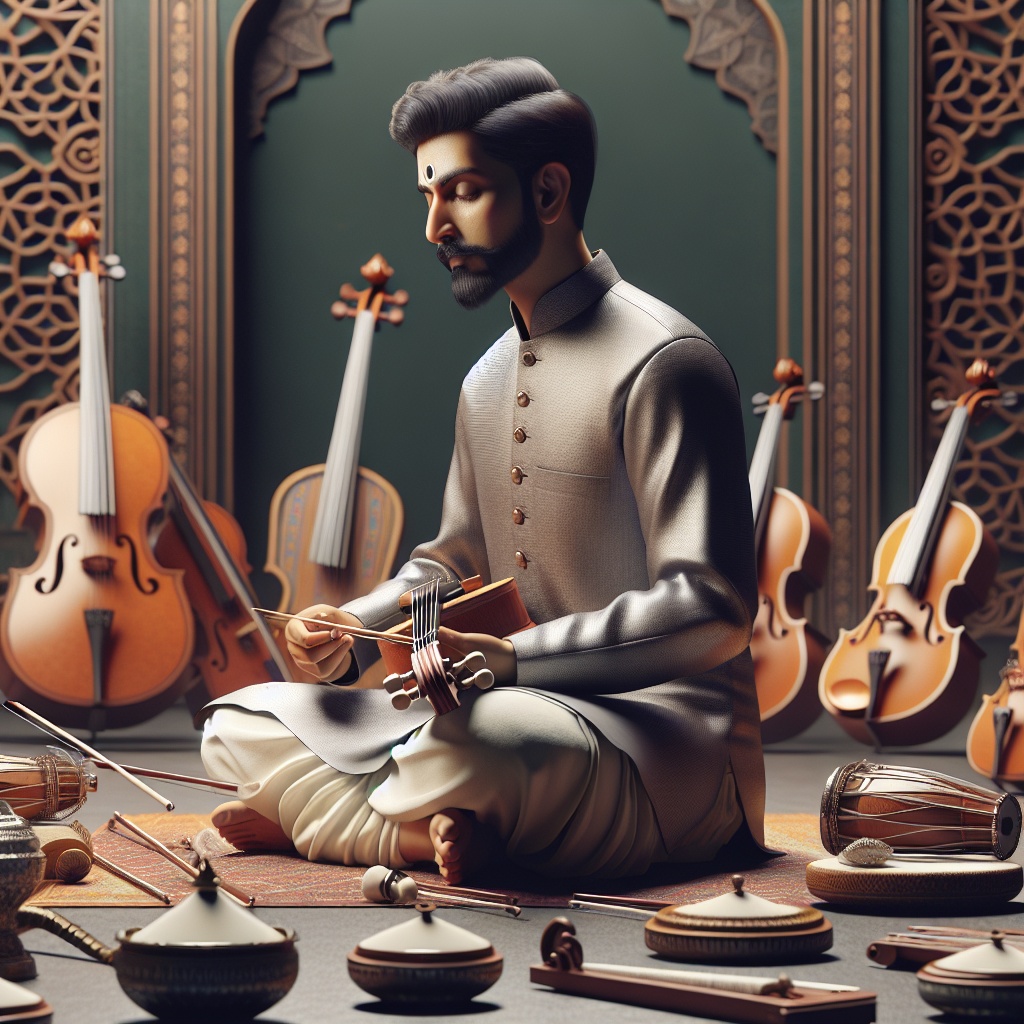

Pandit Divyang Vakil’s journey in music reads like an epic saga, with beats that echo through the corridors of time. A maestro in the art of tabla, one of India’s most revered percussion instruments, Vakil hasn’t just played music; he’s crafted stories, traditions, and teachings that ripple across continents. Born in India, where music breathes through life like the monsoon through the parched earth, Vakil began his rhythmical journey in his youth. He studied under the legendary Pandit Sudhirkumar Saxena, immersing himself completely in the classical rhythms of Indian music.
His expertise in classical Indian music led him to transcend traditional boundaries, teaching and spreading his art internationally. In the 1980s, when much of the world outside India was just beginning to dip their toes into the expansive pool of Indian classical music, Vakil was already swimming in it, guiding others on the same journey.
Over the years, Vakil has become much more than a musician. He's a touchpoint for cultural exchange, where the ancient and modern worlds meld harmoniously. This fusion is evident in his role as a guru, inviting students from all walks of life to experience and participate in the rich cultural embrace of the tabla. His school, Taalim School of Indian Music, stands as a beacon in the United States, providing lessons that reach beyond mere technique into the very soul of music.
Vakil’s work showcases his flexibility and sensitivity to different perspectives. With students ranging from eager kids to accomplished artists, and with venues stretching from small community centers to grand international festivals, he champions inclusivity and accessibility in the traditionally rigid world of classical music. His teaching style is known for being empathetic, encouraging students to see beyond the immediate rigors of learning and feel the music’s living spirit.
Not merely content with embedding traditional roots, Vakil has also embraced modernity. He has worked and collaborated with contemporary musicians, bringing the tabla into unexpected genres. Under his guidance, his pupils have stepped into new territories, showcasing that music, indeed, knows no bounds. Here, tradition meets invention, fostering an open-minded approach that speaks volumes to Gen Z's penchant for cultural fluidity and innovation.
Yet, to truly grasp Vakil’s impact, one must consider the broader picture. He is situated at a cultural crossroads, navigating a world with increasingly polarized social and political views. His work subtly nudges us toward unity, encouraging an understanding through rhythm and beats that bypasses linguistic or ideological barriers. This approach provides not just a platform for cultural dialogue, but a call to the deeper, universal heart of music as a uniting force.
Critics of Indian classical music often argue its complexity can be a barrier to appreciation, especially for those unfamiliar with its nuances. Vakil challenges this notion, however not by simplifying the music, but by inviting listeners and students to engage in the complexity, to explore its layers, and uncover its many messages. In doing so, he transforms what might be seen as intimidating into an invitation to learn and grow—a captivating adventure awaiting discovery.
For Gen Z, in particular, living in an age of digital echoes and fleeting interactions, Vakil’s work is a reminder of the tangible, earthy wisdom of practiced art. It's not just about playing the tabla to perfection. It’s an act of mindfulness, of being present. The intimate relationship between player and instrument, between teacher and student, speaks to deeper connections often lost in virtual exchanges.
Through Vakil, young musicians find not only a mentor but a beacon guiding them through the intricacies of tradition while encouraging them to explore their identities within the music sphere. His teachings urge them to question, to fuse, and most importantly, to listen—core tenets of creativity and progressive thought.
Ultimately, Pandit Divyang Vakil’s influence transcends the music itself. It extends into creating a community, an inclusive space for people of all backgrounds to come together and share. It’s a testament to his vision that remains as dynamic and relevant as ever in today’s fast-changing world. His life's work carries the pulse of an ancient art form into the vibrant beats of modernity.