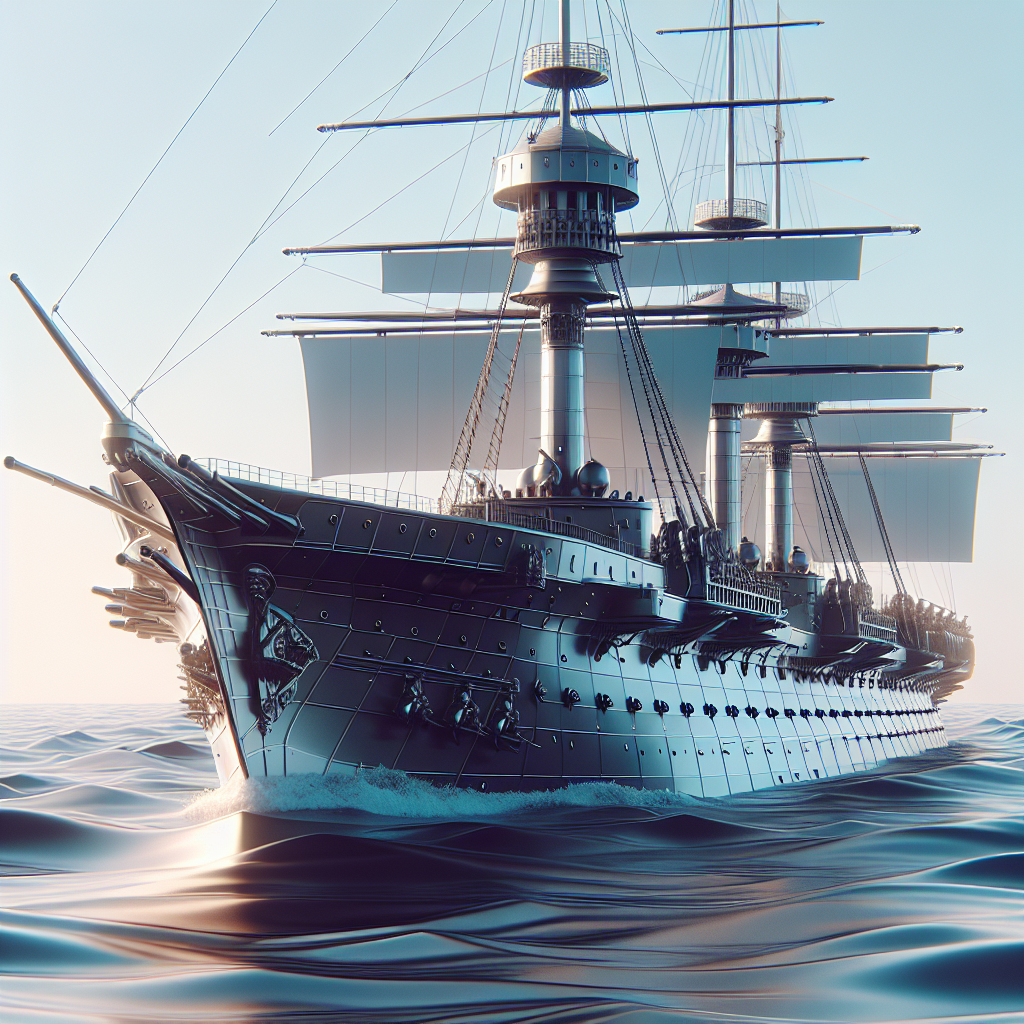

Imagine sailing into the pages of history aboard a formidable vessel, built to rule the waves and intimidate foes far and wide. The Ottoman ironclad Iclaliye was such a behemoth, a symbol of innovation and power during a transformative era. Launched in 1869, the Iclaliye was more than just a steel-clad ship of the line; it was the brainchild of the once-mighty Ottoman Empire as it endeavored to modernize its naval capabilities in a rapidly changing world. Constructed in the shipyards of the French city of La Seyne-sur-Mer, this formidable vessel was both a product of imperial ambition and international collaboration.
The iron age of naval warfare was ushering in a new era, aligning perfectly with the Industrial Revolution's waves of technological advances. The Iclaliye came at a time when dominance at sea was essential for any nation with aspirations of empire or colonial holdings. The ironclad marked a stark departure from the traditional wooden hulks that previously ruled the seas. She embodied the Ottoman Empire's attempt to keep pace with prominent world powers, including the British and French, whose mastery of the seas dictated the terms of power.
In a world on the brink of modern warfare, the Iclaliye represented the Ottoman Empire’s urgent stride towards military modernization. The Empire was navigating through a period fraught with political and territorial challenges, and its weakened state was a subject of intense diplomatic discussion in Europe. The ironclad might have been perceived as a boastful attempt to display strength, perhaps too late to stave off the decline of Ottoman influence, yet still significant in the broader narrative of naval history.
Crafted with cutting-edge technology for its time, the Iclaliye was armed with formidable weaponry, a calibre that could instill fear in adversaries. The imposing presence of ironclads on water was emblematic of technological progress, but it also sparked debates. Critics at the time and even historians today question the effectiveness of such battleships compared to the manpower and tactics that had been the Empire's historical strengths.
For Gen Z, accustomed to tech revolutions at light speed, the Iclaliye is a throwback to an era when innovation took tangible forms in iron and steam. As we now live amidst moves towards renewable resources, electric advancements, and lesser reliance on heavy industry, the story of the Iclaliye might seem out of a steampunk narrative. However, it highlights the eternal quest for progress, whether through wielding superior tech or driving cultural shifts.
The debate about the Iclaliye and its significance may seem distant in the face of today's geopolitical challenges, yet it captures a timeless dynamic where innovation collides with established norms. Opponents of the ironclad technology during its nascent period highlighted the strategic threat these vessels posed to fragile peace treaties. They argued about the steep costs of building and maintaining such large fleets, more so for an empire with strained resources. Empirical wealth or a lack thereof often dictates the breadth of national interests.
On the flip side, advocates championed the Iclaliye as essential to protecting a vast and diverse empire. They perceived it as a necessary expense that projected tangible strength. For many, the Iclaliye's presence was a deterrent, a peacekeeper in steel clothing amidst unpredictable seas.
The legacy of the Iclaliye is one woven with strands of ambition, ingenuity, and decline—a narrative all too familiar in the trajectory of imperial powers striving to assert influence in an ever-fluid geopolitical landscape. It's a narrative that resonates with Gen Z's understanding of today's intricacies where boundaries between technology, politics, and global influence are increasingly blurred. While the world today operates on a very different technological ethos, the learnings from such historical endeavors underscore the importance of adaptability and contemplation regarding future advancements.
Today as we stand on the precipice of technological leaps, be it artificial intelligence or renewable energy solutions, reflecting on the life of the Iclaliye can foster a deeper appreciation for how tech innovations have historically remodeled societies. We might ponder whether we are destined to repeat mistakes of the past, succumb to the allure of innovation without considering long-term ramifications.
Ultimately, the story of the Iclaliye transcends beyond being just an ironclad. It was a testament to the creative endeavors of a late-imperial scramble for relevancy amidst the volatile tides of international relations. As the Ottoman oars of power waned, iron fists took their place, albeit briefly. This cycle of innovation and obsolescence links different eras, providing a mirror for our generation to reflect upon as we weigh the promises and perils of our own technological futures.