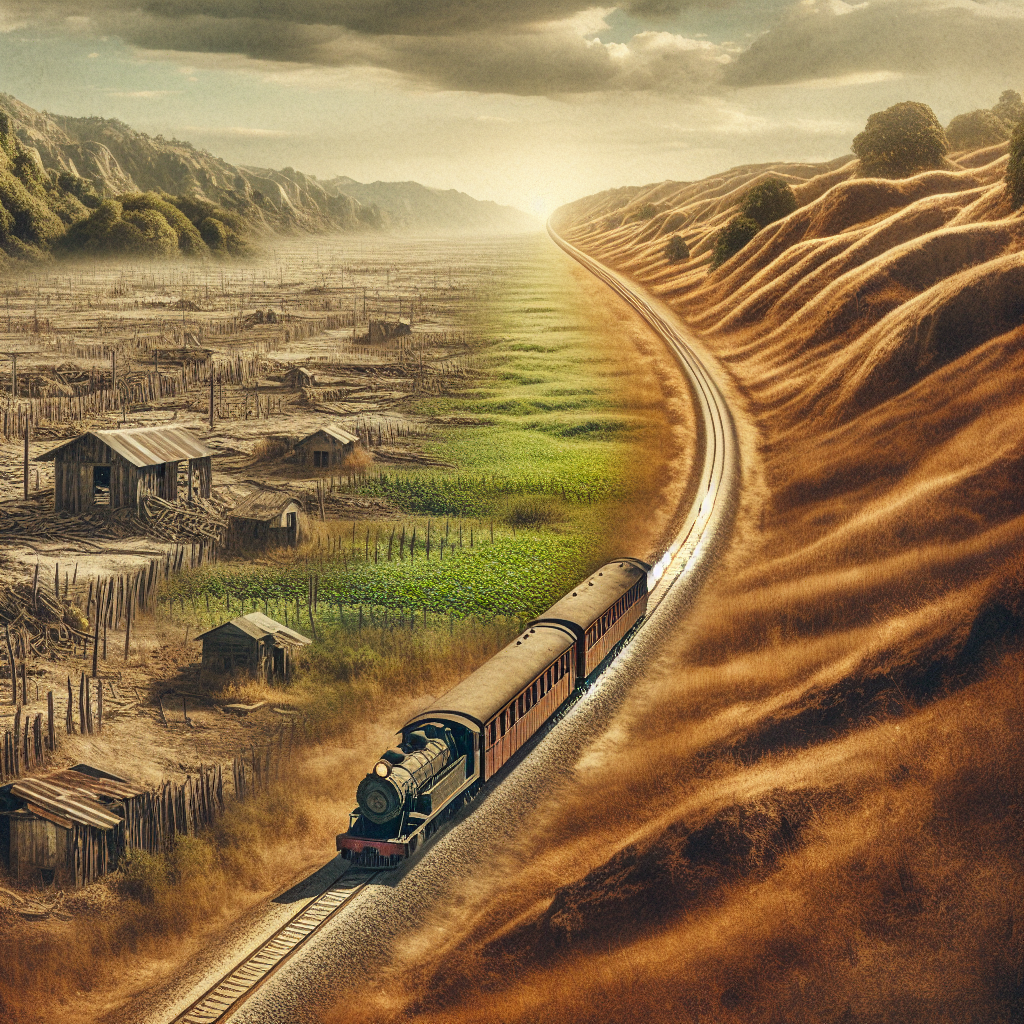

The Northern Xinjiang Railway: A Journey Through Time and Politics
Imagine a train journey that not only takes you through breathtaking landscapes but also through a complex web of history and politics. The Northern Xinjiang Railway, a crucial rail line in China, does just that. Built in the mid-20th century, this railway stretches across the vast and diverse region of Xinjiang, connecting the city of Ürümqi to the rest of China. It was completed in 1992, but its roots go back to the 1950s when the Chinese government sought to integrate Xinjiang more closely with the rest of the country. The railway was a strategic move to boost economic development and strengthen political control over this remote and resource-rich region.
The Northern Xinjiang Railway is more than just a transportation route; it is a symbol of China's efforts to modernize and unify its vast territories. For the people of Xinjiang, the railway has brought both opportunities and challenges. On one hand, it has facilitated trade and mobility, allowing for economic growth and improved living standards. On the other hand, it has also been a tool for the central government to exert greater influence over the region, which has a complex ethnic and cultural landscape.
Xinjiang is home to a diverse population, including the Uyghurs, a predominantly Muslim ethnic group with a distinct culture and language. The railway has played a role in the migration of Han Chinese, the ethnic majority in China, into Xinjiang. This demographic shift has been a source of tension, as many Uyghurs feel that their cultural identity is being eroded. The Chinese government argues that the railway and subsequent development projects are necessary for economic progress and national unity. However, critics argue that these efforts often come at the expense of the local population's rights and freedoms.
The Northern Xinjiang Railway also highlights the environmental challenges faced by the region. Xinjiang's arid climate and fragile ecosystems are vulnerable to the impacts of large-scale infrastructure projects. The construction and operation of the railway have raised concerns about land degradation, water scarcity, and habitat disruption. Balancing economic development with environmental sustainability is a delicate task, and one that requires careful planning and consideration.
From a geopolitical perspective, the Northern Xinjiang Railway is part of China's broader strategy to enhance its connectivity with Central Asia and beyond. The railway is a key component of the Belt and Road Initiative, a massive infrastructure project aimed at reviving ancient trade routes and strengthening China's economic ties with other countries. By improving transportation links, China hopes to boost trade and investment in the region, while also expanding its influence on the global stage.
For many young people, particularly those in Gen Z, the Northern Xinjiang Railway represents a complex intersection of progress and controversy. It is a reminder of the challenges that come with balancing economic development, cultural preservation, and environmental protection. As the world becomes increasingly interconnected, understanding the implications of such projects is crucial for shaping a more equitable and sustainable future.
The Northern Xinjiang Railway is a testament to the power of infrastructure to transform societies. It has brought significant changes to Xinjiang, both positive and negative, and continues to be a focal point of debate. As we look to the future, it is essential to consider the voices of those most affected by these developments and to strive for solutions that respect both human rights and the environment.