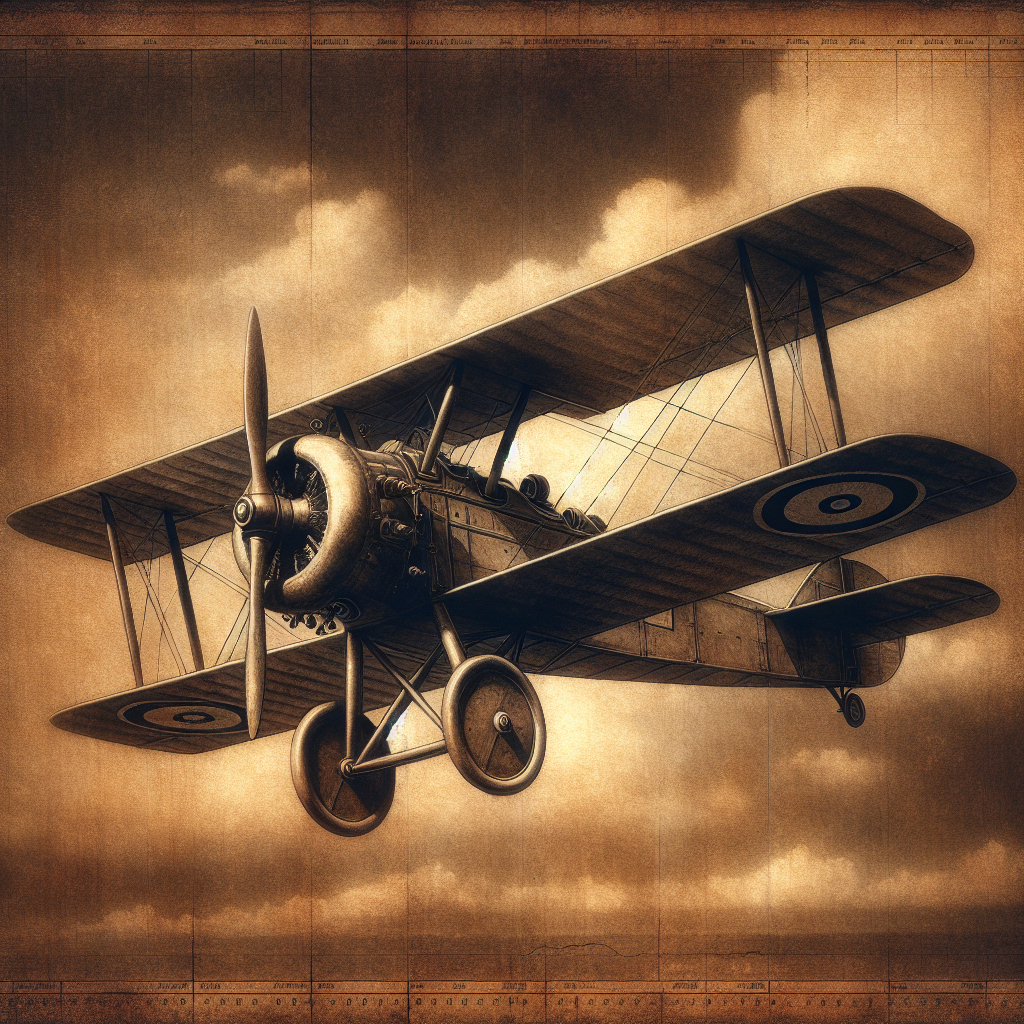

If planes could be rock stars, the Nieuport 17 would be the Mick Jagger of the skies during World War I. Taking the aerial stage in 1916, this French biplane fighter earned its fame by outmaneuvering rivals and charming even its foes. With a lightweight design and unparalleled agility, it became a favorite among Allied pilots battling in the war-torn skies over Europe. But what made the Nieuport 17 such a legendary craft?
The Nieuport 17 was the brainchild of one Édouard Nieuport, a visionary who laid its foundation in the early 1900s with his aviation company. Though Édouard tragically perished in a crash, his legacy took flight thanks to employees like Gustave Delage—an engineer who transformed the company's prototype into a war icon. The Nieuport 17 quickly became a mainstay of the WWI fighter squadrons for the French, British, Belgian, and even Russian air forces.
Small yet mighty, the plane featured a distinctive sesquiplane wing structure, meaning its lower wing was significantly smaller than the upper. This design gave the Nieuport 17 an unparalleled climb rate, allowing it to soar high and fast, characteristics crucial in dogfights. Its rotary engine, often the Le Rhône 9J, provided robust power, letting pilots pull off daring aerobatic maneuvers. It was armed with a single synchronized Vickers machine gun, enabling pilots to fire through the spinning propeller without shooting it off—no small feat in early aviation technology.
The fighter achieved its iconic status during the early days of its deployment when it effectively countered the German Albatros fighters, known for their overwhelming firepower. In a time when air superiority was still being defined, the Nieuport 17's agility often turned the tide in air skirmishes. Numerous aces achieved their fame in this aircraft, taking it to the literal and metaphorical heights of aerial warfare.
Like all great stories, the Nieuport 17 had its flaws. Its lightweight design, which granted it agility, also made its wings susceptible to damage during sharp turns at high speed. Pilots had to carefully balance their daring maneuvers with the risk of airborne disassembly—floating the thin line between reckless heroism and disaster. Yet, for those who mastered it, the Nieuport 17 offered a thrilling experience replete with the adrenaline rush of combat.
Some critics argued that, despite its agility, the Nieuport 17 was outmatched in firepower by its German counterparts. And while the introduction of twin-gun setups in later models tried to address this, it never quite reached the same firepower level. The German Albatros series eventually adapted and improved, with stronger airframes and more powerful engines, thus overshadowing the Nieuport in the later stages of the war.
Generational perspectives might sympathize with those who favored evolutionary advancements instead. For many young people today, the discussion around military technology can invoke thoughts of ethical considerations and the consequences of such innovations. Some might rather celebrate advancements in green technology or peaceful aerospace engineering. However, the discourse around the Nieuport 17 and planes like it often gravitates toward innovation and the human spirit of invention—even if it's in the context of war.
The lasting legacy of the Nieuport 17 isn't just in its technical prowess but in its contribution to the mythology of early aviators and the spirit of determination and courage they embodied. Today, historians and aviation enthusiasts alike marvel at its legacy, often reflecting on how this little fighter did so much with so little.
Examining the history of the Nieuport 17 also presents an opportunity to reflect on how war spurs rapid technological advancements—sometimes with a price too high to be quantified solely in numbers. While our modern conversations around innovation tend to be shaped by the needs of peace, the wartime scenario presents a contrasting paradigm, often challenging our moral and ethical stances.
As society continually strives for peace, examining machines like the Nieuport 17 reminds us of the precarious balance between technological marvels and their implications. It speaks to a generation deeply concerned about the consequences of technological decisions—a reminder that the beauty of innovation can come entangled with the sorrows of its use.