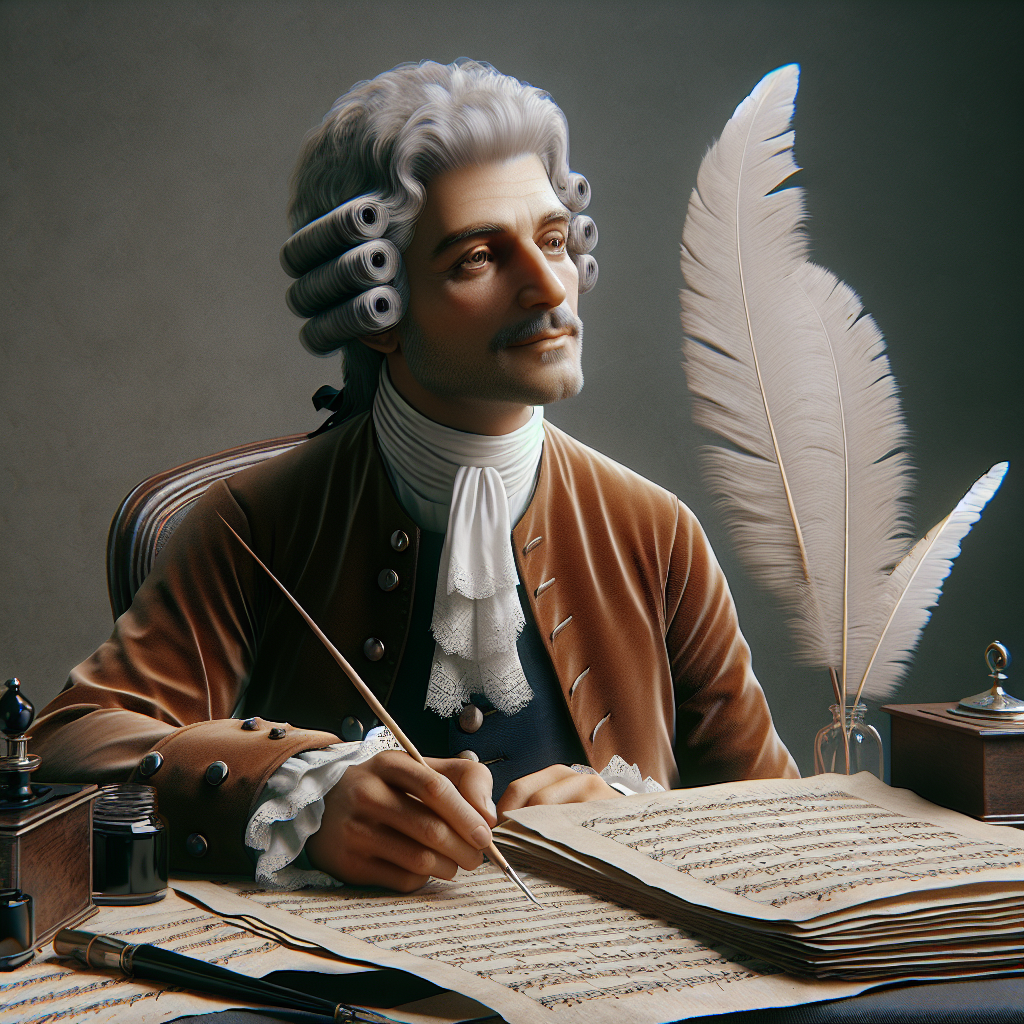

Imagine a world where a gifted musician, whose talents could rival those of contemporary legends like Bach, remains mostly unknown. That's the tale of Nicolas de Grigny, a French composer and organist whose name echoes quietly through the halls of Baroque music history. Born in 1672 in Reims, France, Grigny composed some of the most intricate organ music of his time. Yet, due to unforeseen circumstances, his works only survived in the shadows. Why? His life and career, though musically profound, had a rather subterraneous journey, obscured by the giants of his era.
Grigny came from a family with deep musical roots. His grandfather and father were both organists. This familial foundation likely played a significant role in his eventual mastery of the organ. Upon his death at a young age in 1703, his influence seemed fleeting. He wasn't forgotten due to a lack of talent—far from it. It's more the towering figures of his contemporaries and the limited opportunities of the age that eclipsed his light.
His most famous work, 'Livre d'orgue', is a collection of organ music compiling a mass and three hymns. Written in a style that was both elaborate and rich, it became an inspiration for later composers. Johann Sebastian Bach, a titan in his own right, admired Grigny’s compositions immensely and even copied them by hand to study his craftsmanship. Bach’s admiration suggests Grigny was not only recognized as talented but revered among those in the know.
Even though Europe during the late 17th and early 18th centuries was a place bustling with artistic revolution and societal shifts, Grigny’s life reflects a quieter rebellion—a steadfast commitment to the depth and beauty of sound over sheer fame. His music, romantic and uplifting, provided solace, joy, and a glimpse of the divine. This perspective is deeply important, as it reflects an artist prioritizing his craft over celebrity.
During Grigny’s short life, he taught at the Cathedral of Notre-Dame in Reims. Some might say this role limited his exposure, tethering him to one geographic and social sphere. This local position reflects music for intimate spaces, not grand stages. In a politically charged world, that almost counter-cultural simplicity is quite radical and profound.
What one truly questions, however, is how genuinely accessible Grigny's music was to the common people of his time. Today, we might say he was ahead of his time. But was it really his time or merely the rigid social hierarchies that delayed wider recognition? The elitism of music and arts during this period means many would have never heard Grigny’s compositions in the majestic cathedrals unless they were part of the select few.
Grigny’s story is emblematic of several talented individuals whose accomplishments remain underfoot in broader historic narratives. These hidden tapestries remind us that talent alone isn't always enough; historical context, marketability, branding—these are concepts we think of as modern, but they have roots deep in moments like Grigny’s. Who gets remembered, who's forgotten, often hinges on more than merit.
Today, Nicolas de Grigny might enjoy a slight resurgence, thanks in part to modern efforts to rediscover forgotten composers. In a world increasingly curious about the unheard and underappreciated, his music serves as a rich vein of discovery. In a sense, there's room now more than ever for his nuanced harmonies and brilliant musical counterpoints.
Grigny's legacy rests, in part, in his indirect influence through musicians like Bach, who studied and appreciated his work. He embodies the power of influence, personifying how art's ripples can extend long beyond an artist’s lifetime. For a generation so intent on breaking barriers and democratizing knowledge, Grigny offers a narrative of quiet, profound revolution—a revolution in sound, language, and expression.
With today's digital access, no longer must we depend solely on geographic location, patronage, or the approval of gatekeepers to explore and enjoy such art. Grigny's work reflects this truth—art survives and thrives beyond boundaries. It's this timeless quality that invites us to imagine our own potential legacies, encouraging the young artists and dreamers of today to make their mark, no matter how small it might seem in the vast narrative of history. As Gen Z paves its paths through culture and society, remembering artists like Nicolas de Grigny offers lessons in humility, persistence, and the everlasting pursuit of beauty.