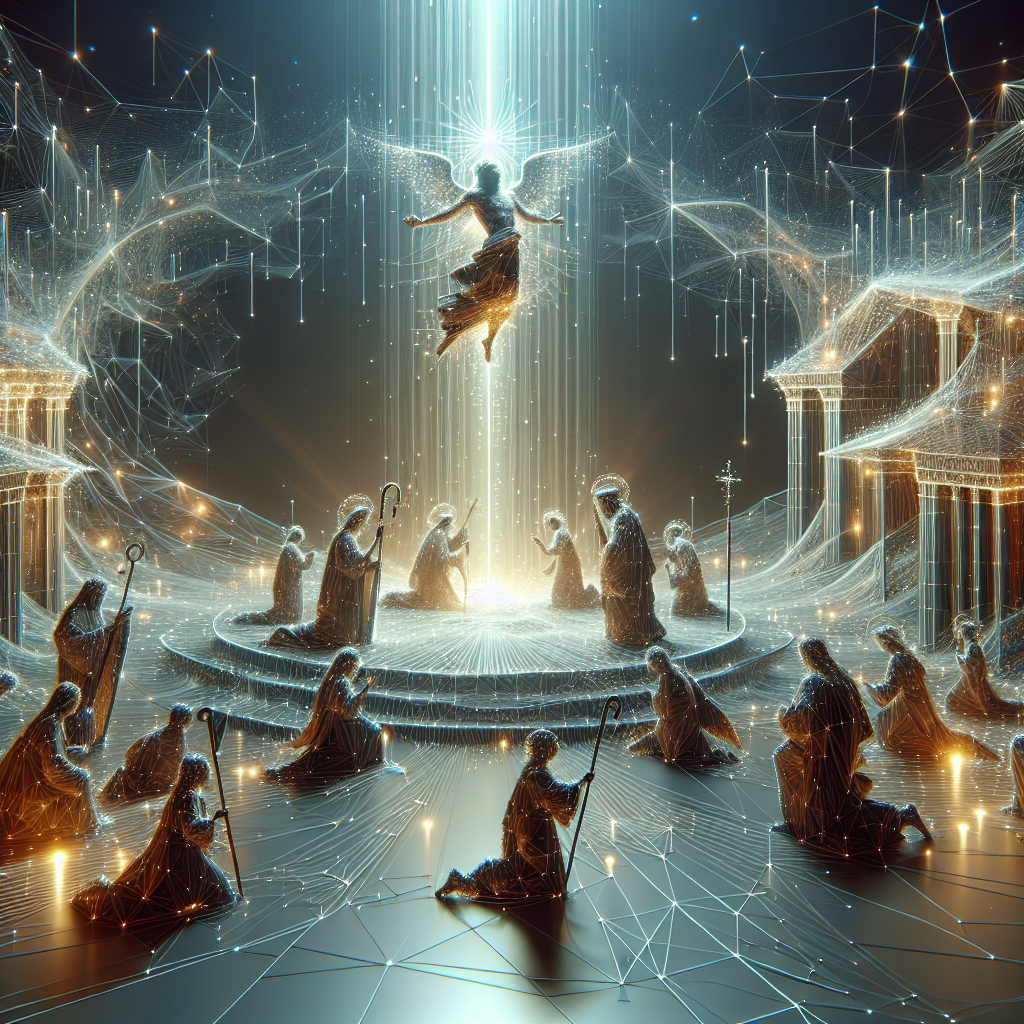

‘Narodil se Kristus Pán,’ which translates to ‘Christ the Lord is Born,’ is not just any old Christmas carol—it’s like a time machine wrapped in melody. This traditional Czech hymn likely sprang up around the 15th century, although its exact roots are shrouded in mystery, enveloped in the mists of medieval Europe. Sung in the cozy confines of festive gatherings and grand cathedrals alike, it brings to life a central story that many cherish during the Christmas season: the Nativity of Jesus. Popularly sung in the Czech Republic, this carol holds great significance as a reminder of shared cultural heritage, cozy December nights, and the community spirit emblematic of Christmas celebrations worldwide.
Every note and phrase in this carol carries the weight of centuries, a testament to its endurance. The song is steeped in the simple, beautiful message of Christ’s birth and the joy it brings to the world, resonating deeply with listeners across generations. It’s like the Starbucks red cup of festive music—familiar, reliable, but somehow always fresh and exciting.
Beyond the borders of the Czech Republic, this carol finds its voice in choirs around the world, amplifying its universal appeal. Its simplicity in both melody and lyrics allows it to transcend linguistic barriers, speaking to that part of us which longs for light in the heavy blankets of winter. However, it’s not just a piece of music; it’s a societal artifact, echoing the collective voice of a people who have clung to this song through times of peace and turbulence alike.
This carol, like a cultural heirloom, has inevitable intersections with politics and identity. Imagine its role during historic upheavals, a gentle anthem of perseverance. The Czech lands have seen their share of political and social turnarounds, from Austrian rule through Communist confines, and still, ‘Narodil se Kristus Pán’ emerged unscathed—a beacon of hope, a much-needed embrace within the storm. It’s comforting to think of how these words might have soothed souls across history, different languages, different lives but the same humanity.
Today’s Gen Z can find an unexpected kinship with this carol’s narrative. In an era driven by digital noise and rapid change, something as quietly powerful as ‘Narodil se Kristus Pán’ is a heartening anomaly. Many of this generation are increasingly interested in exploring their roots, understanding ancestral legacies, and piecing together cultural jigsaws left by previous generations. This carol serves as a bridge between the fast-paced modern lifestyle and the slower, tradition-rich celebrations of the past.
In a world increasingly aware of cultural diversity and history, 'Narodil se Kristus Pán' symbolizes the beauty in preserving and celebrating our heritages. While not all will celebrate Christmas or follow Christianity, many can still recognize and respect the significance of such traditions to those who do. Songs like this invite us to think beyond our bubbles, fostering empathy and understanding across creeds and cultures.
Admittedly, not everyone vibes with Christmas carols or their underlying stories. For those who stand outside of this cultural fold, ‘Narodil se Kristus Pán’ may appear as an idyllic fantasy, or perhaps even an archaic tradition better left behind the cultural arc. But even the skeptical can find within it a spark of artistic admiration—a musical tale crafted by monks, shared by generations, and kept alive by its innate brilliance. There is something appealing in its endurance, a kind of shared global playlist.
Riffing on the essence of 'Narodil se Kristus Pán', today’s artists and musicians can pull inspiration from its authenticity. Its survival isn’t just a nod to religious adherence; it's a testament to the binding power music holds. Beyond religious connotations, it stands as a cultural emblem of unity, an example of tradition living on because people chose it, time and again.
The Christmas bells, much like the gentle notes of ‘Narodil se Kristus Pán’, ask us to pause—to remember that the stories of old have much to teach, much to give. They tell us about days gone by and invite us to create meaningful traditions for ourselves, whatever our beliefs may be. Through them, we explore connections with distant times, weaving their ancient harmonies into the rhythm of our modern lives, forever shaping the way we experience the world each December.