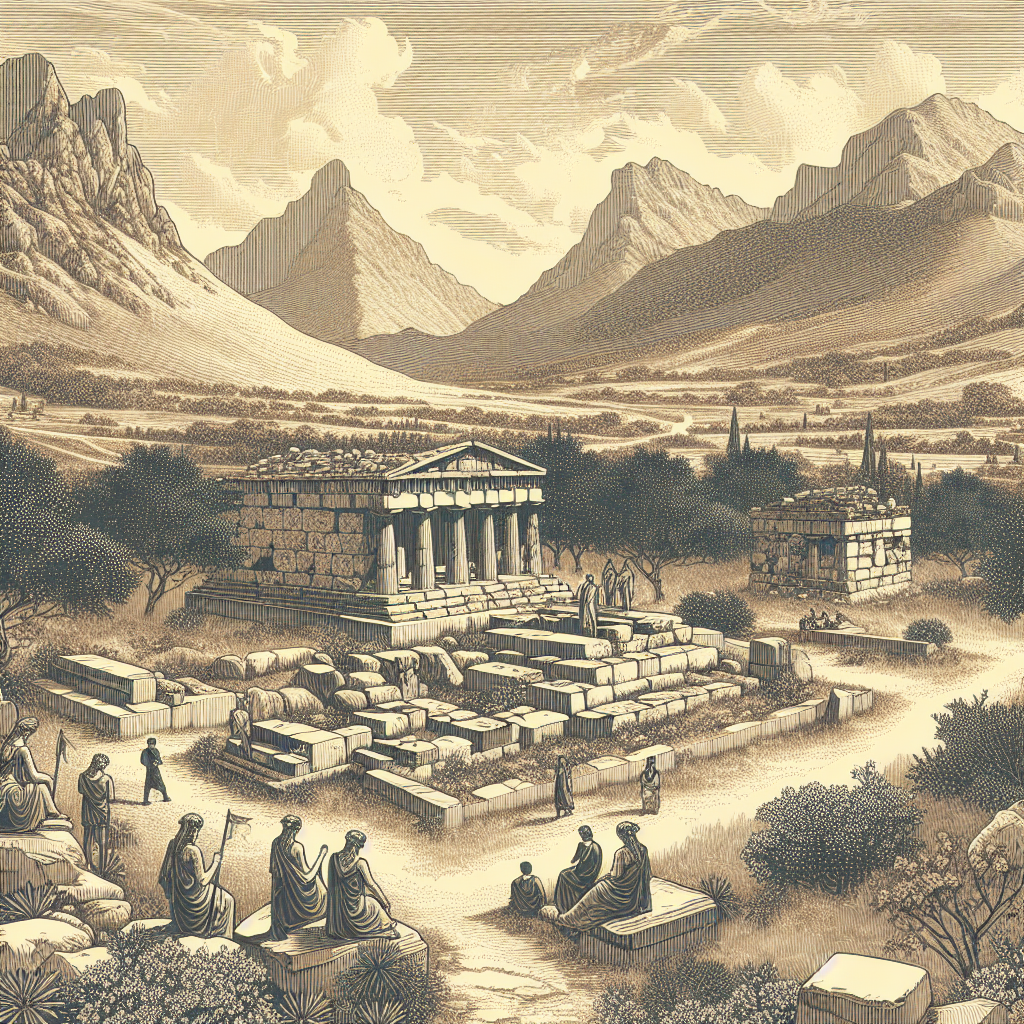

Hidden beneath the crisp, clear skies of Achaea in western Greece, the Mycenaean cemetery of Voudeni whispers the mysteries of a bygone era that would make any history buff’s heart skip a beat. Dating back to between 1500-1100 B.C., this archaeological site offers a glimpse into the ancient Mycenaean civilization, known for its impressive palatial centers and powerful, warrior-like society that inspired legends like that of Homer’s Iliad. The cemetery, located near modern-day Patras, is one of the most significant Mycenaean burial sites in Greece and sheds light on the cultural practices, social structures, and beliefs of an age that laid the foundations of Greek identity.
Imagine a place where history is almost palpable, where every stone and artifact seems to tell a story of its own. Voudeni is not just an archaeological treasure trove; it is a cultural linchpin that surfaces compelling narratives about a civilization obsessed with the afterlife, evidenced by the presence of more than 77 graves and rich burial offerings, including jewelry, feast utensils, and the occasional weapon. These artifacts provide an intimate look into the daily lives and practices of the Mycenaeans, revealing their complex societal hierarchy where warriors and rulers were venerated, and wealth and status often followed one beyond the grave.
While walking through the cemetery, you are accompanied by thoughts of how locals from centuries ago might have walked the same paths during funerary processions. The vases used for libations or the well-crafted daggers that lie buried with the dead are not just relics but keyholes to understanding the interplay between life and death in Mycenaean society. They believed in life after death, an idea that resonates across many cultures but is uniquely exemplified by their elaborate burial systems. Skulls adorned with gold foils and remains showcased with personal artifacts give you the feeling of attending a conversation where the past speaks to the present.
What’s particularly interesting is how Voudeni bridges the ancient with the modern. For now, the site serves as an educational stage where archaeology students, history enthusiasts, and curious travelers alike can observe meticulous excavation practices, conservation techniques, and advancements in archaeological methodologies. There's a sense of democratization here, with history being open-source for anyone who cares to listen to its silent echo. Knowledge is not hoarded; it is shared, fostering an understanding that can transcend modern political and cultural barriers.
From another angle, it’s crucial to acknowledge the voices who often critique these archaeological efforts. Some argue that tourists and academia disturb the sanctity of such sites, stripping them of their spiritual essence for the sake of scholarly glory or economic benefit. Indeed, the respect owed to ancient practices can sometimes clash with modern ambitions. These perspectives challenge us to continuously navigate the boundaries between preserving a historic legacy and maintaining the dignity of a once-sacred resting place.
Looking at Voudeni, it doesn’t just represent a collection of graves and artifacts—it represents continuity. The Mycenaeans might have faded, but their whispers remain active and relevant. This is especially pertinent for Gen Z and younger generations who inherit the responsibility of sustaining interest and support for cultural heritage projects. History is not just in books; it unfolds beneath our feet and needs guardians who understand its value beyond mere academic achievement.
So if you ever find yourself in western Greece, allow yourself the luxury of absorbing the stories Voudeni has to offer. Walking the grounds isn’t just a leisurely activity; it’s a powerful encounter that connects you to the continuum of human existence. You emerge from this historical pilgrimage with a richer appreciation for how the past molds our contemporary narratives, whispers of the continuum resonating loudly enough in our angry, bustling modern world, nudging us towards introspection and understanding.
History is not just to be read or stored in textbooks but to be felt, debated, challenged, and ultimately celebrated. Voudeni, amid the emerald hills and blazing horizons, invites us to broaden our horizons and empathize with those long gone but still vividly present in spirit.