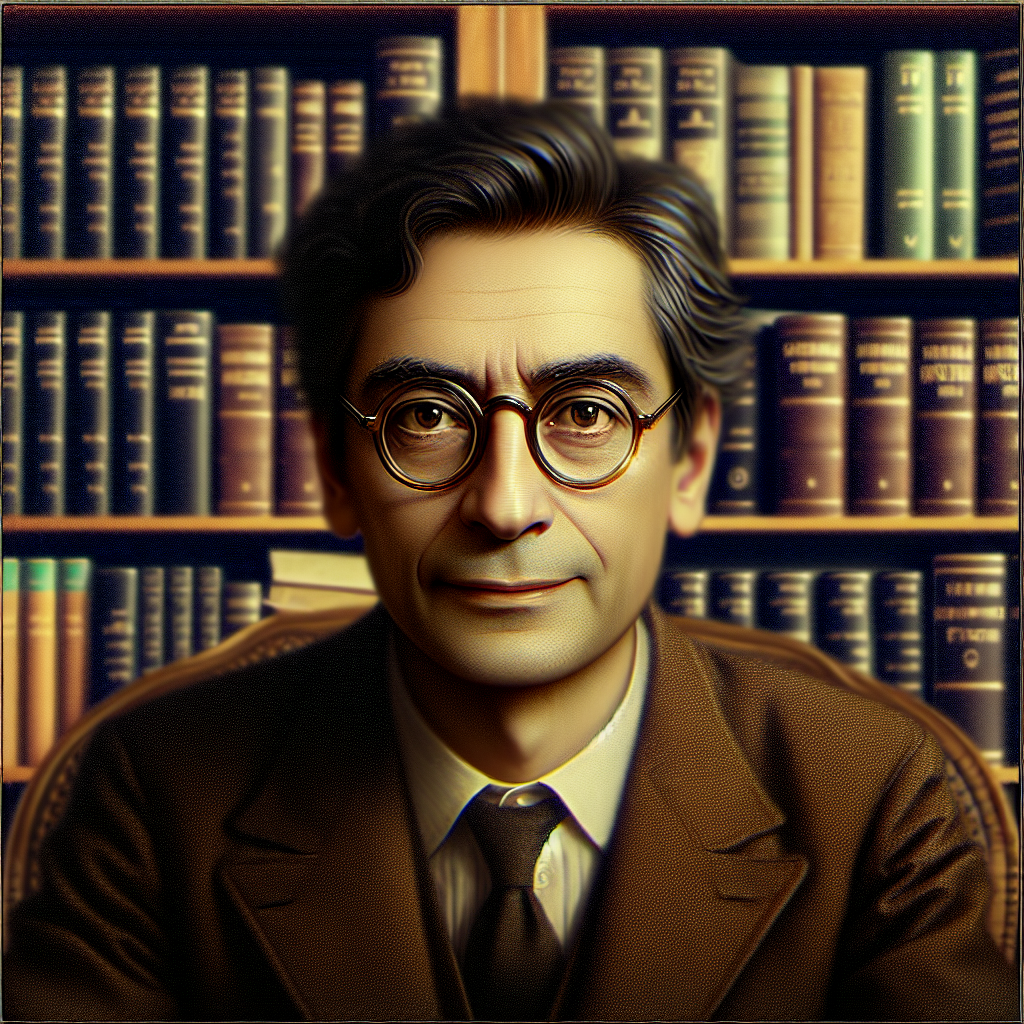

Imagine a mind so vibrant that even the seemingly tedious world of algorithms turns electrifying. Mihai Pătrașcu was such a mind—a brilliant computer scientist whose legacy resonates through the field of theoretical computer science. Born in Romania in 1982, Mihai took the tech world by storm until his untimely death in 2012. But who exactly was Mihai, and why is he so important? His work predominantly revolved around data structures, an area that defines the efficiency of algorithmic processes, propelling them from mere chains of logic into powerful, practical tools.
Mihai had a knack for seeing problems in a way others couldn’t, dissecting them into understandable chunks, and offering solutions that were as clever as they were groundbreaking. He studied computer science at the Massachusetts Institute of Technology (MIT), a breeding ground for the world’s foremost tech innovators. He obtained both his Master’s and Ph.D. from MIT, where he was celebrated for his outstanding academic achievements and impressive problem-solving skills.
While there’s a tendency to associate tech and innovation with self-contained genius, Mihai was proof that collaboration is key. He often worked with other brilliant minds and believed in the sharing of knowledge as a strategy to enhance collective understanding. This sense of community was a defining trait of his career and mindset. Yet, his kindness in collaboration contrasted with his fiercely competitive nature at programming contests, where he would often emerge at the top.
His accomplishments didn’t just collect dust in academia. They had real-world applications, especially in the realm of algorithms and data structures. His work improved the way these structures functioned, making data processing faster and more efficient—a crucial improvement in our data-driven society. His research included breakthroughs in dynamic connectivity and lower bounds for dynamic problems, which became foundational knowledge in the study of algorithmics.
Mihai was, however, more than just his work. By all accounts, he was a charismatic figure, someone who could explain the beauty of a complex algorithm as if he were painting a picture. Even people who didn’t deeply understand his field were drawn to his ability to narrate complex ideas in an engaging manner. His story doesn’t just matter because of his intellectual prowess. It’s significant because it demonstrates how human warmth and intelligence can coalesce into a touching legacy.
His passing in 2012 at just 29 left a void in the computer science community. It also sparked conversations about the intense pressure and high expectations often found in academic circles. Here, we encounter differing perspectives—some argue that he symbolizes the necessity for balancing intense dedication with personal wellbeing, while others mistake this intense focus as a hallmark of success.
In a tech era dominated by fast-paced innovations and relentless competition, Mihai reminds us that the world of computer science is both daunting and exhilarating. His tale captures something essential about human potential—one where perseverance, creativity, and collaboration inspire advancements that seem almost magical in their simplicity and impact. His work continues to inspire a new generation of computer scientists who walk in his footsteps but also venture into paths he helped illuminate.
There's something profoundly touching about Mihai’s legacy. It’s a narrative of brilliance and the undying human spirit’s quest to solve puzzles and unravel mysteries. A mind like his doesn’t just further the frontiers of technology; it shapes how we perceive the boundless possibilities within each of us.