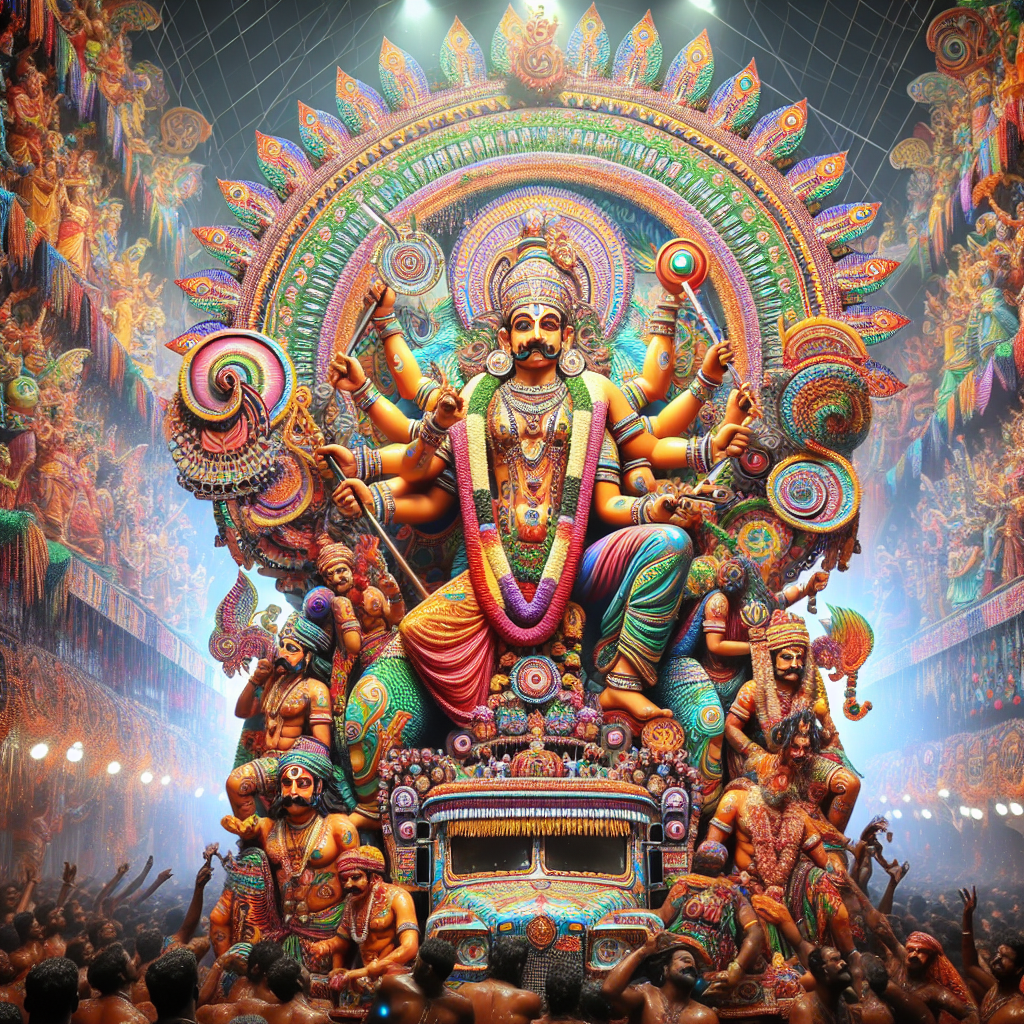

The Magudam: A Cultural Symbol of Tamil Nadu
Imagine a crown that tells a story, not just of power, but of culture, tradition, and identity. The Magudam is such a crown, a significant emblem in Tamil Nadu, India. It is a traditional headgear worn by kings and deities, symbolizing authority and divinity. The Magudam has been a part of Tamil culture for centuries, often seen in temple sculptures and ancient texts. Its presence is not just historical but also cultural, representing the rich heritage of the Tamil people.
The Magudam is intricately designed, often adorned with precious stones and metals, reflecting the craftsmanship of the artisans who create them. It is not just a piece of jewelry but a representation of the divine right to rule, a concept deeply rooted in Tamil history. The crown is often associated with Hindu deities, particularly in temple rituals and festivals, where it is placed on the idols as a mark of respect and reverence.
In modern times, the Magudam continues to hold cultural significance. It is used in various cultural events and ceremonies, symbolizing the continuity of tradition. For many, it serves as a reminder of their roots and the values passed down through generations. The Magudam is more than just an artifact; it is a living symbol of Tamil identity and pride.
However, the significance of the Magudam is not without its complexities. In a rapidly globalizing world, where cultural symbols can sometimes be commercialized or misrepresented, there is a need to preserve the authenticity of such traditions. Some argue that the Magudam should be protected from becoming a mere tourist attraction, ensuring that its cultural and historical importance is not diluted.
On the other hand, there are those who believe that sharing the Magudam with a broader audience can help promote Tamil culture globally. They argue that by showcasing such symbols, there is an opportunity to educate others about the rich history and traditions of Tamil Nadu. This perspective highlights the balance between preservation and sharing, a common theme in discussions about cultural heritage.
The Magudam also raises questions about cultural appropriation and the responsibilities of those who engage with it. As with many cultural symbols, there is a fine line between appreciation and appropriation. It is crucial for those outside the Tamil community to approach the Magudam with respect and understanding, acknowledging its significance to those who hold it dear.
For Gen Z, who are often at the forefront of cultural exchange and dialogue, the Magudam represents an opportunity to engage with and learn from diverse traditions. It is a chance to explore the complexities of cultural identity and the ways in which symbols like the Magudam can bridge gaps between different communities.
Ultimately, the Magudam is a testament to the enduring power of cultural symbols. It is a reminder of the rich tapestry of human history and the ways in which traditions can continue to inspire and connect us. As we navigate the challenges of preserving cultural heritage in a modern world, the Magudam stands as a beacon of the past, guiding us towards a future where diversity is celebrated and respected.