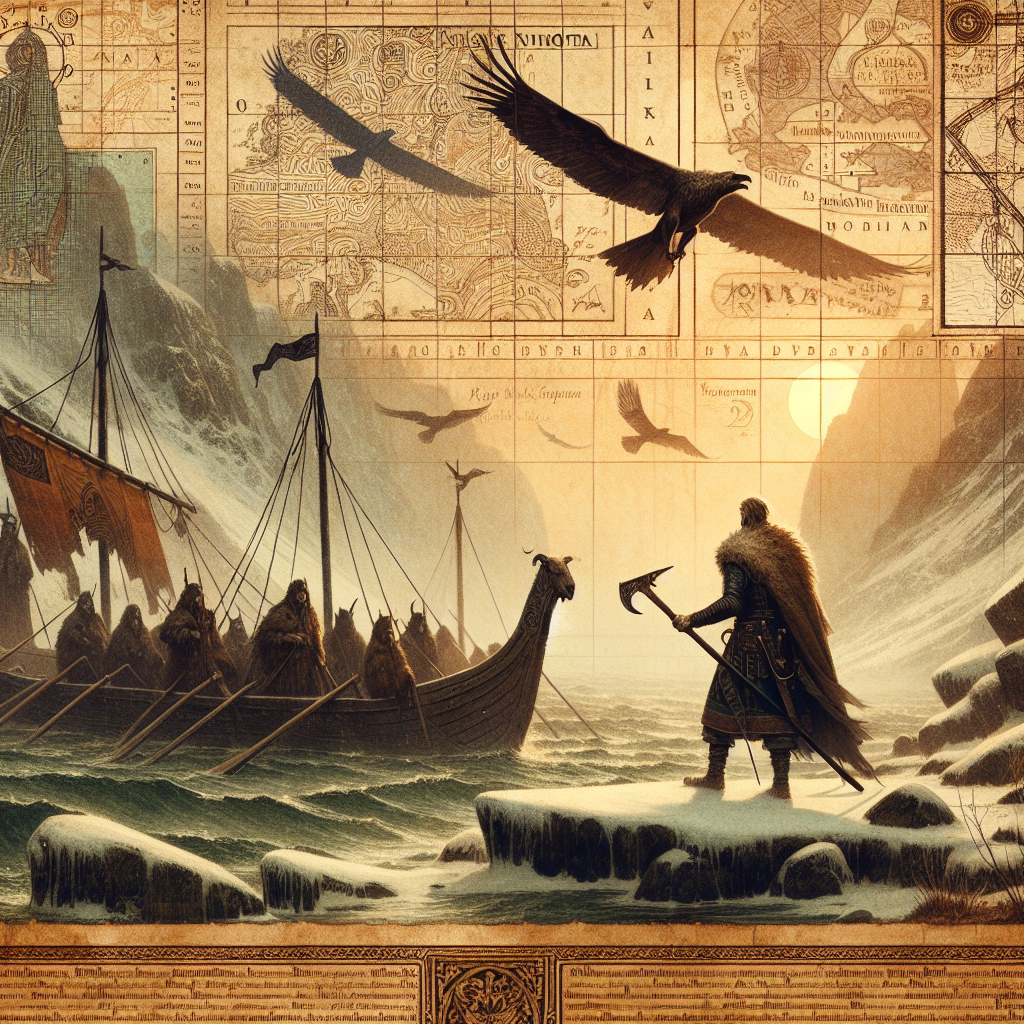

Imagine a universe beginning to take shape, not with a big bang, but with the serene and haunting notes of a musical masterpiece. That's precisely what Finnish composer Jean Sibelius achieved with his symphonic poem 'Luonnotar'. Written in 1913, 'Luonnotar' draws inspiration from the Finnish national epic, the Kalevala. In the tale, Luonnotar, the spirit of nature, creates the world from the shards of egg shells. Through Sibelius' composition, the epic's creation story is given an ethereal and haunting form, bringing to life the mysticism and depth of Finnish nature and mythology. The music serves as a dynamic bridge between tangible nature and ethereal imagination, inviting listeners to contemplate the universe's inception.
Jean Sibelius, born in 1865 in Finland, spent his life weaving natural landscapes and mythology into his music, much like how artists paint scenes that dance between reality and fantasy. 'Luonnotar' stands as one of Sibelius' masterpieces, and its composition marked a poignant moment in his life. This was just before World War I, a time when Europe was precariously balancing on the edge of transformation and chaos. For many, art and music became refuge and resistance against the looming darkness, providing a canvas on which hope and creativity could flourish.
Venturing into 'Luonnotar' feels like stepping into a mythic realm powered by Sibelius' profound sense of nationalism and nature. The piece features a solo soprano who embodies Luonnotar, adeptly navigating the highs and lows of Finnish folklore with a vocal range that reaches celestial heights and aquatic depths. The symphony is an intricate tapestry, echoing the ebb and flow of creation and destruction. Watching a performance of 'Luonnotar', listeners are not just spectators but participants in the universe's genesis as imagined through Sibelius' detailed and powerful score.
The political climate of the early 20th century had a conspicuous influence on Sibelius. Finland was pursuing independence from Russia, and Finnish nationalism was swelling like a tide. As a politically liberal thinker, it strikes a chord to see how Sibelius' music resonated with the socio-political environment of the time. Reactions might have varied, with some listeners feeling grateful for the celebration of Finnish culture while others viewed nationalism and mythologizing one’s history with skepticism. The significance of 'Luonnotar' goes far beyond just its musical structure, capturing a longing for identity and an assertion of cultural uniqueness.
Listening to 'Luonnotar' today, one can find connections between Sibelius' world and ours. People are constantly searching for understanding in a complex and often fragmented world, much like the readers of the Kalevala sought comprehension in stories of creation and birth. The piece invites a reflection on the current landscape—be it political, social, or environmental—allowing an escape through art while also serving as a beacon, guiding contemporary thought back to the power of narrative and creativity.
In embracing 'Luonnotar', it's noteworthy how it transcends traditional storytelling by captivating anyone who opens up to its wonder. The music’s structure intricately pairs with the tale's spiritual essence, making it a fascinating phenomenon of brain and soul. Such artistry doesn't just 'tell' a story; it becomes one. Even those who may approach this piece without knowledge of its backstory can find themselves swept away by its mystical flow and visceral emotion.
Sibelius was ahead of his time, not just as a composer but as a thinker who understood the role of art in shaping and reflecting society. Even if conservative voices might have leaned towards preserving status quos by overlooking deep mythological roots, progressives like Sibelius knew the importance of expression through cultural and emotional depth.
What makes 'Luonnotar' uniquely appealing, especially to the younger generations like Gen Z, is its embodiment of timeless themes—creation, identity, and the dance between nature and imagination. It urges its listeners to appreciate art not just in historical terms but as a continuous dialogue with the present and future. For those young at heart, 'Luonnotar' speaks directly to the quest for understanding one's roots, seeking identity in a world that is perpetually reshaping and redefining itself.
Though it's tempting to say 'Luonnotar’ isn't everyone's cup of tea, there's something genuinely universal about its cosmic exploration realized through sound. It strips away the superfluous and reminds us of the unity found through myth, nature, and music. Sibelius' work isn't just a national treasure but a global one, a voice reaching across time, nudging spirit and mind alike.