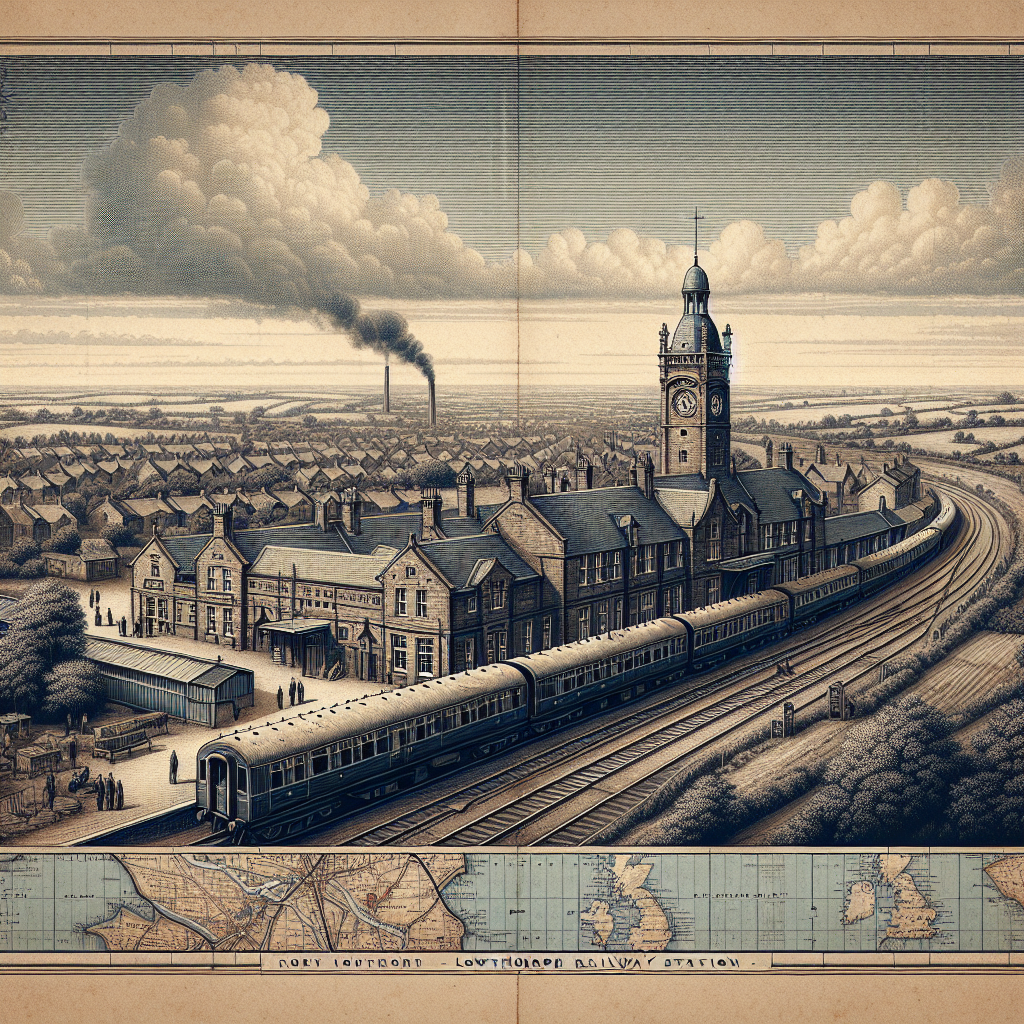

Somewhere amid the lush green landscapes of East Riding of Yorkshire, an intriguing forgotten relic of the Victorian railway era rests - Lowthorpe railway station. This quaint station was once a buzzing stop in the network of British transport, serving the charming village of Lowthorpe from its opening in 1846 until its inevitable closure in 1970, a narrative not unfamiliar in the chronicles of England's railway history. Nestled near Driffield on the Yorkshire Wolds railway line, it holds stories of progress, change, and the bittersweet journey of modernization.
Lowthorpe railway station was a product of the Hull and Scarborough Railway, strategically placed to cater to the villages in the region, facilitating mobility and connecting people. It’s hard not to picture the steam engines pulling into the station, clouds of smoke billowing, as passengers and goods alike embarked or disembarked in a most analog fashion. The line was part of a broader rail expansion that played a pivotal role in linking rural communities with urban centers.
The decline of Lowthorpe, like many similar stations, was entwined with the infamous Beeching cuts. During the 1960s, as part of a reductionist strategy aimed at eradicating what was considered ‘unprofitable’ rail routes, many small stations saw their demise. While these moves were justified in terms of economics and the evolving transportation needs towards roads and automobiles, it’s clear that the social cost of such decisions was manifold.
For generations, Lowthorpe served not just as a transit point, but a community hub that fostered local interactions. It connected family members, facilitated trade, and brought essential services to an otherwise isolated rural space. With its closure, the village found itself gradually receding into quietude, the track once alive with possibility now a silent reminiscence.
Despite its shuttering doors, Lowthorpe railway station continues to echo through time. The station’s architecture remains a visual treat for those passionate about history. It still stands albeit in a state of quiet dignity, an emblem of the past preserved against the whims of time. For some, it’s a romantic monument to an era of steam and steel, a reminder of the pivotal role railways played in nation-building and community development.
However, there’s room to empathize with perspectives on both sides of the rail debate. Detractors of the Beeching-era decisions might lament the loss of access and community disintegration, advocating for a restored connectivity that counters the environmental impacts brought on by over-reliance on cars. Reconnecting old rural stations can be seen as a step towards sustainable travel options, reducing carbon footprints, and embracing green alternatives.
From another lens, the closure’s proponents argue for a focus away from outdated routes towards leaner, more economically viable transport models. With limited resources, the prioritization of high-capacity routes connecting major urban hubs makes an undeniable economic and logistical sense. Yet, one can’t ignore that such economic decisions may overlook valuable cultural and historical contexts; the tangibility of a town’s spirit often hinges on such seemingly small community spaces.
Interestingly, there’s been a renewed interest in reopening some rural railway locations across the UK, spurred by shifts towards greener transport policies and sustained public interest in local heritage. Although Lowthorpe hasn’t yet been earmarked for revival, it’s evocative of a larger movement towards reclaiming spaces once deemed obsolete. The conversation is becoming increasingly multi-dimensional, involving questions around heritage preservation, modern needs, and environmental considerations.
At its core, Lowthorpe railway station compels us to consider the broader implications of infrastructure evolution. This viewpoint isn’t just about reclaiming a path lost; it's an exercise in acknowledging how transport influences our social fabric. The question for us, perhaps, is what kind of future we envision for our communities and how we can strike a balance between practicality and preserving connections that bind us through time.
As we trudge forward, Lowthorpe remains a testament to a bygone era, a relic holding whispers of past travels, lost connections, and possible futures. Each visit to its site today is a journey in itself, a reflection on our relationship with history, infrastructure, and the legacy we choose to remember or forget.