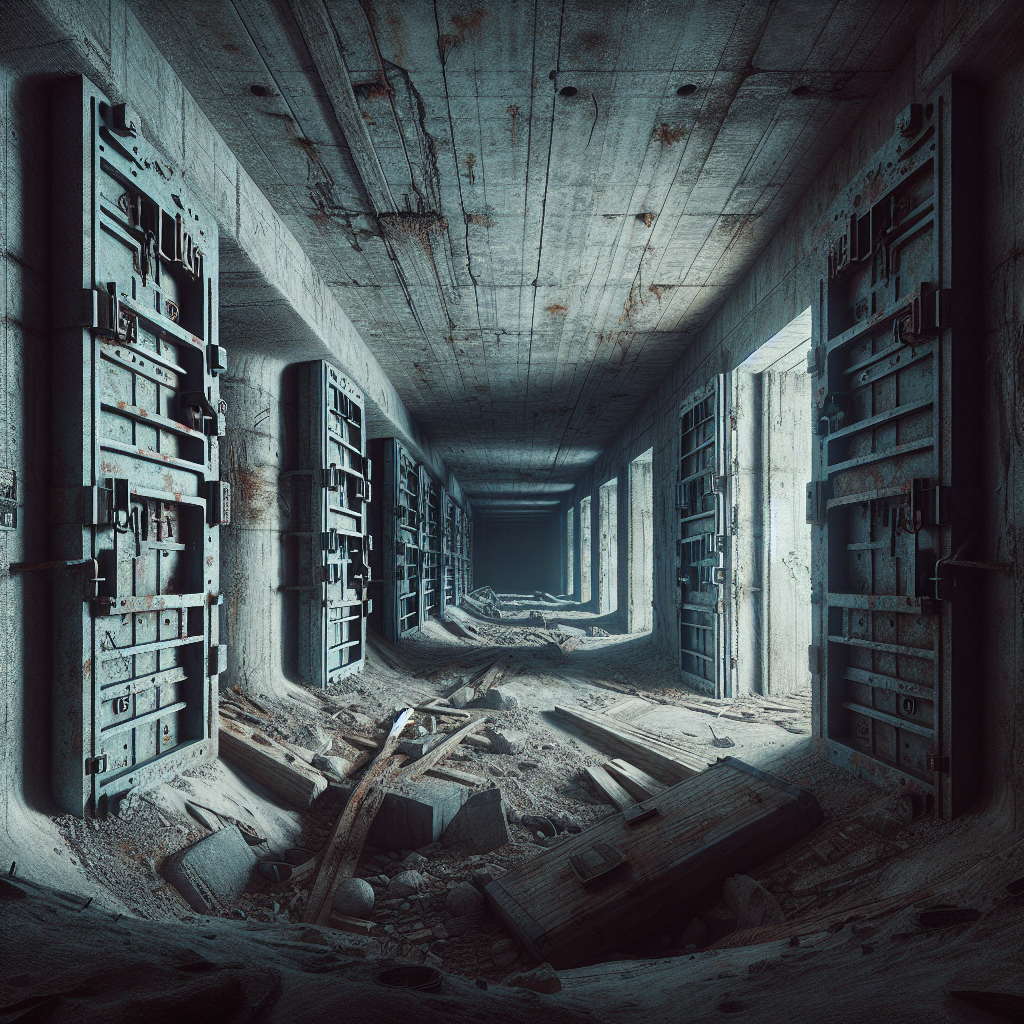

Imagine waking up underground, where the world above is a distant memory and your life now exists within reinforced concrete walls. This isn't the plot of a sci-fi movie but a reality for some people around the globe. Bunkers are typically associated with times of war or political instability, used by individuals seeking safety from external threats. While often thought of as emergency shelters, bunkers can also be imaginative spaces akin to underground fortresses, complete with modern amenities and communal living areas.
Who are these individuals choosing such a life? Often, they are survivalists or those skeptical of global stability. The "preppers," concerned about potential disasters—whether natural, man-made, or economic—seek self-sufficiency and safety. The debate around this lifestyle echoes deeper societal concerns, about trust in governments, the environment, and fears of societal breakdown.
The idea of living in a bunker might initially evoke feelings of claustrophobia for some and perhaps a hint of excitement for others. These underground spaces range from basic rooms equipped with provisions and essentials, to luxurious labyrinths featuring swimming pools and bowling alleys. Companies today even market luxury bunkers complete with designer interiors and all the perks of high living.
Time spent in these shelters varies. For some, it's an occasional retreat; for others, it’s a more permanent existence. Imagine schooling children underground, celebrating birthdays, or growing gardens using artificial light. Each day is a test of adapting to a new rhythm of life where everything feels both isolated and tightly connected at once.
What drives people to heavily invest in these expansive shelters, often costing millions, is an unavoidable tension between survival and fear. It’s an age multiplied by uncertainty, where anxiety often fills the gap between reality and worst-case scenarios. While one point of view sees these shelters as rational plans for uncertain futures, others claim they exemplify a disproportionate emphasis on isolation over communal solutions.
You could argue that the structure symbolizes our shared concern about a rapidly changing world. Climate change, political unrest, and pandemics now make the bunker lifestyle seem less eccentric. While some could see this as conceding that these issues are beyond fixing, others contend that life in a bunker embraces a proactive approach to personal safety.
Interestingly, while the appeal of bunkers escalates, not everyone embraces this outlook. Skeptics see this trend as a reflection of social inequality, where only those with ample resources can afford such comprehensive plans for personal safety. It's a stark reminder of who gets to secure themselves against catastrophes while others are left vulnerable.
The psychological impacts of living in such controlled, often enclosed spaces can't be overlooked. Humans are naturally social beings who thrive on interaction within dynamic environments. Prolonged isolation or lack of freedom to roam might result in elevated stress levels or a decline in mental health. However, people adapt, develop innovative solutions, and form new communities, proving the resilience of the human spirit.
Therefore, while bunkers primarily designed for survival, they have grown to represent a unique intersection of future-planning, intrigue, and critical social debates. They challenge us to reflect on modern societal structures and consider what it means to live a life anticipating crises. Moreover, they force us to grapple with wide-ranging emotions—like the thrill of survival, fear of the future, or a desire for control.
Life in a bunker isn't just about living apart; it's about sustaining human relationships, questioning societal norms, and facing the uncertainties of the world on one’s own terms. It's a topic that combines age-old human curiosity with modern anxieties, revealing much about how we respond to the world's evolving challenges.