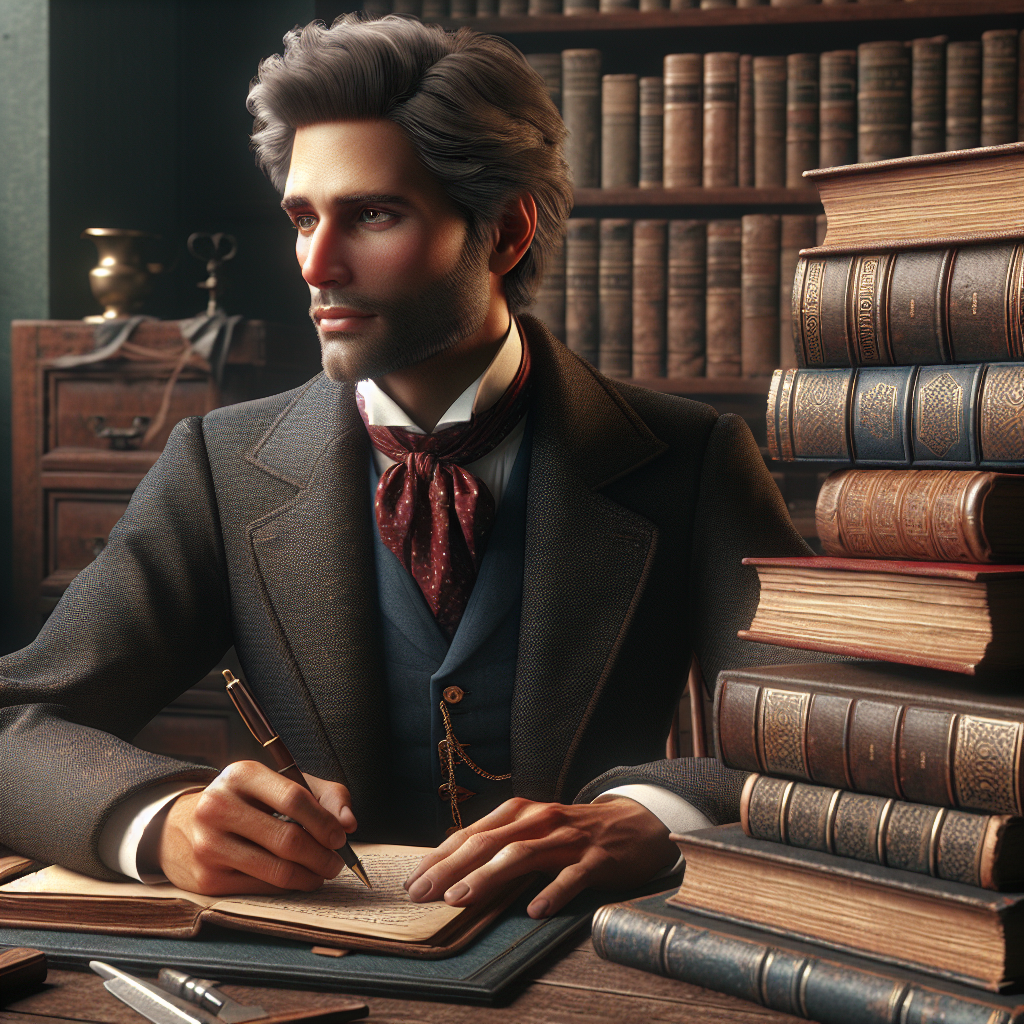

In the vast landscape of literary voices, Lee Sandlin stands as an intrepid explorer of Americana’s overlooked nooks and crannies. Born in the heartlands of America in the mid-20th century, Sandlin crafted narratives that made readers pause, rewind, and rethink the uncelebrated stories of the American past. His works, most active until his passing in 2014, are a study in human curiosity and historical nuance, pushing us to view our collective timeline through a kaleidoscope of intrigue.
Sandlin grew up in Chicago, a city that undeniably weaves itself into his storytelling. He began his journey not as a renowned novelist or a mainstream historian, but as a man transfixed by the world around him. Starting with essays like "Seeing the Electric City" and later paving the road with his acclaimed history offerings like "Wicked River" and "Storm Kings," he provided a window into the soul of bygone eras and forgotten minutiae.
His personality was akin to an intricate mosaic, having the sort of curiosity that questions the mundane and pries the lids off understated mysteries. This curiosity translated into a writing style that felt both familiar and distant, sometimes like a conversation with a long-lost friend, other times like a sage steering us through the recesses of history. His style blends elements of narrative nonfiction, essay, and history, often laced with wit and a touch of irony.
Sandlin epitomized the journey rather than just the destination. In "Wicked River," his exploration of the Mississippi River's lore paints the mighty waters as both a cradle of civilization and a cauldron of human drama, embodying our struggle and triumph. His tales echoed whispers of a time when the river played a vital part in shaping the sociopolitical landscapes, a reminder that the past is never truly gone but woven into our present.
While not overtly political, Sandlin's writings often danced on the edges of sociopolitical nuances. His exposition of nature's wrath in "Storm Kings" highlights how societal advances still wrestle against forces of nature, offering a commentary that echoes into today's climate crisis dialogue. Sandlin’s perspective draws gentle attention to the delicate dance between human endeavor and the uncontrollable chaos of the natural world, speaking to political liberals about respecting and protecting our environment.
Writing to Gen Z, in particular, Sandlin’s work invites a reflection on the roots and dynamics that shape our contemporary identity. His narratives might seem nostalgic, but they resonate with a spirit of change and awareness that calls young readers to appreciate history's lessons. At a time when digital stories compress history into digestible snippets, Sandlin's comprehensive and textured portrayals remind us of the broader tapestry of our society.
Not everyone may appreciate Sandlin's detailed deep dives into history's sometimes granular details. Critics might argue that his narratives occasionally linger too long on tangents, but this approach serves as a much-needed counter-narrative to the oversimplification of complex topics. His writing captures the attention to detail and authenticity many of us yearn for in an age of quick information bites.
To his audience, including those who tread paths opposite to liberal ideologies, Sandlin’s work provided an understanding of America’s nuanced past in a way that transcends political leanings. It’s a reminder that our stories, big or small, funny or tragic, shape and reshape our identity. Embracing this diverse narrative landscape can bridge gaps and connect generations.
Lee Sandlin’s untimely departure in 2014 was in parallel to the eclipse of his generation of writers who taught us about the depths lying under America’s busy, churning facade. However, his narratives stand firm, inviting each reader—a Gen Z digital native or a seasoned wisdom seeker—to pause and reflect. His writing remains a testament to the unsung and the unseen, a blend of personal and collective memory that endures across the pages of history.