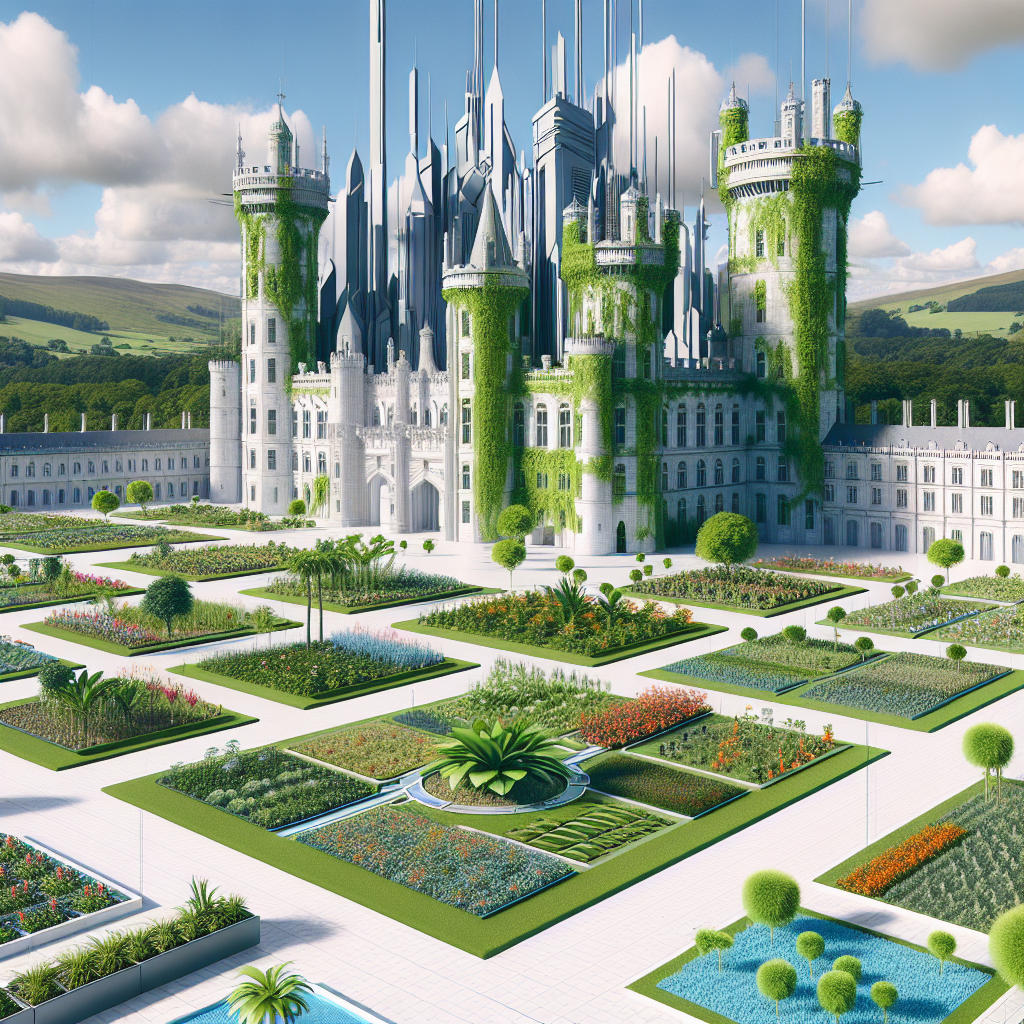

Knepp Castle, nestled in the rolling countryside of West Sussex, England, is more like a wild fairy tale than a static historical monument. Established as a medieval fortress in the early 12th century, it holds the echoes of English history within its ancient stones. Today, however, it’s not just a testament to human heritage but also a thriving hub of biodiversity and progressive environmentalism—a unique blend that makes it a fascinating place for both history buffs and nature enthusiasts alike.
Imagine a place where the past seamlessly meets innovative environmental practices, where ancient stones nestle amidst unruly vines, and songbirds flit through primeval woods. That’s Knepp for you.
The story of Knepp is highlighted by the vision of its current custodians who have converted the castle’s vast estate into one of the largest rewilding projects in lowland Britain. This change began in the early 2000s as a response to low returns from traditional farming, cleverly transforming economic pressure into an opportunity for ecological revival.
Rewilding is quite the buzzword nowadays, representing hope for our ravaged ecosystems. Knepp Castle’s rewilding journey offers an inspiring blueprint. By allowing nature to take its course—removing fences, reintroducing species like Exmoor ponies, Tamworth pigs, and longhorn cattle—they’ve turned rigid farmland into a thriving wildland within just two decades.
Knepp’s success challenges long-held views on land management. The results have been dramatic. Species, some of which were rarely seen for centuries, now find a sanctuary here. Walking through the estate, one encounters the melodies of nightingales, a sound previously thought lost to these parts. The reintroduction of essential grazing and browsing animals has led to the emergence of mixed woodlands and flower-strewn meadows, rejuvenating habitats for countless species.
Still, not everyone claps for rewilding. Critics argue that land should be farmed intensively to support a growing population. They see projects like Knepp as indulgent, questioning their sustainability and overall impact. Considering such perspectives helps us appreciate the challenges and compromises involved.
Yet, nature at Knepp seems to speak for itself. The land, once heavily plowed and economically strained, now supports diverse life, aptly illustrating nature’s adaptability and resilience. More than just preserving history, Knepp Castle’s project is about reshaping the future, creating a legacy intertwined with natural heritage.
What makes Knepp even more compelling is how its story of natural rebirth doesn’t stand alone but lives alongside global efforts to counter climate change and biodiversity loss. It feels excitingly rebellious against the backdrop of urban sprawl and industrial farming.
Knepp offers a hands-on experience for visitors through safaris and camping under the stars, directly connecting people with nature’s rebirth. It’s as much about making us question our practices as it is about offering hope. Seeing centuries-old landscapes come back to life prompts deeper thinking about our interactions with the world.
At the same time, Knepp Castle stands beautifully as a historical narrative keeper. Its ruins hint at tales of knights and nobility, making one wonder about those medieval days while surrounded by modern conservation efforts. This intertwining of narrative and nature underpins Knepp’s unique appeal.
For Gen Z, obsessed with sustainability and innovation, Knepp Castle is particularly relevant. It represents what can be achieved when working with nature instead of against it, showcasing powerful examples of environmental leadership. It speaks to the heart of social justice, too—considering how environmental health and human welfare are deeply linked.
Being aware of past failures keeps the hope alive for better future solutions. History, after all, isn’t there just to admire but to learn from. Knepp Castle’s shift from medieval stronghold to wildlife haven reminds us that adaptations are not only beneficial but essential. It teaches us about coexistence, resilience, and the art of letting go with purpose.
Knepp is more than a picturesque landscape; it’s living proof of possibility. Though medieval tales weave around its stones, the rebirth of the land, filled with the laughter of life teeming once more, adds a deeper narrative to its age-old walls. Walking that ground feels like flipping history’s pages forward, discovering a greener tomorrow waiting to be embraced.